
Accessible Hiring: Advancing Fair Workplaces for All
December 16, 2025Over 61 million American adults live with a disability, yet many still face invisible barriers when looking for jobs. Accessibility in hiring matters because it directly affects who gets a fair chance to prove their talent. Removing these obstacles does more than follow the law—it gives everyone an equal shot and helps companies tap into a broader, more creative workforce.

Accessible Hiring Defined and Core Principles
Accessible hiring represents a comprehensive approach to recruitment that actively removes barriers and creates equitable opportunities for all professionals, regardless of their individual differences or abilities. At its core, this approach goes beyond legal compliance to embrace genuine inclusion and respect for human potential.
The fundamental principle of accessible hiring is creating recruitment processes that welcome diverse talent without unnecessary obstacles. Removing barriers within recruitment practices means reimagining traditional hiring approaches to ensure every qualified candidate can demonstrate their skills and capabilities. This includes providing accommodations, using adaptive technologies, and designing inclusive application processes that do not inadvertently exclude talented professionals.
Key components of accessible hiring include:
- Designing flexible interview formats
- Offering multiple communication channels
- Providing clear, straightforward job descriptions
- Implementing standardized evaluation criteria
- Training hiring managers on unconscious bias
Recruitment strategies focused on non-discrimination aim to create environments where every candidate feels respected and empowered. This means actively recognizing and dismantling systemic barriers that have historically prevented marginalized professionals from accessing career opportunities.
Pro Tip - Accessibility Assessment: Conduct an annual audit of your hiring practices to identify and eliminate potential barriers, ensuring your recruitment process remains inclusive and adaptive to evolving workforce needs.
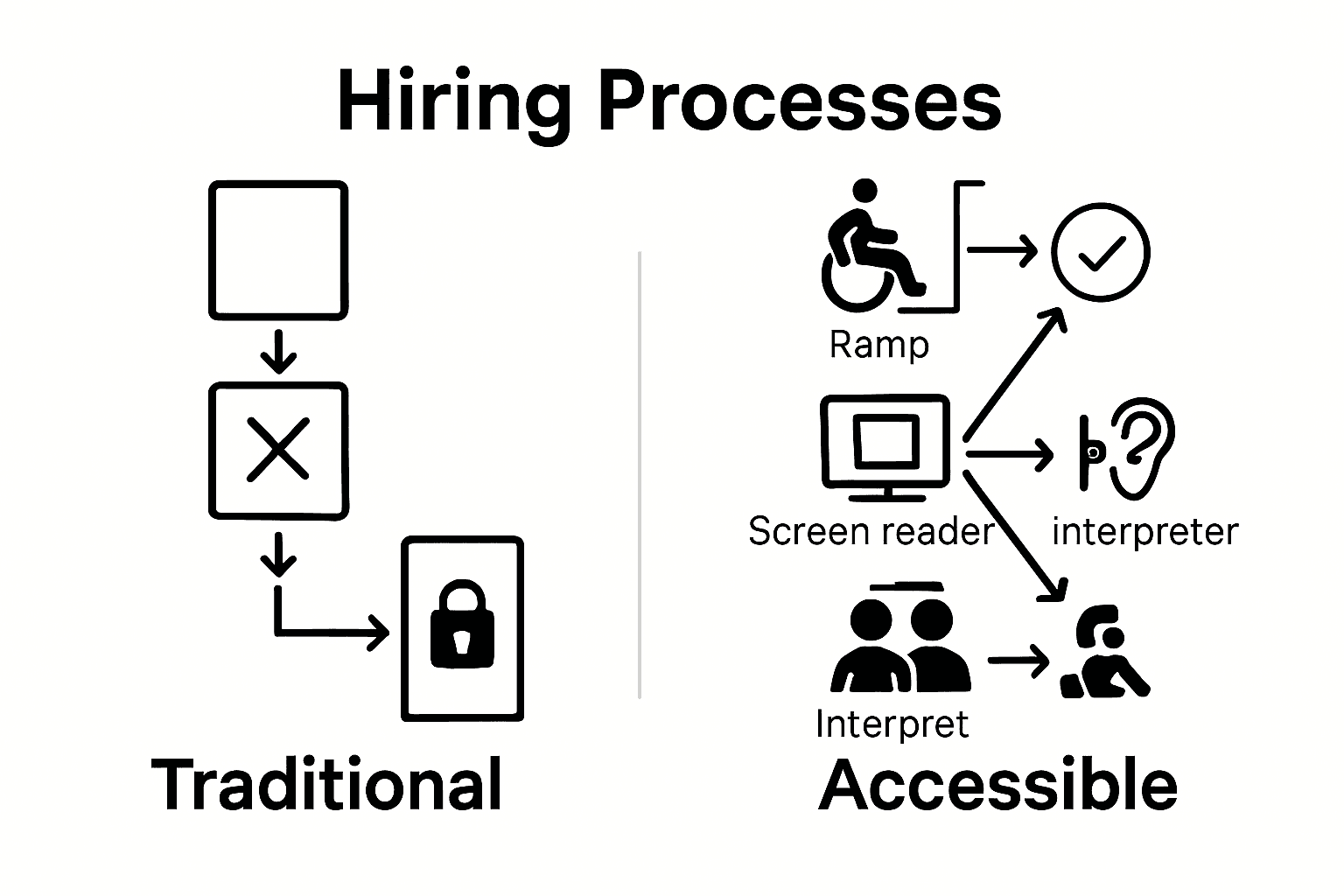
Here’s a comparison of traditional hiring versus accessible hiring approaches:
Types of Accessibility in Recruitment Processes
Recruitment accessibility involves designing comprehensive hiring strategies that accommodate diverse professional backgrounds, abilities, and communication preferences. Modern organizations recognize that true inclusivity extends far beyond basic compliance, requiring intentional and nuanced approaches to talent acquisition.

Ensuring online application forms remain fully accessible represents a critical first step in creating equitable recruitment experiences. This means developing digital interfaces that work seamlessly with assistive technologies, providing alternative application methods, and eliminating potential barriers that might prevent talented candidates from showcasing their skills.
Key types of accessibility in recruitment include:
- Physical accessibility for in-person interviews
- Digital platform compatibility with screen readers
- Alternative communication format options
- Flexible interview scheduling
- Comprehensive accommodation request processes
Carefully implementing hiring technologies helps prevent unintentional candidate exclusion. Advanced recruitment strategies now prioritize adaptive technologies that can be customized to individual candidate needs, ensuring that technological tools enhance rather than limit opportunities.
Pro Tip - Accessibility Audit: Regularly review your recruitment technology and processes with input from professionals with disabilities to identify and proactively address potential barriers before they impact candidate experiences.
Key Accommodations and Inclusive Practices
Workplace accommodations represent strategic approaches that enable professionals with diverse abilities to fully demonstrate their talents and contribute meaningfully to organizational success. These practices go beyond basic legal requirements, reflecting a genuine commitment to creating supportive and equitable work environments.
Improving recruitment equity for professionals with disabilities requires a multifaceted approach that addresses potential barriers throughout the hiring process. This means proactively designing recruitment strategies that provide flexible options and personalized support for candidates with different abilities and communication needs.
Key accommodations and inclusive practices include:
- Providing interview questions in advance
- Offering multiple interview format options
- Creating accessible physical and digital spaces
- Implementing adaptive communication technologies
- Developing flexible scheduling arrangements
- Training hiring managers on inclusive communication
- Establishing clear accommodation request processes
Successful inclusive practices recognize that accessibility is not a one-size-fits-all solution. Each candidate may require unique support, and organizations must remain responsive and flexible. This approach demonstrates respect for individual differences and creates environments where every professional can excel based on their skills and potential.
Pro Tip - Personalized Accommodation Strategy: Develop a standardized yet adaptable accommodation request process that empowers candidates to communicate their specific needs confidentially and comfortably during recruitment.
Legal Obligations and Global Standards
Legal frameworks for workplace accessibility represent critical mechanisms that transform inclusivity from an ethical ideal to a structured, enforceable requirement. These standards ensure that organizations move beyond voluntary gestures to create systematic pathways for diverse talent integration.
Public sector organizations are now mandated to develop comprehensive accessibility plans that actively identify and remove employment barriers. These legal requirements compel institutions to conduct thorough reviews of their recruitment, hiring, and workplace practices, ensuring that professionals with diverse abilities can fully participate in professional environments.
Key legal obligations and global standards encompass:
- Mandatory accessibility audits
- Non-discrimination employment policies
- Reasonable accommodation requirements
- Transparent reporting mechanisms
- Proactive barrier identification processes
- Consistent monitoring of inclusive practices
- Equal opportunity employment guidelines
Global education and employment standards emphasize the 4As framework of availability, accessibility, acceptability, and adaptability. This approach ensures that legal standards are not merely procedural but fundamentally transformative, creating environments where professional opportunities are genuinely open to all individuals regardless of their abilities.
Pro Tip - Compliance Strategy: Develop a proactive legal compliance roadmap that anticipates accessibility requirements, transforming legal obligations from reactive restrictions into strategic opportunities for organizational growth.
This reference table outlines key global accessibility standards and their professional relevance:
Benefits and Impact for LGBTQ+ Professionals
Inclusive recruitment practices represent transformative strategies that go beyond compliance, creating meaningful professional opportunities for LGBTQ+ individuals. These approaches recognize talent holistically, addressing systemic barriers that have historically limited career advancement for marginalized communities.
Developing comprehensive inclusive recruitment practices fundamentally shifts organizational cultures, enabling LGBTQ+ professionals to showcase their full potential without fear of discrimination or marginalization. This approach acknowledges that diversity is not just a metric, but a strategic advantage that drives innovation and organizational excellence.
Key benefits for LGBTQ+ professionals include:
- Enhanced psychological safety
- Increased career mobility
- Authentic professional representation
- Reduced workplace microaggressions
- Stronger professional networks
- Improved mental health and job satisfaction
- Greater opportunities for leadership development
Practical inclusive recruitment steps demonstrate how organizations can create environments where LGBTQ+ professionals feel valued, respected, and empowered to contribute fully. These strategies recognize individual strengths, challenge traditional hiring biases, and build workplace cultures that celebrate diverse professional identities.
Pro Tip - Identity Affirmation: Create recruitment processes that allow candidates to self-identify confidentially, signaling organizational commitment to genuine inclusivity beyond superficial diversity metrics.
Empower Accessible Hiring and Champion LGBTQ+ Workplace Inclusion Today
The article highlights the urgent need to remove barriers and build truly accessible hiring practices that welcome diverse talents including LGBTQ+ professionals. Companies often face challenges like unconscious bias, rigid recruitment processes, and a lack of personalized accommodations. These obstacles hinder creating equitable work environments where individuals can thrive and contribute fully.
At mygwork.com, we understand that fostering inclusive recruitment is not only about compliance but about embracing authentic diversity. Our platform is built to support LGBTQ+ job seekers and inclusive employers by providing a trusted space to connect, share opportunities, and access essential resources. Whether you are seeking to expand workplace accessibility or create psychological safety for marginalized professionals, we offer tools and community to accelerate meaningful change now.
Take the next step to advance fair workplaces where every professional feels valued. Join mygwork.com to discover inclusive job opportunities, connect with allies, and gain insights that transform hiring from a challenge into a strategic advantage. Empower your recruitment efforts by embracing diversity-driven practices today.
Frequently Asked Questions
What is accessible hiring?
Accessible hiring is a recruitment approach that removes barriers and creates equitable opportunities for all professionals, ensuring that every qualified candidate can demonstrate their skills and capabilities.
Why is accessibility important in recruitment?
Accessibility in recruitment is crucial because it promotes diverse talent acquisition, creates inclusive environments, and recognizes the unique contributions of individuals with different abilities and backgrounds, ultimately enhancing organizational performance.
What accommodations should be considered in the hiring process?
Key accommodations include providing interview questions in advance, offering flexible interview formats, creating accessible digital and physical spaces, and implementing adaptive communication technologies to support candidates with different needs.
How can organizations ensure compliance with accessibility standards in hiring?
Organizations can ensure compliance by conducting regular accessibility audits, developing transparent reporting mechanisms, and proactively identifying barriers to create a more inclusive recruitment process.