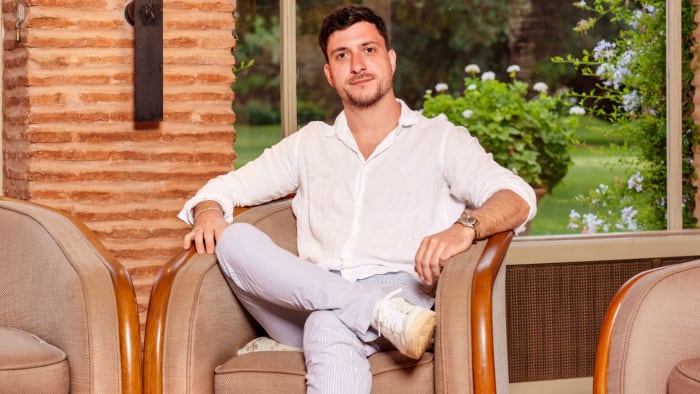
Alum of the Month: Pierre Gaubert
July 17, 2026Name: Pierre Gaubert
Programme studied and year of graduation: MSc in Management and CEMS, 2011–2013
What are your current areas of focus, professionally or otherwise?
My focus is on building myGwork into the largest global platform for the LGBTQ+ business community. Day to day, that means working with hundreds of inclusive employers across finance, law, consulting, tech and pharma to help them recruit, retain and genuinely include LGBTQ+ talent. We run two flagship annual events — WorkFair, our global LGBTQ+ career fair, and WorkPride, our week-long Pride Month conference — alongside the myGwork Academy, our DE&I training arm.
A lot of my energy right now goes into navigating what's become a much harder climate for diversity and inclusion work — spending more time in conversation with our clients and community, alongside allies who are holding the line on inclusion even when it's become more challenging to do so. On the personal side, I'm renovating my grandparents' house in the south of France with my two brothers — a lovely counterweight to running a company.
Tell us about your career journey since graduating from LSE.
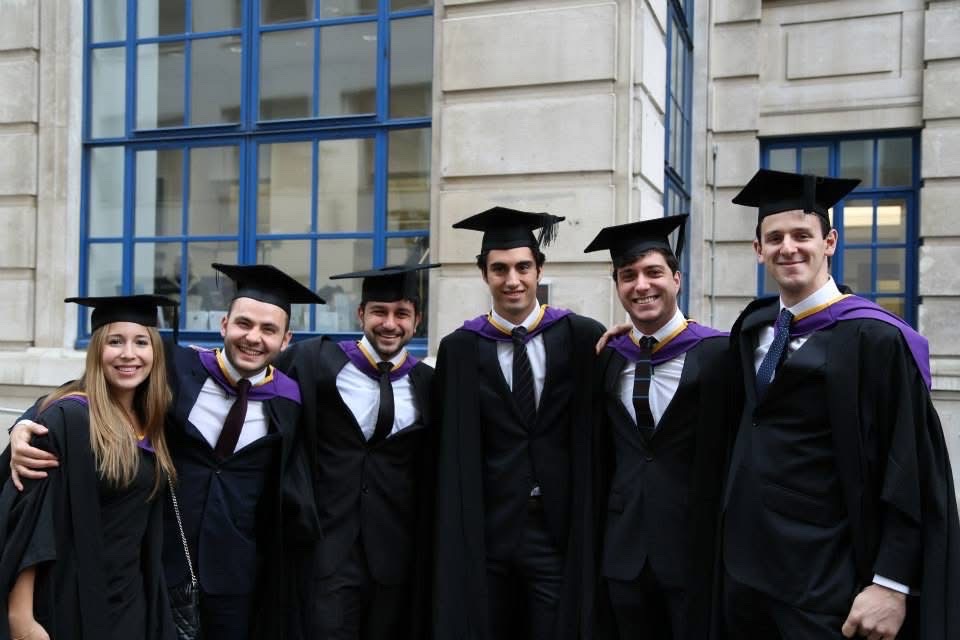
I left LSE in 2013 and joined a US software company in Madrid. On paper, it was exactly the kind of graduate role I'd been working towards. In practice, I spent the year fielding casual, daily homophobia from managers — the kind of low-level commentary that makes you question whether you belong in any workplace at all. My twin brother Adrien was having a parallel experience working for the Foreign Office in China. Around the same time, our mother Françoise had passed away, and one of the last things she'd worried about was whether being gay would hold us back.
That combination — her concern, our own workplaces, and the fact that there were plenty of LGBTQ+ social spaces but nothing serious on the professional side — pushed us to start myGwork in 2014. We launched out of a tiny London setup and built it one corporate partner at a time. Our younger brother Valentin invested in the business early on and has been our best ally ever since — having a sibling believe in what we were building, both financially and personally, made an enormous difference in those first years. More than a decade on, we're a team of around 20, with hundreds of corporate members and a global community — in 2025 alone, 11 million people visited the myGwork job board.
What skills have you learnt along the way?
More than anything, resilience. Founding a business is a long exercise in being told 'no' politely, and learning not to take it personally. I've also become a much better listener — to our team, to corporate partners, and to a community whose needs change as the world does. Beyond that: how to sell, how to read a balance sheet, how to recruit and let people go with dignity, and how to hold a clear strategy while staying open about changing the parts that aren't working.
What inspired you to set up your own business?
Honestly, a mix of grief, anger and stubbornness. Losing our mother shifted the way Adrien and I thought about time. The discrimination we were both experiencing at work made the gap painfully obvious — there were Pride parades and dating apps, but no serious professional infrastructure for LGBTQ+ people. We thought someone should build it, and at some point realised we weren't waiting for someone else to do it.
Has your career worked out the way you envisioned?
Not at all — and I mean that in the best possible way. When we started, my ambition was modest: something genuinely useful for LGBTQ+ professionals in the UK. That myGwork is now global, that we run events attended by tens of thousands, and that I get to work alongside my twin every day — none of that was on the original plan.
What were the most valuable lessons you took away from studying at LSE?
Above all, critical thinking — a skill that has only become more valuable in the age of AI, where the ability to interrogate information, spot weak reasoning and form your own view is genuinely scarce. The Department of Management takes both rigour and real-world relevance seriously, and I left able to read a strategy paper or a pitch deck with a critical eye. The CEMS programme also gave me an international cohort I still rely on today. More than the academic content, though, LSE taught me that ambitious people are far more open and supportive than the stereotype suggests.
What is the greatest challenge you've had to overcome?
Two things have shaped me more than anything else. The first was having to restructure the company and let people go who weren't just colleagues but genuine friends. The team you grow with becomes family, and being the person who has to tell someone you care about that there isn't a role for them anymore is, in my experience, the single hardest thing a founder has to do. Thankfully, I'd hired an amazing Managing Director who helped me navigate the restructuring — having someone alongside me with the experience and steadiness to make those decisions properly was invaluable, and a reminder of how much the right hire can carry you through the hardest moments.
The second is the current anti-DEI climate. After more than a decade of hard-won progress, we're watching parts of that infrastructure being publicly dismantled — programmes cut, language softened, some long-standing partners gone quiet. The challenge is commercial but also deeply emotional. What's pulled us through is the realisation that this is precisely the moment myGwork was built for. The work is needed more, not less.
If you could offer one piece of advice to students or fellow alumni from your department who are starting their own business, what would it be?
Surround yourself with people who are brighter and more skilled than you. It's tempting, especially early on, to hire for comfort and stay the smartest person in the room — but that's a quiet way of capping the company at your own ceiling. The founders I admire most actively recruit people who'll challenge them. That mindset, more than any single skill or strategy, is what lets a business grow beyond its founder.
Share with us your fondest memory of the Department of Management.
Towards the end of my time at LSE, my classmates voted me 'best smile' at one of our end-of-programme moments. It sounds like a small thing — but it came just after my mother had passed away, at a point when I wasn't sure I had a smile left in me. The fact that the people I'd studied alongside had noticed me and chosen to do something kind in that moment is something I've carried with me ever since. It's the memory I think of when I talk about what community can mean — and, in a roundabout way, it's part of what made me believe that building one was worth doing.