Avaloq's Syd Cohen on the everyday reality of coming out at work
October 8, 2025Words by Syd Cohen, Avaloq
Just a month before National Coming Out Day is my own coming out anniversary – almost exactly 11 years to the day.
I say that as if it’s a one-time experience, when truthfully, as most queer folks can probably relate, it’s a recurring event for us to come out within our daily lives, in small and big ways. This is true in all of the environments we find ourselves in, and this is true at work. We come out over and over again — when we talk about our partners, when we wear clothes that align most fully with our sense of self, when we seek out protections and standard workplace benefits that extend to our families, when we mention our pronouns in conversations, when people make assumptions or try to guess about our personal lives in casual chat.
Still, although we come out repeatedly in our daily lives, that first time was a defining moment for me, when this understanding of myself really hit hard and my life completely changed.
The picture of my life now is strikingly different since before coming out, and yet in many ways the same at its core. In a nutshell, I am a technical writer at a software company, a single mum, a nonbinary and gay person, a sci-fi and fantasy nerd.
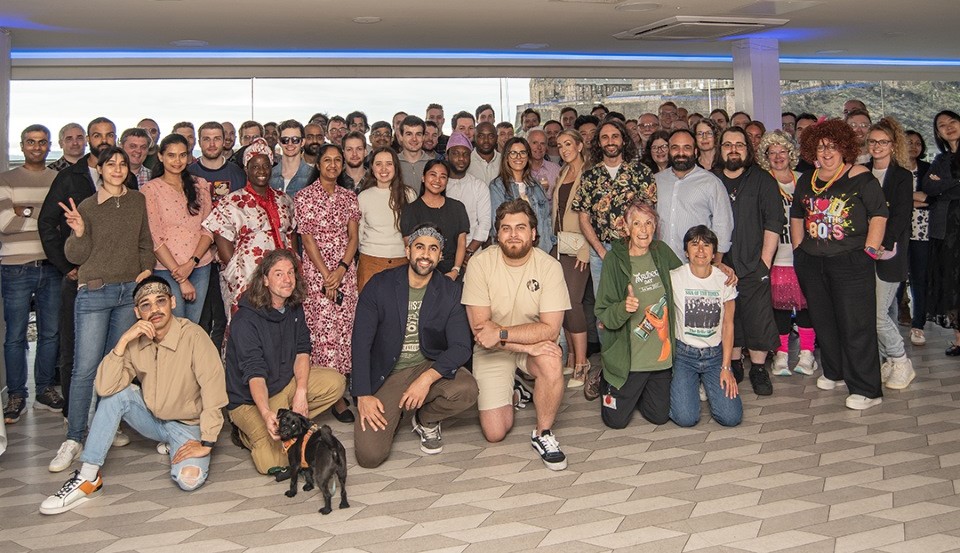
Before I came out, I lived in the United States, near my family, far from where I live now. I had many queer friends but I was never authentic to myself. I hid my gender behind the “acceptable” expectations of clothes and interests that a professional and a mum “should” wear and have. Just a year after moving to Scotland, I came out to myself, and then to everyone in my life. I came out first and foremost to be authentic for my daughter, and as a close second, to be authentic to myself. It meant breaking up our family, because I couldn’t stay married after recognizing myself better. It also meant reaching out to the LGBTQ+ community and finding an incredible network of people, some of whom became close friends and chosen family.
For me, being authentic in my everyday life includes being open and vocal at work. This has brought challenges; I’ve not always felt welcome or safe in all environments. But it enables me to be more intrinsically comfortable in my own skin, it allows me to feel more seen by others and more valid within myself, and it also offers me the opportunity to be visible for those who aren’t able or ready to be out, in everyday life and at work. For me, being out at work can be as simple as joining in conversations with colleagues about my weekend or my plans with my girlfriend, books I’ve read, films I’ve watched, and events I’ve gone to. It can also include advocating for my pronouns to be used accurately. For others, it can mean learning how to access medical coverage needed for their same-sex partner or seeking out a safe path to transitioning in the workplace.

I have heard the argument many times that being queer shouldn’t be discussed at work. But how can we ask people to leave a part of themselves at the door, not to mention their partners or spouses, and forgo workplace benefits when these things are considered normal and expected for straight and cisgender colleagues?
It is true that each of us is much more than just our queer identity: we are people with so many varied interests, political inclinations, cultural backgrounds, family traditions, and spiritual beliefs, and all of these facets of our individual selves make us so much more than being queer. But yet still, our queer identities play a huge role in our lives. It touches and impacts so much of what makes me me. And I have already spent a long enough time masking parts of myself from others and making my real self smaller, at a deep personal cost, and I am not willing to do that in my life at all anymore.
To me, coming out and being out at work is as simple as being able to talk about and be your real self. Not everyone feels comfortable or safe or ready to be their real and full selves openly. The best we can do, both LGBTQ+ people and allies, is to work towards an environment that is safe for those who want to be out.
Creating a safe environment is much more than simply saying we don’t mind if someone is queer. It means being open to learning about others, listening to their experiences, introspecting, and challenging your own assumptions about gender and sexuality, and being willing to challenge the status quo. It doesn’t always require grand gestures, just a little more thought, care and effort from all of us.