
Bias Training: Fostering LGBTQ+ Workplace Inclusion
February 13, 2026
Every year, tech professional teams in cities from San Francisco to Berlin strive to shape more inclusive work cultures, yet unconscious prejudices often slip through even the best hiring or promotion processes. For LGBTQ+ professionals, recognizing and managing these hidden influences is crucial to creating spaces where everyone feels safe and valued. This article unpacks bias training as a practical path to fairer workplace interactions, with real strategies to encourage accountability and genuine respect at every level.
Key Takeaways
What Is Bias Training And How It Works
Bias training is a targeted professional development approach designed to help individuals recognize and mitigate unconscious prejudices that can impact workplace interactions and decision-making. Unconscious bias training provides a structured method for understanding how ingrained societal perspectives unconsciously shape our perceptions and behaviors.
At its core, bias training addresses the subtle yet powerful ways individuals may inadvertently discriminate against colleagues based on characteristics like gender, race, sexual orientation, age, or disability. These trainings go beyond simple awareness, offering practical strategies to interrupt automatic thought patterns and promote more equitable workplace environments.
Effective bias training typically involves several key components:
- Interactive workshops that create safe spaces for honest dialogue
- Self-assessment tools to help participants identify personal biases
- Role-playing scenarios demonstrating real-world bias manifestations
- Data-driven insights about the impact of unconscious prejudice
- Skill-building exercises for interrupting and addressing biased behavior
The ultimate goal of these programs is not to shame participants, but to create a culture of mutual understanding, respect, and proactive inclusion. By helping professionals recognize their blind spots, organizations can create more supportive, innovative, and collaborative work environments that leverage the strengths of diverse talent.
Pro tip: Start your bias training journey with genuine curiosity and openness, recognizing that everyone has unconscious biases and the goal is continuous personal growth.
Types Of Bias Training In Modern Workplaces
Modern workplaces have developed several specialized approaches to bias training, recognizing that a one-size-fits-all strategy is ineffective. Unconscious bias training programs have evolved to address the complex ways prejudice manifests in professional environments, targeting different aspects of workplace interactions and decision-making.
Different types of bias training have emerged to address specific organizational needs and challenges. These specialized approaches help companies create more nuanced and targeted interventions that go beyond generic awareness sessions:
- Recruitment Bias Training: Focuses on eliminating prejudice in hiring processes
- Leadership Development Bias Training: Helps managers recognize and interrupt biased promotion practices
- Microaggression Awareness Training: Identifies subtle forms of workplace discrimination
- Intersectional Bias Training: Explores how multiple identity dimensions interact
- Team Collaboration Bias Training: Improves cross-cultural and cross-identity team dynamics
Anti-bias training programs come in diverse formats, including interactive workshops, lectures, role-playing scenarios, and multimedia presentations. The most effective programs integrate these training methods with broader organizational diversity strategies, ensuring that learning translates into meaningful behavioral change.

Successful bias training goes beyond mere awareness, providing concrete tools and strategies for interrupting unconscious prejudices. By offering participants practical skills and creating systemic accountability, these programs can transform workplace culture and promote genuine inclusivity.
Pro tip: Choose bias training programs that offer measurable outcomes and include follow-up mechanisms to track real behavioral changes in your organization.
Here’s a comparison of key types of bias training and their primary organizational benefits:
Key Features And Methods Used In Bias Training
Bias training employs sophisticated methodologies designed to transform workplace understanding and behavior. Anti-bias training programs utilize a comprehensive approach that goes far beyond traditional diversity workshops, integrating interactive and introspective techniques to create meaningful change.
The most effective bias training methods incorporate multiple strategic approaches to address unconscious prejudice and promote inclusive thinking:
- Interactive Role-Playing: Simulates real-world scenarios to expose hidden biases
- Implicit Association Tests: Measures unconscious attitudes and stereotypes
- Empathy-Building Exercises: Develops deeper understanding of diverse experiences
- Perspective-Taking Activities: Encourages participants to view situations from different viewpoints
- Data-Driven Reflection: Uses statistical insights to challenge ingrained perceptions
Research on bias interventions demonstrates that successful training requires more than awareness—it demands sustained engagement and measurable behavioral change. Effective programs typically include pre- and post-assessments to track participants’ progress in recognizing and mitigating their unconscious biases.
Techniques like storytelling, personal narrative sharing, and structured dialogue help create emotional connections that make bias recognition more impactful. By combining psychological insights with practical skill-building, these training methods aim to transform individual awareness into organizational cultural change.
Pro tip: Design bias training as an ongoing journey of personal growth, not a one-time event, to ensure lasting impact and genuine behavioral transformation.
Best Practices For Implementing Bias Training
Bias training implementation requires a strategic, comprehensive approach that goes beyond superficial awareness. Anti-bias training strategies emphasize the critical importance of systematic, well-planned interventions that are deeply integrated into organizational culture and development processes.
Successful bias training implementation involves several key strategic components:
- Organizational Alignment: Ensure training connects directly to company values and diversity goals
- Leadership Commitment: Secure active support and participation from top management
- Psychological Safety: Create environments where participants feel comfortable exploring difficult topics
- Continuous Measurement: Develop robust tracking mechanisms for behavioral changes
- Customized Content: Tailor training to specific organizational contexts and workforce demographics
Unconscious bias training research suggests that effective implementation requires more than isolated training sessions. Organizations must develop comprehensive strategies that embed bias awareness into recruitment, promotion, and daily workplace interactions.
The most transformative bias training programs view the initiative as an ongoing journey rather than a one-time event. This approach involves creating sustainable mechanisms for dialogue, reflection, and continuous learning that empower employees to recognize and challenge their unconscious biases proactively.
Pro tip: Design bias training as a dynamic, iterative process with built-in feedback loops and opportunities for continuous organizational learning.
Challenges And Common Misconceptions
Bias training faces significant obstacles that can undermine its effectiveness and potential for meaningful change. Anti-bias training programs often encounter complex challenges that extend far beyond simple awareness-building, requiring nuanced and strategic approaches to overcome inherent limitations.
Common misconceptions about bias training include several critical misunderstandings:
- Quick Fix Fallacy: Believing a single training session can eliminate deeply ingrained biases
- Blame and Shame Approach: Focusing on individual guilt rather than constructive learning
- One-Size-Fits-All Mentality: Assuming identical training works for all organizational contexts
- Passive Learning Expectation: Thinking awareness automatically translates to behavioral change
- Permanent Solution Myth: Treating bias training as a completed task rather than an ongoing process
Research on bias intervention strategies reveals that short-term training effectiveness does not guarantee long-term behavioral transformation. Organizations must recognize that bias mitigation is a continuous journey requiring sustained commitment, systemic policy changes, and genuine cultural evolution.
Successful bias training demands a sophisticated understanding that biases are complex psychological patterns deeply rooted in personal experiences and societal conditioning. By approaching these challenges with empathy, patience, and a commitment to genuine learning, organizations can create more meaningful and impactful diversity initiatives.
Pro tip: Treat bias training as an ongoing dialogue and learning process, not a compliance checkbox, to foster authentic organizational growth.
The following table summarizes challenges of bias training and effective solutions for each:
Lasting Impact On LGBTQ+ Workplace Inclusion
Bias training represents a transformative approach to creating more inclusive workplace environments for LGBTQ+ professionals. Workplace diversity research demonstrates that targeted training initiatives can significantly improve organizational culture, employee wellbeing, and professional opportunities for LGBTQ+ individuals.
The lasting impact of comprehensive bias training extends across multiple critical dimensions:
- Psychological Safety: Creating environments where LGBTQ+ employees feel valued and respected
- Career Advancement: Reducing systemic barriers to professional progression
- Organizational Culture: Fostering genuine understanding and empathy
- Talent Retention: Decreasing workplace discrimination and isolation
- Productivity: Enabling employees to bring their authentic selves to work
Successful bias training goes beyond simple awareness, fundamentally reshaping organizational dynamics by challenging ingrained prejudices and creating supportive ecosystems. These initiatives help dismantle invisible barriers that have historically marginalized LGBTQ+ professionals, promoting a more equitable and dynamic workplace environment.
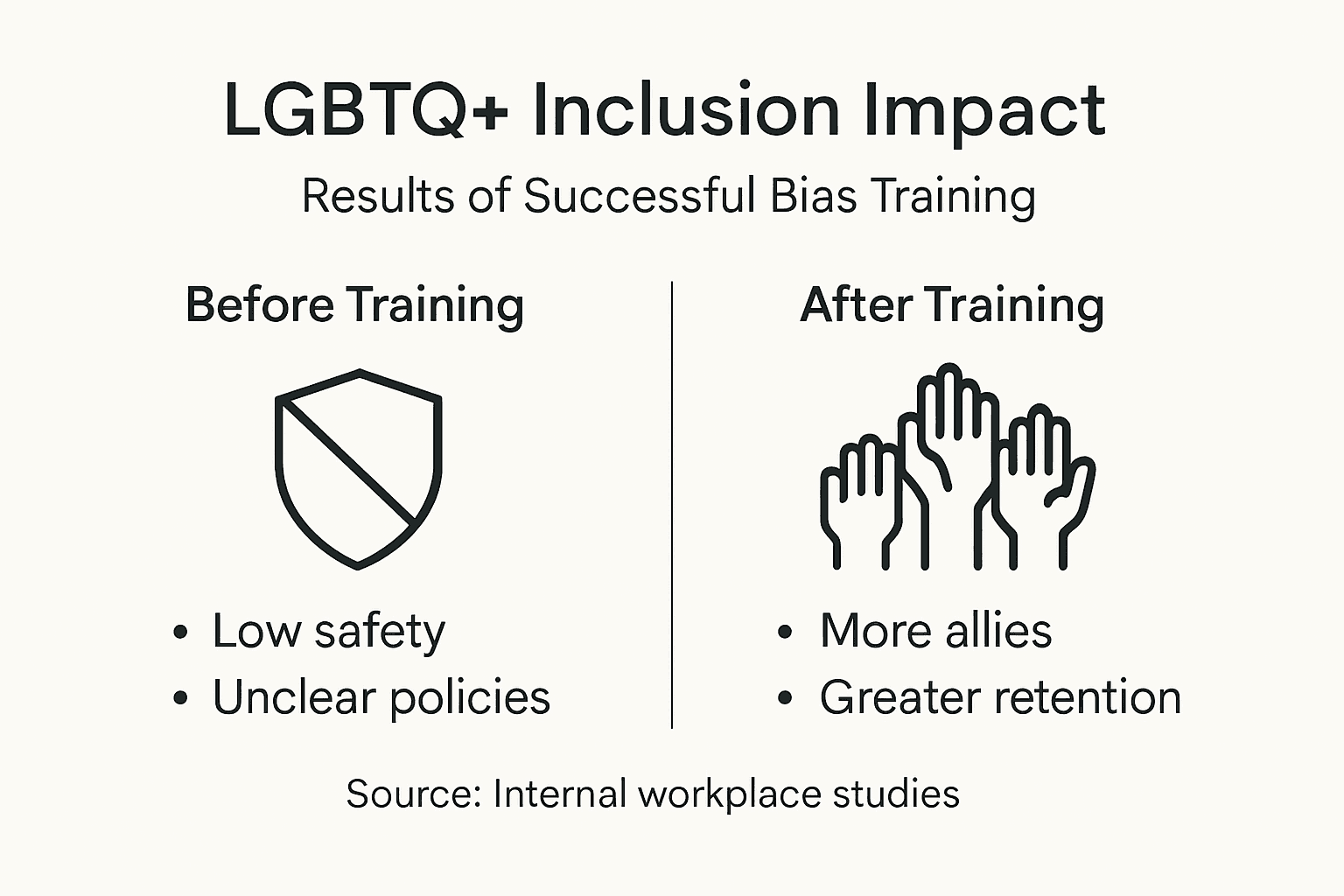
By institutionalizing inclusive practices, organizations can create sustainable change that extends far beyond individual training sessions. This approach transforms workplace culture, demonstrating a genuine commitment to diversity, equity, and genuine professional opportunity for LGBTQ+ talent.
Pro tip: Measure the impact of bias training through longitudinal studies tracking employee satisfaction, retention rates, and promotion opportunities for LGBTQ+ professionals.
Build Inclusive Workplaces and Empower LGBTQ+ Professionals Today
The challenge of overcoming unconscious bias and fostering psychological safety for LGBTQ+ employees requires more than training sessions. It demands ongoing engagement, community support, and real opportunities for career advancement. At mygwork.com, you can connect with a vibrant network of LGBTQ+ professionals and allies who are committed to promoting diversity, equity, and inclusion in every workplace. This platform offers practical resources and a specialized job board designed to help both individuals and organizations break down barriers and create truly inclusive careers.
Take action now by joining a community that champions authentic professional growth and workplace equality. Explore exclusive career opportunities, participate in diversity-driven events, and leverage tools that support continuous learning about bias and inclusion—all in one place. Visit mygwork.com to start building a future where every professional feels respected and valued.
Frequently Asked Questions
What is bias training?
Bias training is a professional development approach aimed at helping individuals recognize and mitigate unconscious biases that affect workplace interactions and decision-making.
How does bias training improve LGBTQ+ workplace inclusion?
Bias training fosters a culture of understanding and empathy, creating psychological safety for LGBTQ+ employees and reducing systemic barriers to their career advancement.
What are the key components of effective bias training?
Effective bias training typically includes interactive workshops, self-assessment tools, role-playing scenarios, and data-driven insights about unconscious prejudice.
Why is continuous measurement important in bias training programs?
Continuous measurement ensures that behavioral changes are tracked over time, allowing organizations to assess the long-term impact of bias training on workplace culture and inclusivity.