
Biden displays AIDS Memorial Quilt on White House lawn
December 5, 2024Joe Biden made history on World AIDS Day last Sunday by becoming the first president of the U.S.A. to display panels of the AIDS Memorial Quilt on the South Lawn of the White House. In their speeches, Biden and others acknowledged the quilt to honour the occasion.
The next day, the Library of Congress announced the release of over 125,000 items, including letters, diaries, photographs, and other materials that document the lives of those represented in the Quilt. These documents will enhance the library’s digitised version of the quilt available online, providing deeper insight into one of the most poignant symbols of the U.S.A. AIDS epidemic.
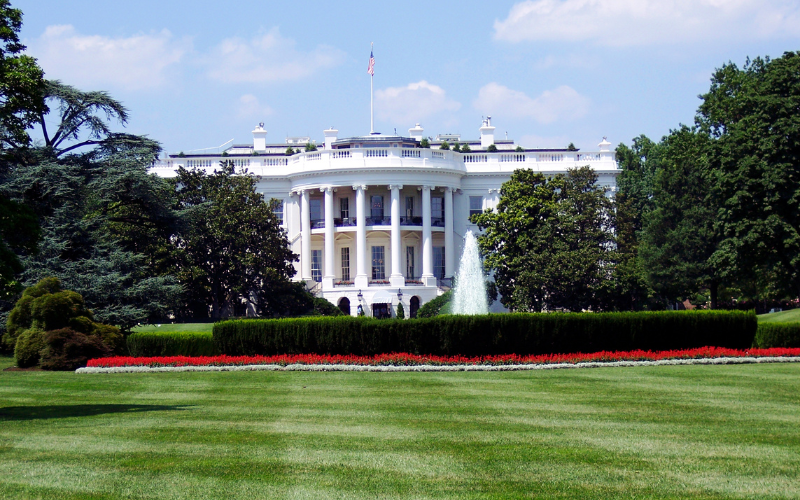
According to ‘LGBTQ Nation’, a total of 124 panels from the quilt were arranged, each adorned with names and symbols that represent individuals who lost their lives to HIV-related illnesses. Additionally, a large red ribbon decorated the southern portico of the White House—this iconic decoration has been a yearly tradition since 2007.
In his speech, Biden noted that the quilt was conceived in 1985 by Cleve Jones and Mike Smith to honour the memory of all those lost to HIV and AIDS.
“It started with one name on one panel nearly four decades ago. And decades later, 50,000 panels and 110,000 names,” Biden said. “This quilt weighs 54 tons, the largest community art project in the entire world, and tells the tragic stories of brothers who died too soon; moms who contracted AIDS at childbirth — her daughter’s life stolen, eventually her own as well; friends and partners who lost loved ones of their lives; and so many more stories of precious lives cut too short.”
“The first threads of this quilt… stitched nearly 40 years ago, this movement is fully woven into the fabric and history of America, shining a light on the memory and the legacy of … [those] who we’ve lost to this terrible disease,” Biden added. “[The quilt’s panels] bring back all the memories. They’re hard. It’s not easy, [but] it’s important.”
On Monday, the Library of Congress revealed the release of its newly digitised collection of AIDS Memorial Quilt records, which include files listing the names of individuals with panels on the quilt.
“A typical panel file contains a letter written by a panel’s maker,” the collection’s website says. “These moving and heartfelt letters often include memories and descriptions of the AIDS victim memorialized on the panel, or explain the maker’s motivations. The files also often contain obituaries, news clippings, and funeral service prayer cards.”
The files also contain photographs and portraits of those who passed away, offering a face and emotional insights into the lives of those honoured and the individuals they left behind. The organised files are labeled to facilitate connections between names, faces, and stories of those lost to the epidemic.
“The digitized AIDS Memorial Quilt Records collection is a major milestone not only in our preservation efforts but also in ensuring that the stories, lives, and collective memory of those lost to the AIDS epidemic remain accessible to future generations around the world,” said Librarian of Congress Carla Hayden.
The digital collection presents the manuscript and still image panel maker records for quilt panels that are more than 25 years old. Records for panels that are less than 25 years old and other media formats are accessible onsite in the Folklife Reading Room.
In her remarks at the White House World AIDS Day event, First Lady Dr. Jill Biden said, “The act of quilting creates a work of art that wraps us up in its beauty. This one was woven together with a grief powerful enough to move the world toward unity, acceptance, compassion, and grace.”
“As I look at this beautiful quilt, with its bright colors,” she added, “the names in big block letters, renderings of lives and loves, I see it as a mom. And I think of the mothers who stitched their pain into a patchworked panel so the world would remember their child not as the victim of a vicious disease but as a son who had played in the high school jazz band, as the child who grew up to proudly serve our nation in uniform, as the daughter whose favorite holiday was Christmas.”
The event also featured a speech by Jeanne White-Ginder, the mother of Ryan White, a haemophiliac who contracted HIV at the age of 13 from a blood transfusion. He drew national attention when he attempted to return to school, facing discrimination from his Indiana community.
He eventually secured his right to attend school and became the national face of public HIV education until his death at age 18. His passing in 1990 led to the creation of a federal program that provides financial assistance for HIV medications.
“[Ryan] taught America we needed to fight AIDS and not the people who have it,” White-Ginder said. “In 1990 … shortly after Ryan died, Senator [Ted] Kennedy (D) asked me if I would come to Washington to explain to senators how vital it was to pass the AIDS bill which had been recently named after my son … the Ryan White CARE Act. He said I was something much more powerful than a lobbyist: I was a mother. I am sure that Dr. Biden can relate.”
“In the 34 years since, that’s exactly what I’ve tried to do, in partnership with the extraordinary community here today that has become my family,” she added.