
Bill Dickinson, Leadership Coach and Author, on Worth, Faith, and LGBTQ+ Leadership
September 24, 2026In this Q&A, myGwork sat down with leadership advisor, coach, and author Bill Dickinson to explore the journey behind his life’s work and his upcoming book, Optimizing Self: Lead Yourself, Know Your Worth.
Bill reflects on coming out later in life after decades in the priesthood, his relationship with his husband Cesar, and what it means to lead from a place of confidence, competence, and credibility.
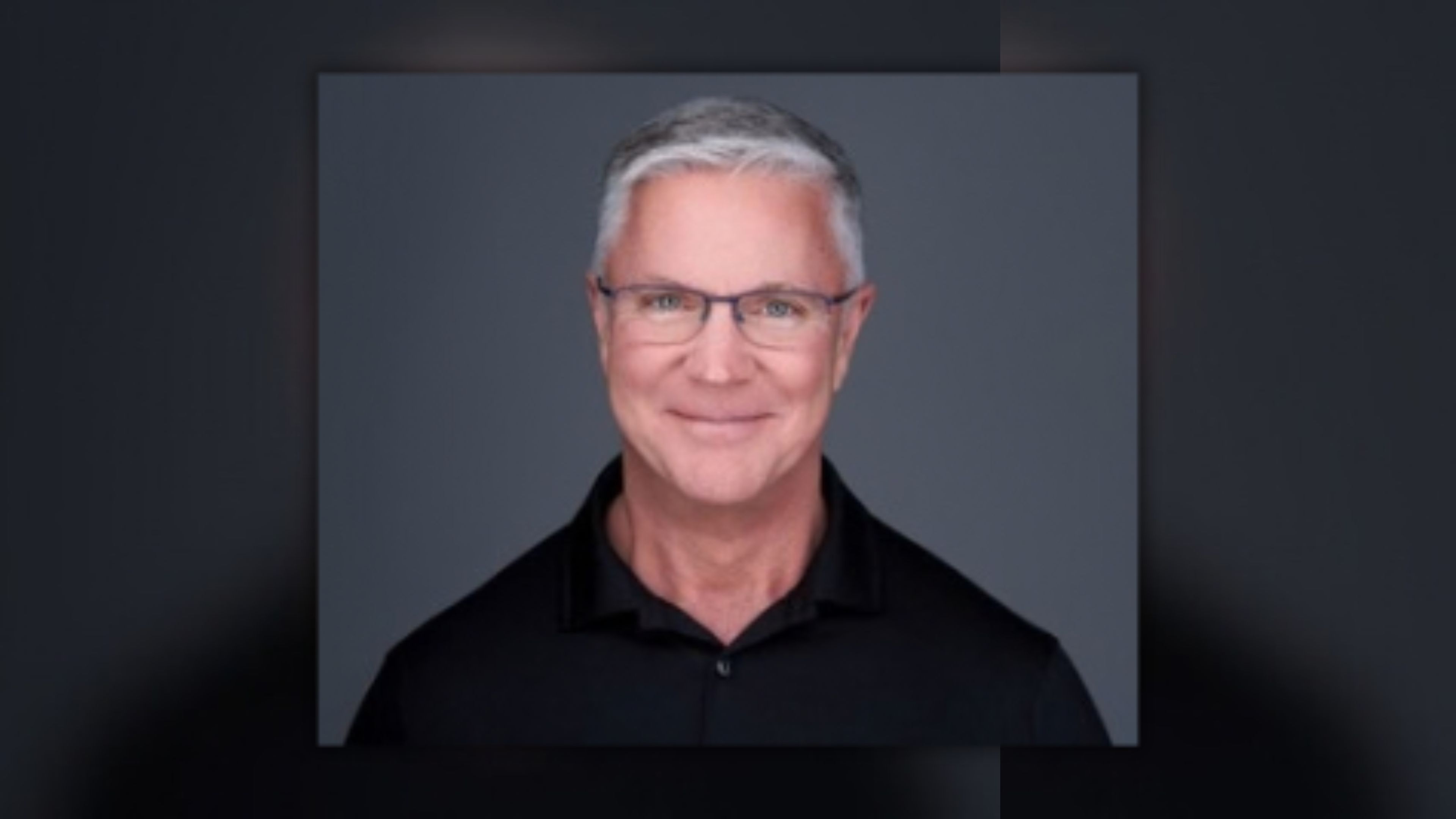
Can you introduce yourself, and your journey leading up to the work you do today as a coach and author?
I am a proud gay man and professional who is entering the early Winter of his life (ie, semi-retirement) with the love of his life, Cesar. I’ve always believed we, as people, seek a form of wholeness that is, too sadly, elusive for most of us. So my journey has been rooted in “I want others to feel valued and loved”; and, in spite of those who may reject us or belittle us. This belief has led me to the place and purpose of both self-awareness and self-leadership. Why? So we can understand and own who we are with dignity and a commitment to overcome stuff that gets in our way. And, this grounds all of my work as a leadership advisor and coach. I also wanted to express this, with real time data, examples, and beliefs in my book. My book gets another to a new place because they spend quality time with themselves (and yes, it may be uncomfortable through the reflections and growth). Finally, although my work is to professionally develop leaders, I know I bring a differentiated value in who I am and my belief in others.
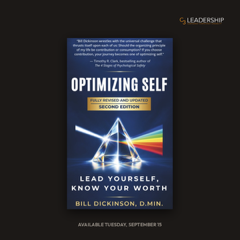
Can you give us an overview of your new upcoming book? What is it about at its core?
It is a self-leadership book for mid-level and senior leaders, built on the framework I have used for more than a decade in my senior leadership development work and coaching practice: confidence, competence, and credibility. The premise is that the hardest person you will ever lead is yourself, and that you cannot lead others well until you can look honestly at your own confidence, your own competence, and the credibility you have earned with the people around you. The second half of the subtitle, know your worth, is the heart of it. Most of the leaders I coach can name their team’s value easily and then go quiet when I ask them to name their own. This edition is substantially revised, with new material on leading with emotional intelligence in a workplace being reshaped by AI, and every chapter is built to be worked rather than only read.
If I had to put the whole book on one line, I would borrow a sentence from the final chapter: we are never finished, we are always, only, still becoming.
What would you say is the biggest highlight of your life or career since coming out, and why that moment?
Two things, and neither one is a single moment. The first is the work. I have evolved as a leader, and what I deliver to clients now is better than anything I was capable of before. I know I am making a real difference for the people I coach, and I no longer wonder whether I belong in the room.
The second is Cesar. I am growing older alongside my husband and more in love with him as I go. I had a beautiful and fulfilling life in the priesthood, serving others, and I would not trade those years for anything. This second half has simply been richer, lived more authentically, with Cesar and within a wonderful and larger LGBTQ+ community that I seem to find wherever I go.
Your book is titled Optimizing Self: Lead Yourself, Know Your Worth. When did you first realize you were still negotiating your own worth?
My worth as a person was settled long before any of this, somewhere deeper than work and grounded in a relationship I still have with my God. When I finally owned that I am gay and decided to come out at fifty-four, after twenty-five years as a Roman Catholic priest, my sense of my own value went up. I appreciated myself more, not less, because I was finally whole in front of people instead of edited. So that was never the negotiation.
What I had to learn was something narrower and more stubborn. I had to learn my professional worth. I left with real leadership competencies and a degree that said so, and still spent a long stretch quietly doubting whether any of it would transfer. Could what I knew about forming people and leading an organization genuinely meet what a business needed, or what another leader sitting across from me needed, once there was no parish around it and no collar to explain me? That is where the negotiation lived. Not in whether I mattered, but in whether what I carried was worth what I was about to ask for it.
The question is open again for me now, as I move toward retirement and ask what I am worth when I am no longer producing. The difference is that this time it is an enjoyable question rather than a frightening one. When the ground underneath you is more or less settled, and at nearly sixty-seven mine is, the professional questions become interesting instead of threatening. That is the whole argument of the book, really.
You talk about LGBTQ+ people often treating their worth as conditional, earned by being useful and never a problem. How have you seen that play out in workplaces and leadership roles?
I think it usually hides inside excellence, which is why it goes unnoticed for years. The person becomes the one who absorbs. They take the unglamorous project, smooth the meeting that was about to go sideways, stay late without being asked, and almost never bring a problem upstairs. From the outside, that reads as a great team member. From the inside it is a running calculation: as long as I am useful and easy, I get to stay. I have coached senior people who could read a room better than anyone in it, because reading rooms was a survival skill long before it was a leadership skill, and who, unfortunately, were the last people in that same room to ask for anything for themselves.
Now, in leadership roles, it shows up as a quiet tax. They underbid their own compensation. They wait to be offered rather than making a case. They hesitate to take an unpopular position, because disagreement feels more expensive for them than it does for their peers. And they mistake being indispensable for being safe, which is a bad trade, because indispensable is a job you have to keep winning. The thing I try to name for them is that usefulness and belonging are not the same thing. Usefulness is a contract you renew every quarter. Belonging is not a contract at all. Let me be clear: we always belong.
How important is LGBTQ+ inclusion in the workplace for you personally, especially given your own journey with faith, identity, and dignity?
It matters to me, though maybe not for the reason people expect. I never needed the Church to confirm my dignity. I knew it, I was not waiting for permission, and I lived a happy twenty-five years as a priest. What shifted in the last few of those years is that I decided to reflect honestly on the truth that I am gay and then act on it, and that was wonderfully liberating. What I carried out of all of it is an eye for a particular arrangement, the one where you are genuinely welcomed and accepted, but on terms, with one part of you left unspoken so the arrangement holds. I was fine inside it because my own ground was settled. Many people are not, and for them the terms do real damage, because granted acceptance can also be withdrawn. That is the difference I care about at work now. Not whether people are tolerated, but whether their worth is understood as already theirs.
I also do not experience faith and identity as opposites, which surprises people who expect the priesthood in my background to sit awkwardly next to this. The conviction that every person carries innate dignity and worth is the most religious thing I believe, and it is exactly why I care how someone is treated in a staff meeting. Practically, I am less interested in whether an organization has a statement and more interested in a small test; for instance, can someone mention their husband on a Monday morning, the way everyone else mentions a spouse, and without running a quick calculation first? When the answer is yes, most of the rest of it is already working. When the answer is no, no amount of policy language fixes it.
Your framework of Confidence, Competence, and Credibility starts with who you are, not what you produce. Which of those three has been the most challenging for you to embrace, and what helped you grow in that area?
Confidence, and by a distance. I could document competence, and I could earn credibility the slow way by keeping promises where people could see me keep them. Confidence was harder because it is the only one of the three that nobody can hand you. When I started out on my own, I had the competencies and the credentials, and I still spent a long stretch wondering whether what I knew would transfer, whether a room full of executives would hear it as substance or as something adjacent to substance. Yes, for me, a form of imposter syndrome.
What moved it was evidence, not encouragement. Encouragement wore off by the parking lot. Evidence stayed. Structured feedback did most of the work, which is part of why assessments and 360s are central to how I coach now: nothing is quite like seeing, in other people’s words, that what you thought was ordinary about you is what they value most. The other half was simply reps. I design and deliver all my own programming, and doing that over and over, whether in front of police chiefs, middle managers, or the most senior of business leaders, builds something no amount of reassurance ever did. I tell leaders now that if they are waiting to feel confident before they act, they have the sequence backward.
On a practical level, what’s one simple habit or method you use to stay self‑aware and emotionally grounded on stressful or busy days?
Sixty seconds before any conversation that matters, I ask myself two questions. What am I actually feeling right now, in one specific word? And what do I want this person to leave with? That is the whole practice. It fits in a hallway or in the pause before my next Zoom call starts. For me, this is invaluable.
The value is also in the precision. Most of us stop at fine or busy or stressed, and those words are too blunt to be useful. When I make myself be exact, the honest answer is often something like rushed, or apprehensive, or protective of something, and naming it that precisely takes most of the charge out of it. It also keeps the feeling from leaking sideways into the conversation, which happens when we walk in carrying something we haven't identified (the art of self-awareness). The second question does the rest. Once I know what I want the other person to leave with, my own state stops being the main character in the room. I really want them to feel listened to, respected, and valued (and, yes, even as I try to close the deal).
If you could give one piece of advice to someone in the LGBTQ+ community who feels they have to keep performing or pretending to be worthy, what would you say to them?
I would say this gently, because I know the habit is old and it kept you safe for a reason. You are not auditioning. The performance was a reasonable response to rooms that, yes, may have required it. And somewhere along the way it stopped being a response and became a default, running in rooms that no longer require anything of the kind. So I would not start by telling you to stop performing. I would start by asking you to notice the difference between the rooms.
Then I would give you something small to try, because insight alone does not change this. Pick one safe place and practice being unedited there. Ask for something you would normally feel you had to earn first. Say the ordinary sentence about your life that you usually route around. Watch what really happens, because it is almost never what the old calculation predicted. And when a room does turn out to be unsafe, hear it accurately: that is information about the room, not a verdict on you.
I will be honest: if a room keeps proving itself that way, I would start preparing to leave it for a better, safer one. Your worth was never the thing being evaluated. It was only ever your usefulness, and those two things were never the same. Again, you have an innate dignity and beauty that no one can ever diminish or even gloss over.