
Breaking Barriers: Magda Stęga on trans visibility, allyship and creating inclusive workplaces
March 31, 2025Rainbow role model Magda Stęga – also a HR Leader, Inclusive Workplace Specialist, and Trans Advocate – talks to myGwork about the vital role of allyship, the power of inclusion, and the importance of trans visibility.
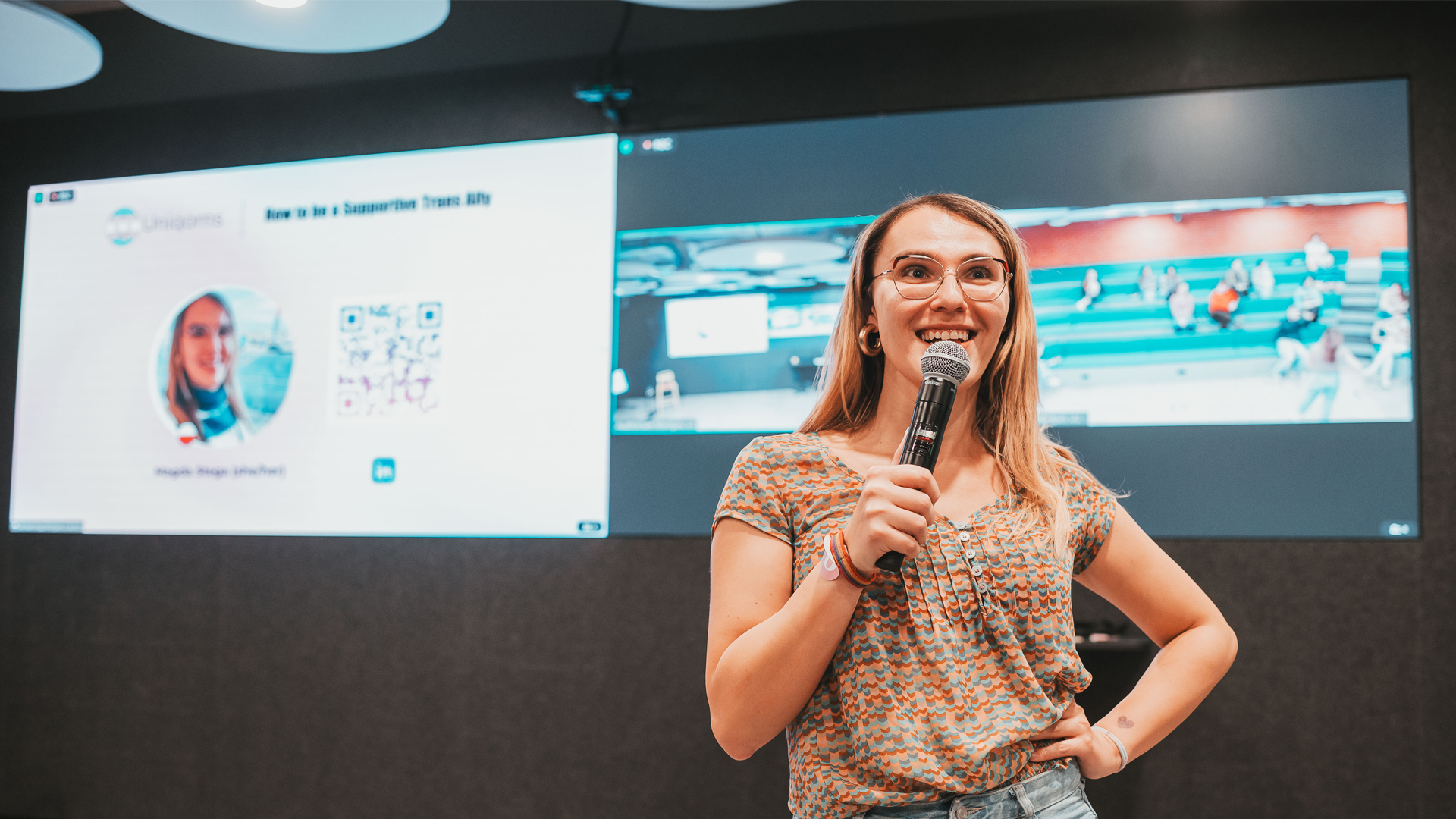
Hi Magda, can you share your career journey and the importance of embracing your true self at work?
My career in HR spans over a decade, focusing on recruitment, employer branding, and leadership. But beyond my professional identity, my personal journey has been one of resilience, self-acceptance, and transformation.
I was born in southern Poland and raised in a deeply Catholic family. Like many trans people, my journey of self-discovery wasn’t straightforward. For 8 years I was expressing and exploring my femininity through crossdressing, but it took me some time, countless challenges and deep self-reflection, to fully recognize and embrace who I am.
A pivotal moment occurred during the COVID-19 pandemic, when I met a woman named Sophie at a gathering in London. So I was there, wearing a dress, wig, high heels, and full makeup. She looked at me and simply said: “You are one of us!”.
That moment sparked deep reflection inside me. Shortly afterward, I began a process of psychotherapy, and after a year, it led me to start my transition. It was a journey of unpacking hidden truths, reclaiming myself, and shedding the shame and fear that had weighed me down for so long. But – believe it or not – it was worth every difficult moment, every painful emotion, and every hour spent in a therapy room. Largely thanks to this, today I stand proudly as a trans woman, using my voice to help others find theirs.
Can you share the importance of trans visibility and why it matters to you?
Events like Trans Awareness Month and Trans Day of Visibility are about more than just recognition – they’re about hope. They create spaces where our stories are heard, where we show that we are just like anyone else – living our lives, pursuing careers, and contributing to society. Each story shared there, is an opportunity to educate and be educated, to challenge misconceptions, and to inspire others who may still be struggling in silence. There are so many people out there without hope! And visibility is what truly helps change that.
During one of my talks, "Speak Up" at Google, I encouraged people to take small actions, emphasizing that small actions can have a big impact on trans community. Small actions, tiny little gestures, and small acts of solidarity truly matter. I also shared this message during my TEDx talk. When I gave a speech at FLINTA event in Zalando, I shared my personal story and highlighted the fact that in order to legally change my personal data under Polish law, I had to sue my own parents as an adult woman. And when speaking at European Parliament, as a person from Central and Eastern Europe, I also pointed out that in the Czech Republic, trans people are required to undergo sterilization, while in Hungary, legal transition is completely impossible. Through my international collaborations, I’ve witnessed first hand how systemic barriers continue to oppress trans people, but also how small, everyday actions, can create meaningful change and foster true inclusion.
Can you share some of the challenges trans people face at work?
One of the biggest struggles trans people face is not being heard. We often encounter laughter, skepticism, or are met with unrealistic expectations regarding norms of femininity or masculinity imposed on us. But on the other hand, many people who can potentially be our allies, hesitate to engage in conversations about inclusivity because they fear getting it wrong.
In my 10 years in HR, I’ve learned that open communication, common empathy and (sometimes radical) honesty, are the most powerful tools for breaking down these barriers. That’s why I created “Ask Me Anything” sessions, where I candidly speak about my transition and answer questions with openness, authenticity and vulnerability. These sessions not only educate and normalize discussions around gender identity, but also provide a space and opportunity for worlds that are sometimes far apart to come together.
Beyond that, small yet impactful actions – like respecting pronouns – can make a world in creating a welcoming workplace. For Ma (the name I used during the first year of my transition), such an approach to pronouns would make an enormous difference on so many levels.
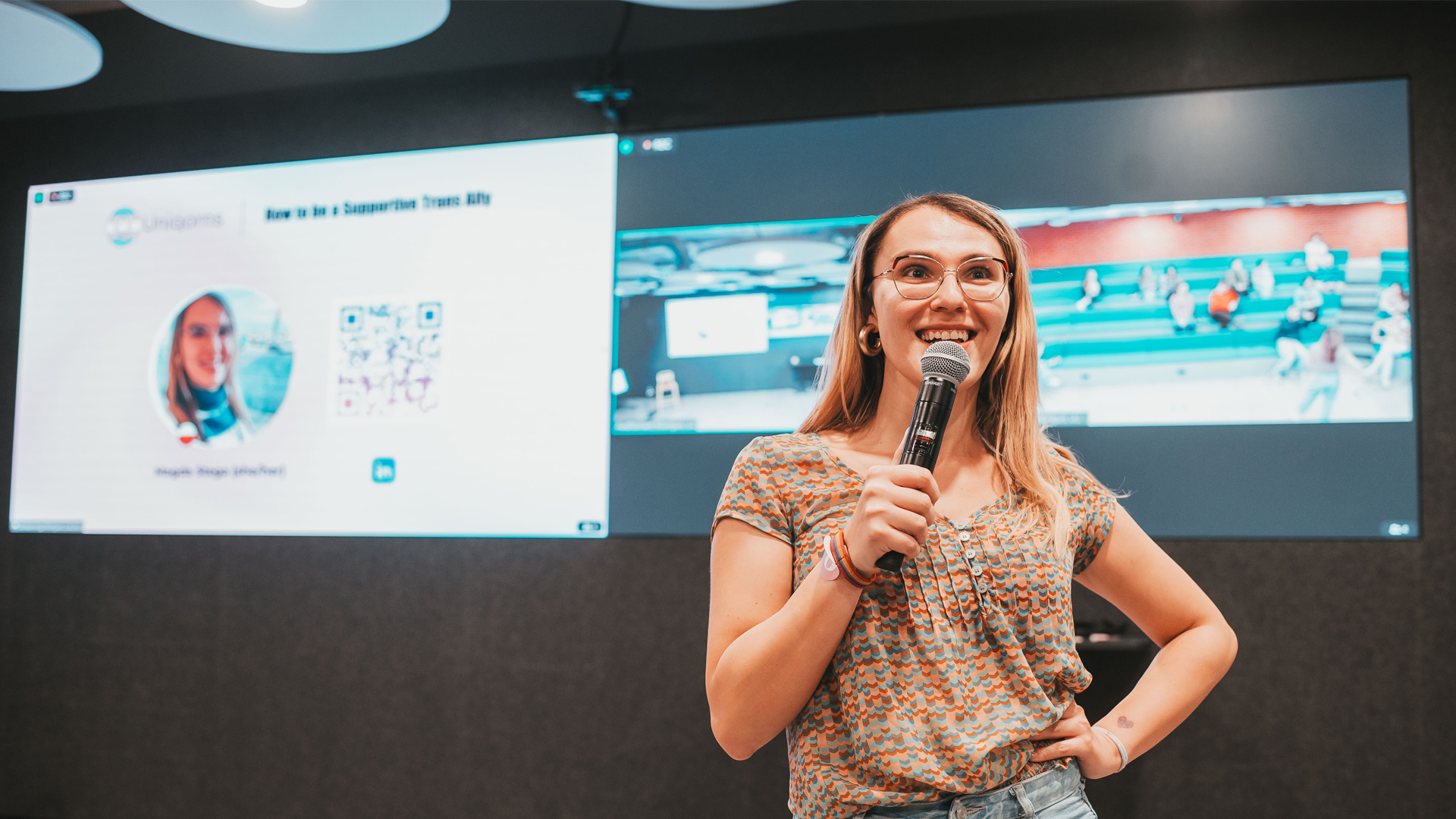
Can you share some of the challenges you have personally faced, such as discrimination and how you’ve navigated through them?
Discrimination is an unfortunate reality for many trans individuals. I’ve faced misgendering, invasive questions, and skepticism about my capabilities. For almost a year, people had been laughing at me – at my chosen name, my pronouns.
Why did they do this? Because they had known me before as a “man” and thought I had lost my mind, gone crazy.So, over time, I’ve learned to channel my energy wisely. Now I focus on those willing to learn, rather than trying to change every mind that is closed. I can’t control others. But I can continue doing my work to make workplaces more inclusive. For those on their own journey – whether transitioning, exploring their identity, or facing professional challenges – I want to say: You are not alone. You really aren’t. Find your support system, whether it’s a friend (like my dear Aleksandra, who helped me a lot and was there for me in my worst, hardest moments, for what I will always be grateful), family member (like my beloved mother!), a therapist, or a community.
Take care of your mental health and physical well-being. I’ve found strength in movement – boxing, yoga, and even just letting out a good scream. Don’t store trauma in your body. Release it, heal, and keep moving forward!
How can allies better support the Trans community?
Allyship is not just about words. It’s about action. Here are some simple yet powerful ways allies can show up for trans colleagues:
- Use pronouns proactively: When people introduce themselves with their pronouns, it creates a safer space for trans individuals to do the same. When I started my transition, I went by ‘Ma’ before settling on Magda. If more people had normalized sharing pronouns, I would have felt less pressure and fear in those early days.
- Practice active listening: Many trans people are dismissed or spoken over. Before asking a question, check in with yourself: Would I be comfortable being asked this? Is this coming from a place of curiosity and respect?
- Create safe spaces: Not every question is appropriate in every setting. It’s essential to ensure that trans employees feel secure before discussing personal aspects of their identity.
- Respect boundaries: It’s not a trans person’s job to educate everyone. Seek out resources, attend workshops, and do your own learning rather than placing the burden on trans colleagues.
In your opinion, how can we work together to build a more inclusive future?
Society must take active steps to combat transphobia. Workplaces can start by implementing inclusive policies, offering education and training, and ensuring that trans employees feel valued and respected. But beyond corporate initiatives, change starts with individuals. Every conversation, every act of allyship, every effort to listen and learn contributes to a world where trans people don’t just survive – we live, laugh, love, and thrive.
So, please, don’t forget, that visibility is power. Let’s use it to build a future where everyone, regardless of gender identity, feels seen, heard, and valued.
Magda Stega is also a myGwork member. You can find out more about her work, and connect with her here.