
Breaking the silence: Yasmin Benoit on redefining asexual activism
September 9, 2025Model, activist, and researcher Yasmin Benoit speaks to myGwork about challenging misconceptions around asexuality and that latest research that is shaping policy and representation.
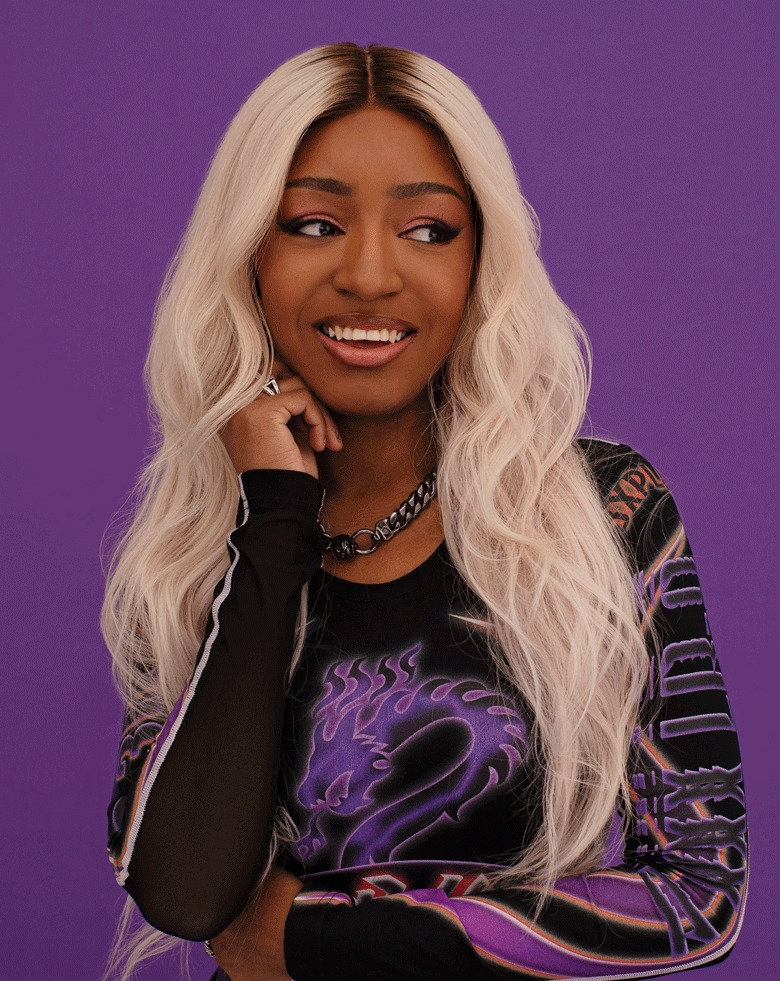
What has been your proudest moment as an activist so far?
In late 2023, I released the UK’s first report into asexual discrimination and experiences, in partnership with Stonewall. It specifically investigated asexual discrimination in the workplace, healthcare and in education. It’s been used to inform political policy, as well as workplace policy, and it’s ignited a lot of discussions around the medicalisation of asexuality in healthcare and psychiatric settings.
What do you think is the most common misconception about asexuality that still persists today?
Probably that asexuality is something that’s ‘wrong’ with you, or that it’s caused by something being ‘wrong’ with you. A lot of people assume that it’s the result of a medical issue, that it’s a trauma response, a bad personality trait, a reflection of anti-sex moral judgements, or even a lifestyle choice. It often leads to people thinking that asexuality is something that can be ‘fixed.’
Could you please tell us more about your work in academia?
I have a two-year Visiting Research Fellowship at King’s College London’s Policy Institute, where we’re conducting research into asexuality. Our first paper looked into public attitudes towards asexuality, we’re working on two more reports simultaneously, while also planning to do what will be my first peer-reviewed paper. It’s really amazing to see such an esteemed institution dedicated time and resources to asexuality, and also to be involved as someone who doesn’t exactly have a traditional research background.
How do your experiences as a Black woman influence how people perceive your asexuality and activism?
Black people are probably the most hypersexualised demographic in the world, so naturally, some have a hard time believing that Black people can be asexual. Asexuality has always been represented by shy, geeky white people, usually white men in their thirties or white girls in their teens. The media and its audience struggled to conceptualise me when I first started doing this, and it’s still an ongoing issue. I’m quite certain that the reason I receive more hate and sexual harassment online than other activists, and it’s also why I wasn’t believe when I did come out. It means that my activism is inherently intersectional, which I think is needed.
If you would like to book Yasmin Benoit as a speaker, please contact [email protected].