
Career Progression for LGBTQ+ Professionals: What Moves It
October 1, 2026
LGBTQ+ professionals advance fastest where they feel safe being themselves, where a sponsor speaks for them in rooms they are not in, and where the employer has shown commitment before the offer is signed. That makes the employer you choose the biggest career decision you make. At myGwork, we connect LGBTQ+ professionals and allies with employers that are actively committed to LGBTQ+ inclusion, so the climate question is answered before you apply.
Key Takeaways
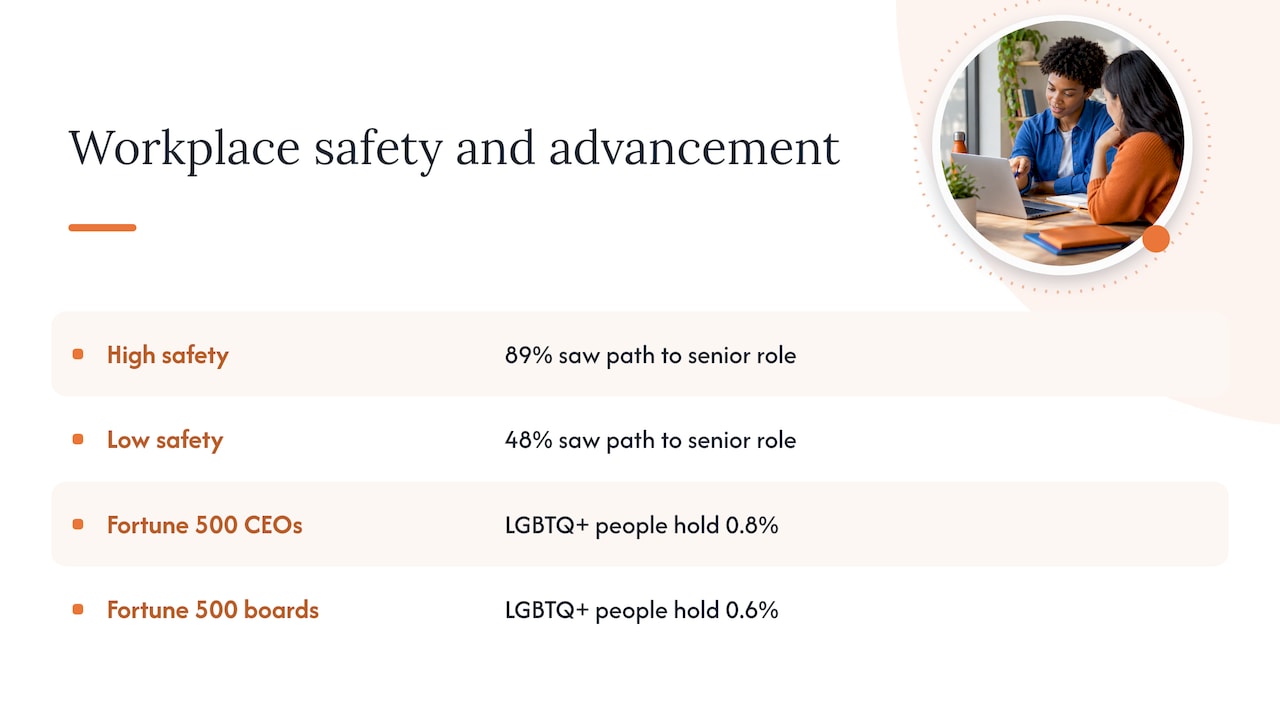
Psychological safety predicts advancement: in EY’s 2024 U.S. survey, 89% of respondents with high safety saw their company as a place to advance, versus 48% with low safety.
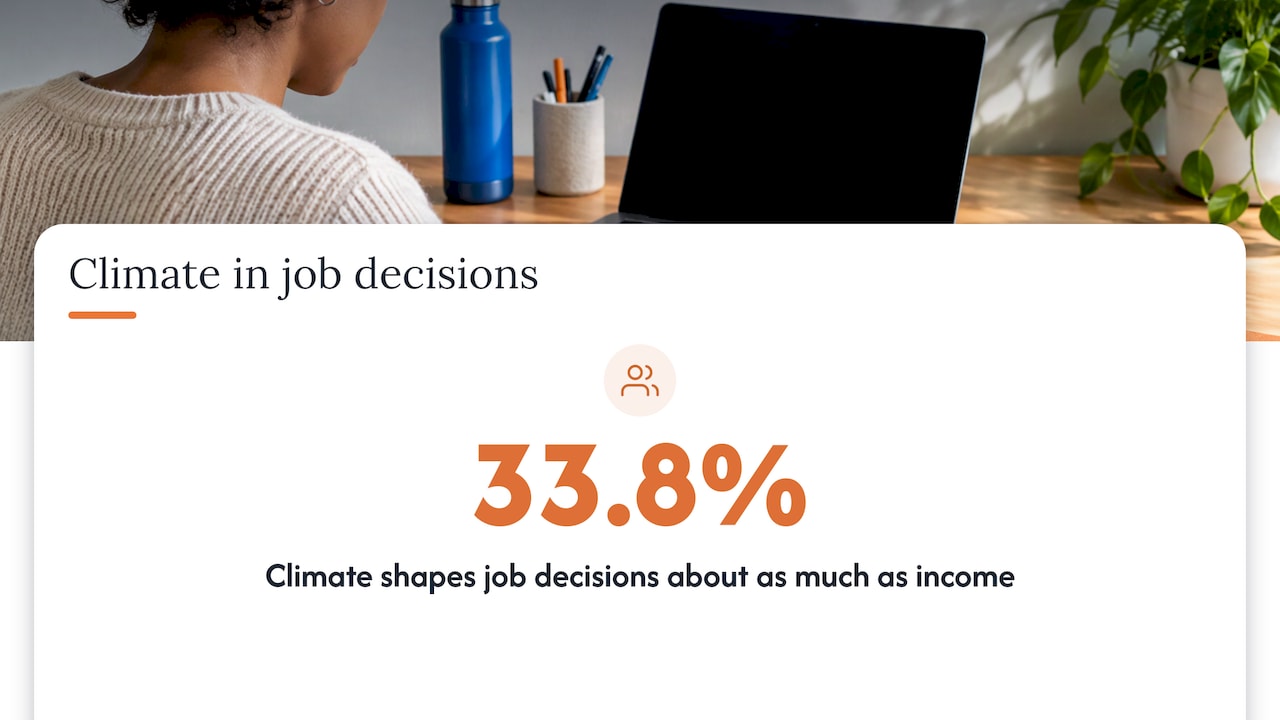
Many LGBTQ+ professionals weigh a friendly work climate about as heavily as income when choosing a job, so screening employers is a career strategy, not a luxury.
Sponsors, mentors and employee resource groups (ERGs) turn a safe workplace into promotions.
Federal protections shifted in 2025, but Bostock still covers promotion and pay; state laws add more.
Employers who want to retain LGBTQ+ talent should celebrate identity, not ignore it.
Why the workplace climate shapes the career path
Career progression is rarely only about skill. It depends on who notices your work, who backs you and whether you spend energy managing how much to disclose.
EY’s 2024 U.S. LGBTQ+ Workplace Barometer found that 89% of respondents with high psychological safety (the feeling that you can speak up and be yourself without penalty) saw their company as a place to advance to a more senior level. Among those with low safety, only 48% did. The same report notes that LGBTQ+ people hold just 0.8% of Fortune 500 CEO roles and 0.6% of board seats, a thin pipeline at the top.
The gap is not the same for everyone. McKinsey’s research on LGBTQ+ workers found that LGBTQ+ women are twice as likely as women overall to be an “only” on their team, and that more than half have experienced sexual harassment during their careers. It also reported that three in 20 LGBTQ+ women believe their sexual orientation will hurt their advancement, compared with six in 20 LGBTQ+ men. Being the only person like you in the room adds stress and performance pressure, which is why representation on your team matters.
Transgender professionals face more. A 2024 peer-reviewed study found that transgender participants generally report more negative workplace experiences than cisgender colleagues.
Climate is part of your compensation
A PLOS One choice experiment of 4,507 respondents (Zindel and de Vries, 2024) found that an LGBTQ±friendly work climate accounted on average for 33.8% of job decisions, comparable to the weight of income. Respondents were willing to trade income, overtime and even promotion prospects for it. The effect was stronger for cisgender women and gender minorities than for cisgender men in the community.
The practical lesson: do not treat a welcoming employer as a bonus after salary and title. Evaluate it first, because it determines whether the salary and title ever grow.
How to read an employer before you apply
The candidate experience starts on the careers page. The Human Rights Campaign (HRC) toolkit on inclusion best practices suggests looking for:
Inclusive language on career pages.
A non-discrimination policy that explicitly names sexual orientation and gender identity.
LGBTQ+ employee resource groups.
Trans-inclusive benefits.
It also suggests asking where the Equal Employment Opportunity (EEO) statement is published and whether employees are told about the company’s nondiscrimination standards.
HRC’s 2026 Corporate Equality Index report adds another signal: highly rated employers show up at events like the Lavender Law Conference and the Reaching Out MBA (ROMBA) Conference and Career Expo. Presence at those events tells candidates that inclusion is part of the culture.
This screening takes time on every employer. On myGwork, the jobs and networking come from corporations committed to LGBTQ+ inclusion, so you begin from a curated list and spend your effort on fit rather than on checking basic safety. If you are comparing tools for the search, our comparison of LGBTQ job search apps lays out the options.
The four moves that turn a safe job into a promotion
1. Find a sponsor, not only a mentor
A mentor advises you. A sponsor advocates for you when promotions and projects are assigned. EY’s barometer recommends leadership development and equitable sponsorship that nurture LGBTQ+ talent early, and McKinsey recommends that companies train managers to be effective sponsors and proactively pair LGBTQ+ women and trans employees with them. If your employer has no such program, ask your manager directly which senior leaders could take that role.
2. Use mentorship programs built around shared experience
Company programs can be concrete. GitLab’s Pride mentorship program pairs participants to build soft skills, connects mentees with mentors who have relevant technical expertise and lists benefits such as visibility with leadership and career coaching. Outside your company, our recap Mentors who matter covers how to build that support, and members can join mentorship programs through myGwork.
3. Join the ERG and take a visible role
Employee resource groups give you access to senior allies and leadership exposure. Volunteering to organize an event or lead a workstream shows leadership in a setting where it is noticed.
4. Build a network outside your employer
Conferences and career expos let you meet recruiters who already signal inclusion. myGwork offers virtual and in-person networking events for LGBTQ+ professionals, students and allies. For industry-specific paths, see our recap on belonging in finance and consulting.
Know your rights in the U.S.
In Bostock v. Clayton County (2020), the Supreme Court held that firing someone for being gay or transgender is sex discrimination under Title VII. The ruling applies to hiring, firing, promotions, pay and other terms of employment at employers with 15 or more employees, and the same source reports that the EEOC’s shifted 2025 priorities do not change it.
Some things did change. A January 2025 executive order revoked express protections for transgender federal employees and for LGBTQ+ employees of federal contractors. The EEOC’s acting chair announced plans to remove gender-identity guidance, and the same report notes that more than half of states prohibit discrimination based on sexual orientation and gender identity. State and local protections remain in effect regardless of federal agency posture, per Epstein Becker Green’s 2026 bulletin.
If you believe you were passed over for a promotion because of who you are, document what happened and speak with an employment attorney in your state, because the protections that apply depend on where you work.
For employers: what keeps LGBTQ+ talent advancing
If you recruit or lead a team, the research points to a short list.
Celebrate identity. The 2024 PMC study found that identity-conscious approaches raise attraction among prospective LGBTQ+ workers and lower turnover intentions among current ones, because they create identity safety.
Reduce the “only” experience. McKinsey advises broadening candidate pools, giving proactive interview feedback, using blind resume screening and funding ERGs with resources for LGBTQ+ women and trans employees.
Say it before the offer. McKinsey’s authors argue companies should highlight LGBTQ+ support so candidates feel safe before they are hired.
Train managers. HRC’s 2026 report notes that common inclusion efforts include new-hire, manager and professional development training covering LGBTQ+ topics.
Keep policies written down. Employers should maintain and consistently follow a policy against workplace discrimination in any form.
Our guides walk through the mechanics: launching LGBTQ hiring initiatives, the recruitment workflow and onboarding steps.
For allies and career services teams
Allies help most through sponsorship, inclusive language and visible support. Career services staff have a clear playbook from the National Career Development Association (NCDA): regular training on LGBTQIA+ issues, private confidential spaces, connections to LGBTQIA+ professionals and mentors, partnerships with inclusive employers for career fairs, guidance on name and gender changes on resumes, preparation for interview questions about gender identity, education on legal rights and alumni networks for mentorship. Our allyship guide shows how to start.
Where myGwork fits
For job seekers, myGwork is free to use for core features: you search jobs with corporations committed to LGBTQ+ inclusion, join networking events and access mentorship. For employers, it is where inclusion becomes visible to the candidates you want. Organizations can choose from plans on our corporate solutions page, build an employer profile and train teams through our Academy on allyship and intersectionality, in person or virtually. We also offer LGBTQ+ talent attraction, employer engagement and an LGBTQ+ inclusive certification for business.
Perspective
Career progression is a safety question before it is a skills question. The data says the same thing from every angle: where people feel safe, they expect to advance, and where they do not, they spend their energy managing risk.
That is why we curate jobs and networking exclusively with corporations actively committed to LGBTQ+ inclusion. A candidate should not have to audit a company’s culture alone, and an employer should not have to hope its commitment is believed. When both sides meet in a community built for this, hiring gets faster and careers get longer.
If you are early in your career, find your sponsor and your network now. If you lead a team, say your commitment out loud and back it with policy.
Adrien
FAQ
Does being out hurt career advancement?
It depends on the workplace. EY found that advancement confidence tracks psychological safety, not identity itself: 89% with high safety versus 48% with low. Choosing an employer with visible inclusion signals is the most reliable way to stay on the high-safety side.
What career resources exist for LGBTQ+ professionals?
Look at inclusive job platforms, ERGs, mentorship programs and conferences such as ROMBA. myGwork combines jobs, networking events and mentorship in one place for professionals, students and allies.
What makes a candidate experience inclusive?
Inclusive career page language, a stated non-discrimination policy covering sexual orientation and gender identity, visible ERGs and trans-inclusive benefits. Interview feedback and blind resume screening also reduce the “only” experience, according to McKinsey.
Are LGBTQ+ workers still protected from discrimination in the U.S.?
Yes. Bostock still holds that Title VII covers sexual orientation and gender identity in promotion and pay at employers with 15 or more employees, and many states add their own protections. For a specific situation, consult an employment attorney in your state.
Sources
Career sacrifice for an LGBTQ*-friendly work environment, PLOS One
Impact of Executive Order Revoking Non-Discrimination Protections, Williams Institute