
Celebrating trans history and looking to the future of LGBTQ+ equality
May 15, 2024Abbie Hooper, MChem Placement Student at AstraZeneca, spoke to myGwork about the importance of trans history, and how allies can better show their support for the trans community moving forward.
Please introduce yourself and describe your role within your organization.
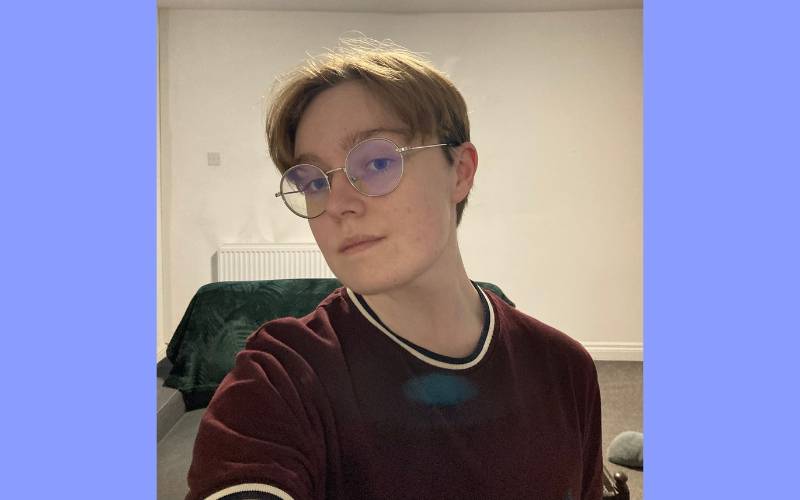
My name is Abbie Hooper (he/they), and I'm currently an MChem Placement Student within Oral Product Development at AstraZeneca, focusing in particular on Material Design in Macclesfield. I'm also a team member in AstraZeneca's Pharmaceutical Technology & Development (PT&D) Pride group, which works to promote inclusion, diversity and allyship within the department.
Can you share with us a significant moment or figure from trans history that has personally inspired or impacted you?
There is an abundance of trans individuals who inspire me, both from history and those advocating for themselves in the world today. Without those who came before me, I wouldn't be able to transition in the ways I have been, nor can I say for certain I would have had the courage to transition at all. As a scientist, Alan L Hart is certainly someone who comes to mind. Alan L Hart was an American physician, radiologist and researcher born in 1890, who pioneered the use of X-ray photography in tuberculosis detection and is credited in saving countless lives. He established Idaho's first fixed-location and mobile TB screening clinics and spearheaded the state's war against TB. Hart's was the first documented transgender male transition in the US, and his story shows the positive impact trans people can have on both healthcare and society as a whole.
How do you think recognizing Trans+ History Week contributes to increased visibility and understanding of the transgender community?
I think knowing our history - whether that's trans history, LGBTQIA+ history, other history of any other group - is vital in understanding the experiences of our community today. Knowing what it was like for someone to transition 40, 50 or 100+ years ago allows us to better understand the challenges that were faced to get to where we are today but also the challenges that are still here. Being visible as a trans person can be empowering at best but dangerous at worst, and to make progress for the future, we need to look at the progress from the past. We have always been here, and we aren't going away.
Have you faced any challenges or obstacles as a transgender professional in your career, and how have you navigated them?
As a transgender person early in my transition, I think the biggest obstacle I currently face is not being seen as myself. Whilst I've had many incredibly positive experiences with colleagues who are aware that I'm trans, I'm still often perceived as a woman to those who meet me for the first time. Being misgendered can be difficult and correcting others (even if they'd react positively) can be even more so. However, whilst if I don't always have the courage to stand up for myself in those moments, I try to work within my organisation to improve visibility and allyship towards the trans community as a whole, encouraging others to stand up for trans people like myself too.
Can you share a personal experience or achievement related to your identity as a transgender professional that you are particularly proud of?
As I think is the case for many in the LGBTQIA+ community, my proudest experience was my coming out. My trans identity is something I have known for about a decade, but I had tried my best to ignore that knowledge to avoid the fears that come with being a transgender person in the world. However, once I started here at AstraZeneca, beginning my professional career, I came to the realisation that I could not continue forward without being honest to myself and those around me. Coming out in both my personal and professional life was a difficult step to take, but my ability to now start to exist as myself has made me incredibly proud of the me that had to take that first leap of faith.
How can allies of the transgender community best show their support and solidarity during Trans+ History Week and beyond?
There are many simple steps allies can take to show their support to the transgender community, some even as simple as using the right words. If someone has told you that they are using a different name or pronoun, integrating these changes into your speech is a small but important way of showing support. If this change is something that they are open about, then it is also important to use the correct name/pronouns when conversing with other people too, not just the person themselves, and to correct others if they get it wrong. In a similar way, sharing your own pronouns (whether in conversation or on social media) is an easy way to open dialogue for someone else to feel comfortable sharing theirs.
But remember - everyone makes mistakes! If you do accidentally use the wrong name, pronouns or word in a conversation, then I would suggest catching yourself, correcting yourself and quickly moving on. In discussions of allyship, everyone starts their learning from somewhere, and it’s generally better to admit you’re unsure, ask questions and be open to learning than to make assumptions or avoid the topic out of fear. A simple way of learning more about the community and the issues we face is to just listen - just as you're doing now with this article!