
Challenging mental health taboos: advice for LGBTQ+ professionals
May 2, 2024Elizabeth Taiwo, Student Recruitment Manager at London Business School, spoke to myGwork about challenging taboos around mental health, and why an organization's attitudes towards mental health can impact an employee's inclination to work there.
Please introduce yourself, your role within your organization and provide a headshot/any relevant photos.
My name is Elizabeth Taiwo and I am a Student Recruitment Manager at London Business School, working to recruit a diverse group of recent graduates for our Graduate Masters Programmes. I also sit on the committee for our PROUD@LBS network for LGBTQ+ staff and allies.
Tell us about something your organization is doing to support good mental health and challenge the taboos on this topic.
A key focus area for the School is wellbeing and work-life balance. There are various ways in which this is supported, from relevant Learning & Development sessions to regular open and honest check ins with your manager and team. We have members of staff who have been trained as confidential advisors as well as a formal wellbeing package which includes a course of counselling sessions.
We also implemented ‘protected time’, a couple of meeting-free hours each week to do with as you wish - whether this is attempting to clear a busy inbox, going for a walk or spending time with family. This mid-week slot gives me a much-needed boost to see out the rest of the week!

Why do you think it’s important to discuss mental health in the workplace?
Whether it’s the personal affecting our work life or vice versa, the interaction between the two play a part in our wellbeing and shouldn’t be ignored. We spend so much of our time at work, so creating a safe space to discuss the impact is not only vital for the individual, but the overall success of the organisation.
Does an organization’s approach to mental health change the likelihood of you wanting to work there?
Absolutely. I’ve learned that my professional life can significantly impact my mental health so it’s important that I’m in a supportive environment, from the colleagues I work with to the policies underpinning the organisation. For example, looking back at life pre-COVID has made me realise just how burned out I was.
As a learned extrovert, the School’s flexible working policy has greatly benefitted my mental health.. If I were to consider a move in the future, the organisation’s approach would be an important factor in my decision making.
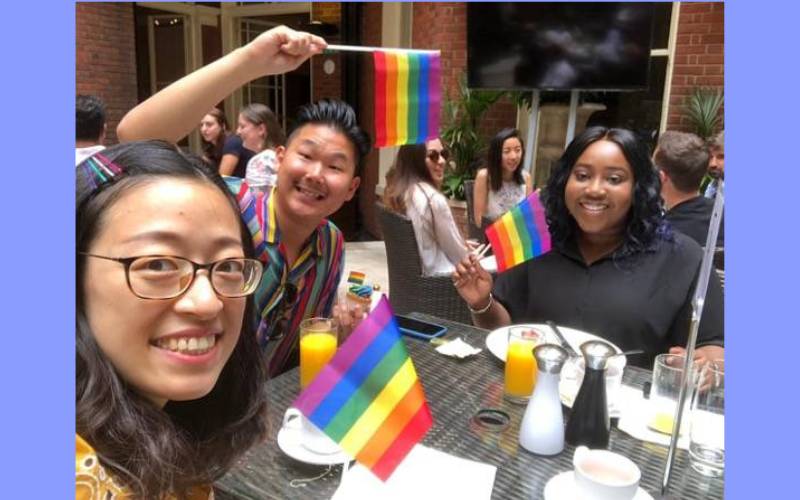
What role do you think an LGBTQ+ network can play in promoting discussions around mental health in the workplace?
Having a dedicated network isn’t enough; first and foremost, it should be a safe place where learning and exchanging experiences is encouraged. It’s also important to recognise that different personalities or stages of acceptance will impact a person’s level of engagement. This is why we make a point to carve out time for sharing in our events, that way someone who may take time to open up will have ample opportunities to speak when ready.
Mental health is another tricky topic for many, so creating a broader welcoming environment should facilitate conversations around this. If the network is open to allies, there may be times where it is appropriate to respectfully limit the attendance of sensitive discussions or events. There is also power in a collective in the workplace and common themes in a professional context can be passed on to members of leadership to consider how they can be addressed by the organisation.
What advice would you give to an LGBTQ+ professional who is struggling with their mental health?
As difficult as it can be, my recommendation is to seek help. Ill mental health, short term or chronic, can be so isolating, but it’s important to remember you aren’t actually alone. Find someone to confide in such as friends and family or a mental health professional. Utilise the resources offered by your employer as many organisations include wellbeing support in their benefits package.
While it might seem daunting at first, I have found moving from informal conversations with my manager and colleagues, to formal processes with my HR department reassuring. Having experienced it now, this is something I would challenge myself to do in a new organisation too, as the potential benefits are worth more to me than avoiding what might be one difficult conversation.