
Championing inclusivity: Steven Naylor on LGBTQ+ history and representation
February 4, 2025In celebration of LGBTQ+ History Month, we take a moment to hear from individuals who play an active role in promoting inclusivity and awareness within their communities and workplaces. Steven Naylor, who works in retail at the Warner Bros Studio Tour London, shares his personal journey as an openly gay man involved in LGBTQ+ advocacy, offering insights into the impact of historical legislation on education and representation.
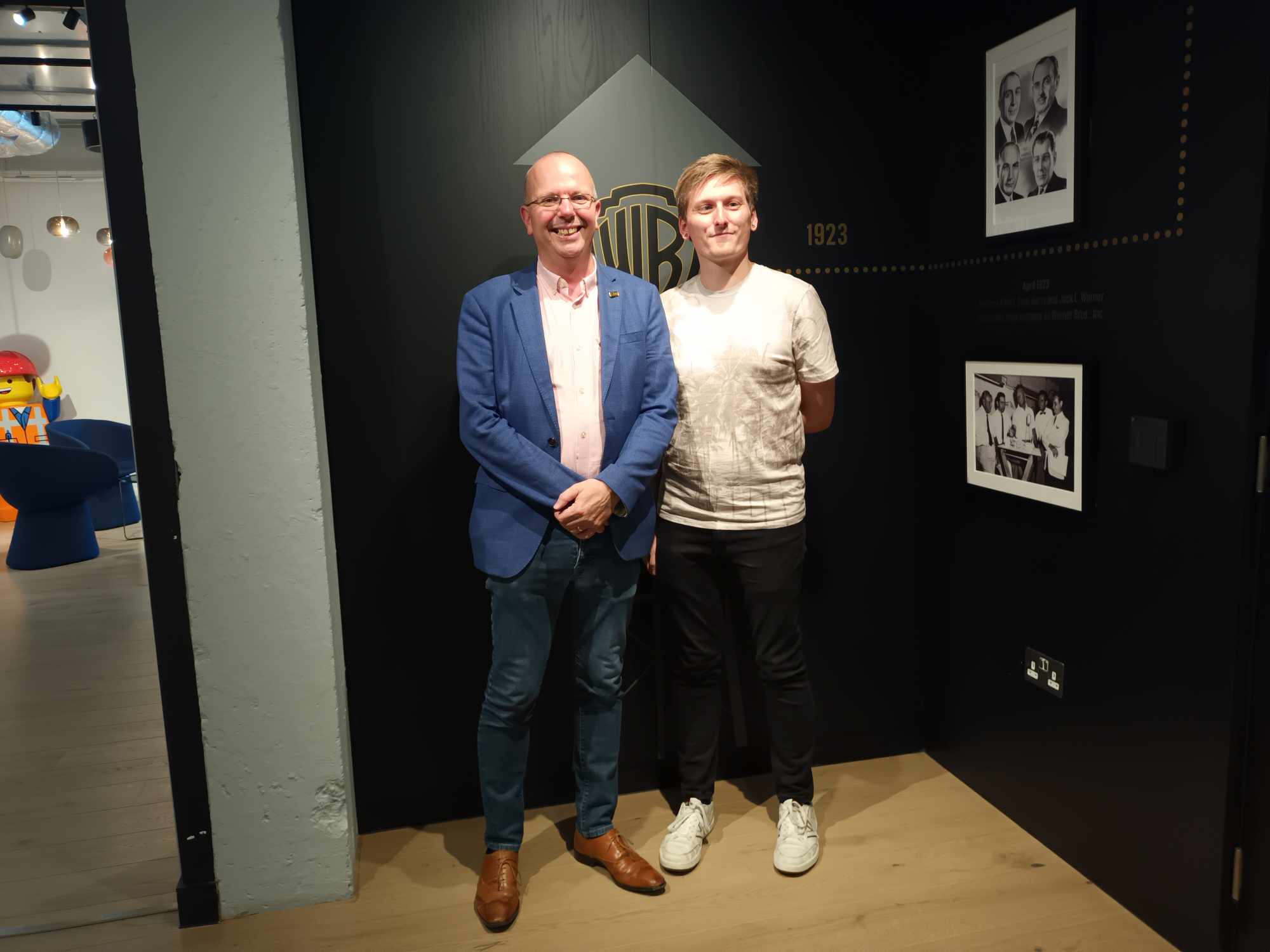
Q: Please tell us a bit about yourself and your role at your company.
A: Hello, my name is Steven Naylor and I work in retail at the Warner Bros Studio Tour London in the UK. I have also been fortunate enough to be heavily involved with our LGBTQ+ Business Resource Groups (Pride) UK chapter, having been a member since 2017 and a board member since 2020. As an openly gay man I feel lucky to be at a company that has a thriving LGBTQ+ network that spans both locally and globally.
Outside of work I’m a bit of a gamer be it console/PC, board games, even Dungeons & Dragons. Games can not only be a welcome distraction but also fantastic for building relationships and logic and critical thinking skills. I enjoy going to the theatre, especially musicals, a bit of a cliché I know, but there is something incredibly powerful being in an auditorium full of people watching a live performance together.
I try to embrace my creative side having played the guitar from the age of 17, I should be much better but finding the time to practice can be hard, it’s still a skill that I’m glad to have gained.
Finally, I love travelling the world with my partner James. Embracing the opportunity to experience different cultures is fantastic for character building and I highly recommend exploring other countries if the chance is there.
Q: Have you celebrated LGBTQ+ History Month before?
A: This is actually my first-time taking part in any aspect of LGBTQ+ History month, which I am very excited about. However, I hope it will not be my last.

Q: Were you taught about LGBTQ+ history in school?
A: I grew up in the UK during a legislation called Section 28 that stated that local authorities throughout the UK “shall not intentionally promote homosexuality or publish material with the intention of promoting homosexuality” or “promote the teaching in any mainland school of the acceptability of homosexuality as a pretended family relationship.” This was in place between May 1988 and November 2003, and I was born in 1991. This means that it wasn’t until September 2004 that there would have legally been any change to the UK curriculum to include any LGBTQ+ topics and even when it was allowed, by this time I was living in a very conservative part of the country so LGBTQ+ subjects were not covered and what little information there was, was either outdated or based on misconceptions.
Q: Do you think LGBTQ+ people are represented in history books enough? Why?
A: I would have to unfortunately say no, I don’t think we are represented very well in history books. I think that currently a lot of the LGBTQ+ representation within mainstream history books skews quite negatively, especially when it comes to covering the AIDs crisis. This could be due to how ostracised the LGBTQ+ community has been over the course of history with both criminalisation and religious prejudice for hundreds, even thousands of years, and as the phrase goes “history is written by the victorious” meaning a lot of what is preserved will be records of what was at the time considered criminal activity. This has resulted in LGBTQ+ representation in modern times being based much more around activism, which is obviously fantastic for us to now have the rights that we have now, but often overshadows LGBTQ+ people’s contribution to the world. Alan Turing is an apt example of this, a fantastic mathematician who helped turn the course of the second world war and who happened to be gay. However, he ended up committing suicide at the age of 41, after being chemically castrated simply for being gay. A tragic end for someone who is widely considered to be the father of theoretical computer science and almost certainly could have given so much more to the world.
Q: What advice would you give someone wanting to learn more about LGBTQ+ history?
A: We live in the information age, utilise the technology around you, use a search engine on topics that interest you and find books on those subjects to read. There are countless YouTube channels, TED Talks and podcasts on LGBTQ+ history, I really recommend listening to podcasts during the commute to work, you can easily listen to 5-10 podcast episodes a week that way and on most music apps you can build a playlist that could alternate between podcasts and music, so you don’t end up with an information overload.
Q: Do you think it’s important for workplaces to celebrate LGBTQ+ history month? Why?
A: I do think it is important that we are able to observe LGBTQ+ history in the workplace, as well as other cultural and historical moments, Black history month, International Woman’s Day, Earth Day, Diwali, to name a few. I believe it is especially important now during an era of DE&I vilification, having companies genuinely embrace these historical and cultural moments creates a stronger company culture, increases staff retention, gives people a sense of pride in the place they work, and “normalises” the existence of people who are not straight, white, cis-gendered heterosexual men, because, at the end of the day we are all normal, some of has just happen to be gay.