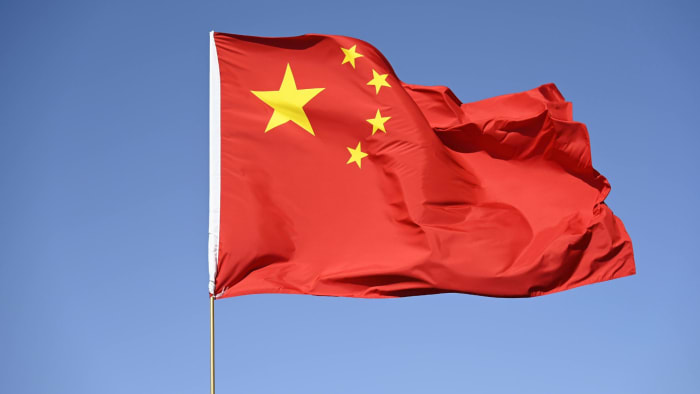
China’s top court issues rare statement on anti-LGBTQ discrimination
May 28, 2026China’s Supreme People’s Court has issued a rare written response acknowledging discrimination based on sexual orientation, gender identity and gender expression, a development that LGBTQ advocates say could support future legal and public advocacy efforts in the country.
The May 8 response came from the Court’s Research Office after a postgraduate student in Qingdao used the official xinfang petition system on March 25 to urge clearer judicial standards against discrimination targeting LGBTQ people. Six weeks later, the Research Office replied in writing, explicitly addressing sexual orientation, gender identity, gender expression, workplace discrimination, public humiliation and school bullying — topics rarely referenced so directly in Chinese judicial documents.
“The opinions and suggestions you raised are of great value,” the translated response states. It notes that, in order to implement the Constitution, the Civil Code, the Employment Promotion Law and related provisions, the Supreme People’s Court has already guided lower courts in handling relevant cases and has “clarified adjudication rules” through typical judgments and other mechanisms.
Washington Blade reports that according to the document, courts may treat public insults, defamation and discriminatory acts aimed at a person’s sexual orientation, gender identity or gender expression as violations of personality rights. The response also indicates that employers who differentiate in hiring, promotion, transfer or dismissal on these grounds may face employment discrimination claims. Schools, it adds, could bear legal responsibility where disciplinary measures or bullying target students because of their sexual orientation, gender identity or gender expression.
The Research Office functions as an internal legal and policy advisory body within the Supreme People’s Court, responsible for researching legal questions, drafting guidance and replying to official inquiries. Its opinions are influential but do not carry the binding effect of a formal judicial interpretation or court ruling.
LGBTQ advocates in China welcomed the statement as a significant institutional reference point, while cautioning against overstating its immediate reach.
“It’s not a systematic change from the authorities recognizing LGBTQ rights,” said Renn Hao, an LGBTQ activist in China. “However, it’s an informal statement from the Supreme Court. According to a scholar researching LGBTQ legal cases in China, courts are recognizing more cases involving LGBTQ discrimination and same-sex partners through their verdicts.”
China removed same-sex sexual relations from the criminal code in 1997 and deleted homosexuality from its list of mental disorders in 2001. Yet same-sex relationships still lack legal recognition, and LGBTQ advocacy remains tightly controlled. Authorities have curtailed public events, community organizing and online campaigns, and content related to sexual minorities is regularly removed from major social media platforms.
This pattern continued after the Supreme People’s Court’s response began circulating. Posts and articles discussing the reply were quickly taken down on several Chinese platforms, activists say, limiting the broader public reach of what many viewed as a notable step forward in official language.
“It may still be too early to fully assess the long-term impact, as this development has only just happened and the situation is still unfolding,” said Xiaogang Wei, a Beijing-based LGBTQ rights activist, filmmaker and founder of the China Rainbow Collective Foundation. “Although the reply is not legally binding, it represents a rare form of institutional acknowledgment of SOGIE-related discrimination in China. For Chinese LGBTQ people and advocates, this could become a meaningful reference point for future legal advocacy, public communication, and community awareness.”
Wei added that the rapid censorship of related content illustrates how insecure LGBTQ visibility remains. “This is why we believe it is important to continue sharing verified information and ensuring that this development is not erased from public understanding,” he said.
In recent years, Chinese courts have gradually heard more LGBTQ-related employment discrimination and family cases, despite the absence of explicit nationwide protections for sexual orientation or gender identity. In 2018, the Supreme People’s Court officially recognized “equal employment rights disputes” as a cause of action, enabling some discrimination cases to move forward. Courts have also addressed cases involving workplace bias, child custody and so-called conversion therapy.
In 2024, a Beijing court drew broad attention by recognizing visitation rights for a child in a case involving a same-sex couple, which activists described as a milestone for LGBTQ families in China. Combined with the Supreme People’s Court Research Office’s latest reply, advocates say these developments indicate a gradual—if uneven—trend toward greater legal acknowledgment of the realities faced by LGBTQ people.
As LGBTQ professionals and allies look for ways to connect, stay informed and support inclusive workplaces globally, platforms like myGwork can help turn legal and social developments into concrete progress: you can stay engaged with stories like this and build supportive professional networks by signing up for myGwork.