
Corporate leadership affirms LGBTQ+ economic value amidst divisive US rhetoric
January 23, 2026In a display of solidarity at the Swiss Alpine resort town of Davos, corporate allies and advocacy groups illuminated venues with rainbow symbols, asserting the indispensable role of LGBTQ+ individuals in the global economy. This initiative, part of the World Economic Forum, delivered a potent message of inclusion, particularly pertinent amidst escalating geopolitical tensions and attempts by some influential figures to marginalize these communities.
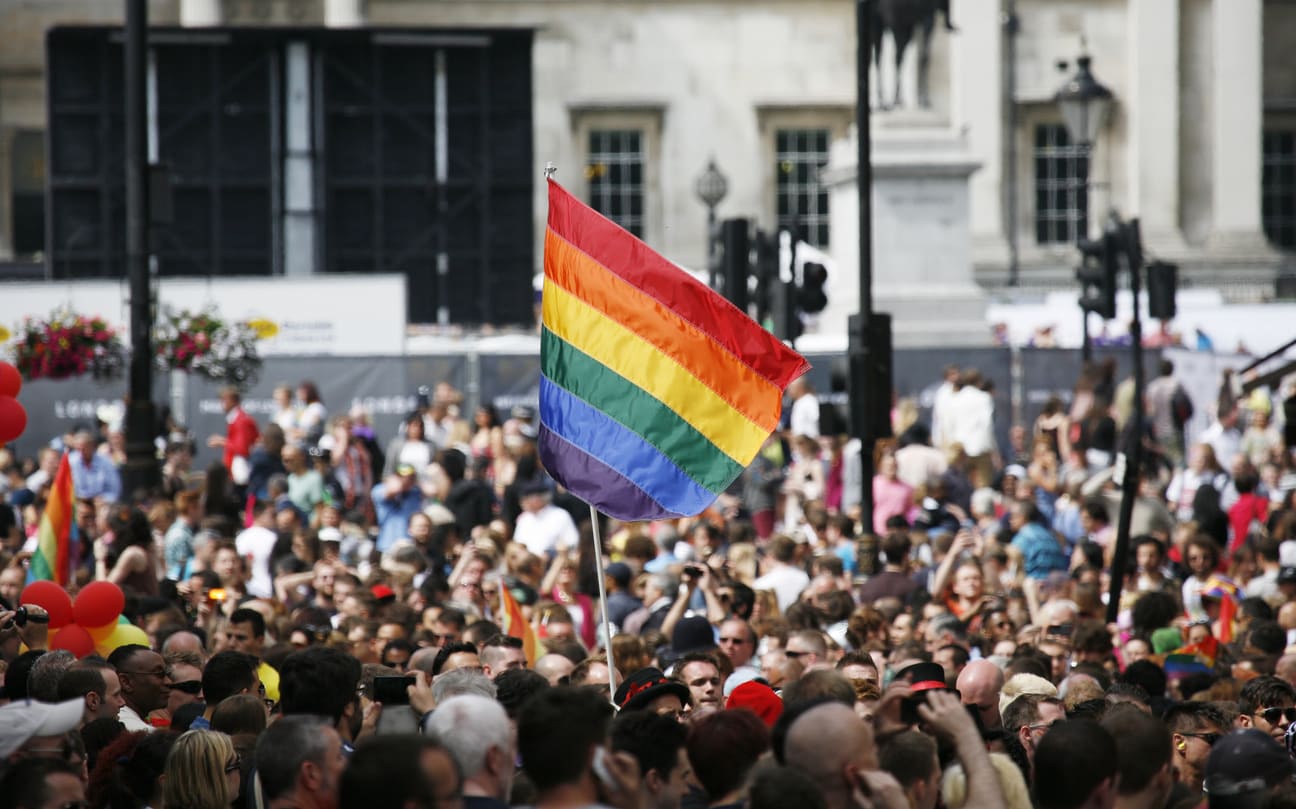
This powerful demonstration marked the fourth annual 'Pride on the Promenade' event, a collaborative effort by GLAAD, Open for Business, and the Partnership for Global LGBTIQ+ Equality. Participating corporations adorned their Davos presences with rainbow lighting, flags, and unequivocal messages of LGBTQ+ affirmation. This visual declaration stood in stark contrast to the fraught geopolitical discourse dominating the forum, notably following former President Donald Trump's critiques of key U.S. allies, Advocate reports.
The profundity of this symbolism was unmistakable. Earlier that day, Mr. Trump, whose previous administration pursued policies widely seen as detrimental to transgender rights, addressed the Davos assembly. His remarks were characterized by a series of unsubstantiated assertions, confrontational rhetoric aimed at international partners, speculative theories, and self-laudatory declarations lacking factual substantiation.
During his address, Mr. Trump proclaimed that inflation in the United States had been "defeated" while concurrently asserting unprecedented economic expansion – an economic paradox that analysts have broadly dismissed. He further asserted that his administration had attracted investments totaling between $18 trillion and $20 trillion, figures that public data does not corroborate. He also characterized the U.S. economy as experiencing the "fastest and most dramatic turnaround in history," while simultaneously denigrating the press and reiterating unfounded claims regarding the integrity of the 2020 election.
The former President's discourse extended to an apparent preoccupation with Greenland, where he indicated renewed ambitions for its acquisition from Denmark, at times seemingly conflating it with Iceland. He suggested imposing economic penalties on Denmark and other NATO member states, depicted European nations as incapable of self-defense, and articulated a vision of U.S. global supremacy as both preordained and deserved. Mr. Trump suggested the U.S. was entitled to the territory due to its military strength and historical protective role, describing Greenland as a "giant piece of ice" critical for global security. He cautioned that a refusal by Denmark to negotiate a transfer could lead to U.S. economic retaliation, implying that American power, rather than international law or the self-determination of Greenland's inhabitants, should dictate its future.
Furthermore, Mr. Trump disseminated inaccuracies regarding the North Atlantic Treaty Organization (NATO), characterizing the alliance as exploitative and questioning the commitment of member states to America’s defense. He stated the United States had derived "nothing" from NATO, suggesting allies would desert America in the event of an attack. This assertion directly contravenes historical precedent; following the September 11, 2001, terrorist attacks, NATO invoked Article 5 of its charter for the sole time in its history, mobilizing allied support including deployments, air patrols, and intelligence assistance in defense of the U.S. Despite this, Mr. Trump continued to present NATO as a unilateral obligation, claiming personal responsibility for preventing its dissolution, and linking U.S. security commitments to potential territorial concessions, including Greenland.
His address also dismissed renewable energy as economically detrimental, erroneously stated China's avoidance of wind power, and included broad, unsubstantiated claims concerning migration and crime. Notably, Mr. Trump declared Washington, D.C., "the safest place" in the U.S. following military intervention – an assertion directly refuted by current crime statistics.
In response to the former President's performance, Democratic U.S. House Minority Leader Hakeem Jeffries of New York expressed profound disappointment, tweeting, "Donald Trump is overseas embarrassing America on the world stage. Again." It was against this backdrop of divisive rhetoric and geopolitical unease that 'Pride on the Promenade' emerged as both a powerful affirmation and a clear rebuke. It underscored a crucial understanding among global business leaders: that their operations are not isolated from societal values, and that ethical principles, alongside economic metrics, fundamentally shape the future.
Ken Janssens, CEO of Open for Business, articulated the initiative's core principle, stating that equality is increasingly recognized not as mere philanthropy but as a vital engine for economic performance. "Inclusion and economic performance belong together," Janssens conveyed to The Advocate. "When people can show up openly and safely, businesses are stronger. That’s the profound message behind the Rainbow Light-Up."
For advocates of LGBTQ+ rights, the timing of this visible initiative was highly significant. With authoritarian narratives escalating worldwide, frequently accompanied by targeting of LGBTQ+ communities, sustained visibility in influential arenas such as Davos has assumed critical urgency.
Sarah Kate Ellis, President and CEO of GLAAD, emphasized the heightened importance of this year's displays. "The colors lighting up the promenade at the World Economic Forum again this year demonstrate essential support for LGBTQ people globally," Ellis remarked to The Advocate. "In an era where long-standing international alliances face unprecedented challenges, the significance of this overt display of solidarity cannot be overstated. Brands that champion shared values of equity and liberty recognize that this commitment positively impacts their financial prosperity."