Courtney Gavitt on Her Journey With Her Identity: “Labels Are Meant to Help You, Not Hurt You”
September 11, 2023"My coming out story isn’t the stereotypical big moment you often see in movies – it happened slowly and with a lot of uncertainty." To mark Bisexual Visibility Month, we spoke to Courtney Gavitt, Senior Marketing Associate at RX Global, about her coming out journey, representation in the media and how her workplace has made her feel supported.
Hi Courtney, thanks for talking to us. Can you share a bit about your role at RX Global?
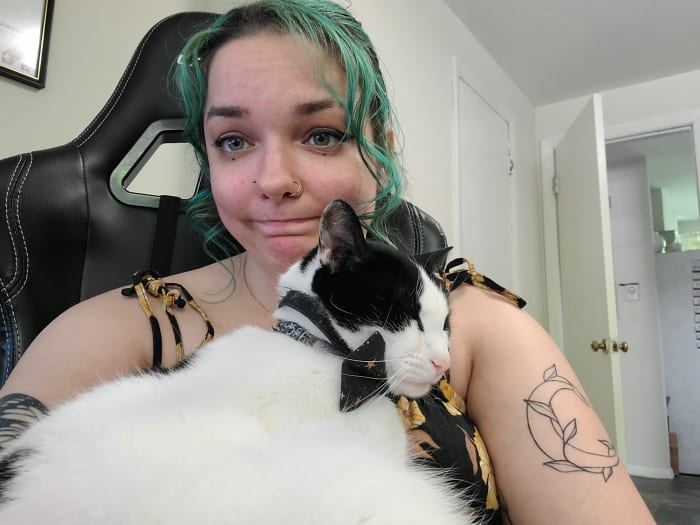
Hi! My name is Courtney Gavitt. I’m a Senior Marketing Associate for RX – so largely, my job is just “Email”. I write and design the communications to get exhibitors and attendees to come to our events!
And what was your journey with coming out?
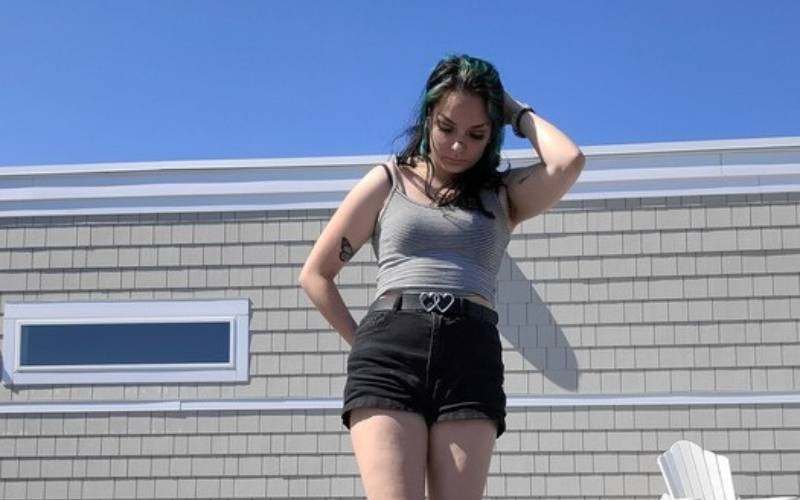
My coming out story isn’t the stereotypical
big moment you often see in movies – it happened slowly and with a lot of
uncertainty. When I first started thinking about my identity in early high
school, I identified as asexual. Basically, I had a romantic interest in
people, but I didn’t experience or understand sexual attraction. Asexuality
comes with its own set of stigmas, and I was afraid of being “broken” and that
no one would ever want to love me because of it.
I felt comfortable enough with the label, but while lying in bed one night, I wondered if I could ever see myself with a girl. Was that the problem, not my presumed asexuality? When I realized the thought was both appealing and exciting, I immediately felt sick to my stomach. It felt like a hole had been ripped through my entire being, and I vividly recall the room spinning as I pulled myself into the fetal position and wished to disappear. I clung harder to the asexual label after that and decided I’d rather be with nobody at all than face the stigma of maybe being gay.
The truth of my bisexual identity came out
slowly and was helped immensely during my senior year of high school when
multiple of my friends came out as part of the LGBTQ+ community. Their bravery,
as well as the communities I’d found on Tumblr, helped reduce my fear in
myself. I went from denying it to stating things like, “I consider myself straight,
but if I were to fall in love with a girl, I wouldn’t limit myself because of
that label. If I fall in love, I fall in love.”
In my first month of college, when a new friend I’d met on my floor confided in me that she was bi, I found myself telling her that I was too. Telling that one person led to another, and that led to another, and I became more comfortable with owning it. All and all, I’m lucky that my journey was met with so much positivity from the people around me.
"From people insistent that I’m lying and am actually gay, to people deciding I don’t deserve to call myself bi because I’m dating a man and am thus “straight-passing,” I’ve heard it all."
What are some of the common myths and misconceptions around bisexuality?
There’s a lot I could touch upon – both
regarding stigma from the general public and stigma from within the community
itself. From people insistent that I’m lying and am actually gay, to people
deciding I don’t deserve to call myself bi because I’m dating a man and am thus
“straight-passing,” I’ve heard it all.
There are also constant debates about various labels within the LGBTQ+ community itself. There’s another term that is less well-known – pansexual – which means you are attracted to all people regardless of gender. With this division, some people have taken offence to the “bi” part of bisexuality and feel the term is inherently transphobic because it implies there are only two genders. It’s very confusing to wake up one morning and suddenly find out half the internet thinks you’re transphobic.
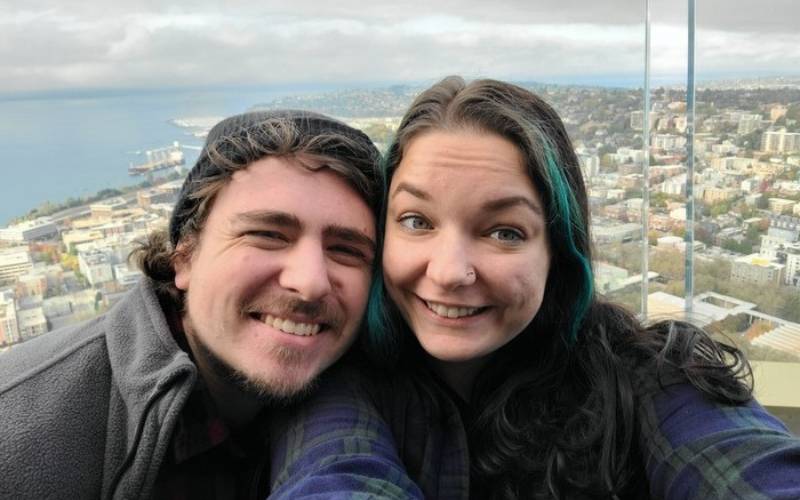
Courtney with her boyfriend
But labels are meant to help you, not hurt you, and a lot of people disregard the infighting and use the two terms interchangeably (or, admittedly, choose the one whose pride flag they like better). Personally, I don’t think “bisexual” means there are only two genders, and I generally think the term is easier to explain to people. I’d rather just tell people I’m bi than have to explain a whole sexuality, as I’ve found a lot of people have never heard of pansexuality.
"Not every LGBTQ+ story needs to be or should be a coming-out story, so I love it when the character’s sexuality isn’t part of the plot – it’s just a part of them."
Have you always been comfortable being out in the workplace?
Surprisingly, yes, and I think the Pride ERG was a big part of that. I remember starting here and immediately seeing Pride Happy Hours on the calendar and deciding I’d go to one. It didn’t even feel like “coming out” in the traditional sense – I just went to the event and was surrounded by people I knew were supportive and who made me feel like I didn’t need to hide.
What does authentic bisexual representation
look like for you?
Bisexual representation in media has always
been important to me, especially because you don’t see a whole lot of it. When
you do, it’s often just pandering to male audiences who like the “taboo” of two
women kissing. That, or it plays off the idea of a character having a “phase”
in college.
Surprisingly, my favorite representation of
bisexual characters in media is when it’s hardly even mentioned. I’m an avid
reader, and I’ve noticed a lot of recently published books have really excelled
in this lately, especially within the fantasy genre. You’ll see quick lines about
how the kingdom’s prince is searching for a husband or wife, or see a male
character casually mention their ex-boyfriend to their current female love
interest.
Not every LGBTQ+ story needs to be or should be a coming-out story, so I love it when the character’s sexuality isn’t part of the plot – it’s just a part of them.