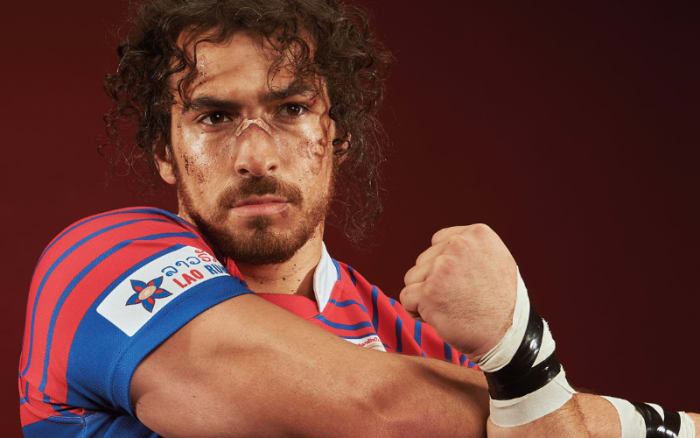
Devin Ibanez on LGBTQ+ Inclusion in Sport: “Allies Should Be the Ones Who Are Pushing for Change”
March 20, 2023There is nothing like sports to bring people together and create community; however, at the same time, the sports industry does not have a great track record of inclusion. When it comes to LGBTQ+ equality, sports teams, leagues, and athletes need to be included in the roadmap to creating a world where everyone feels safe and respected wholly as they are.
Devin Ibañez, Customer Success Manager at myGwork and America’s first openly gay major league rugby player, shares his experiences coming out publicly and what can be done to ensure rugby is truly a game for everyone.
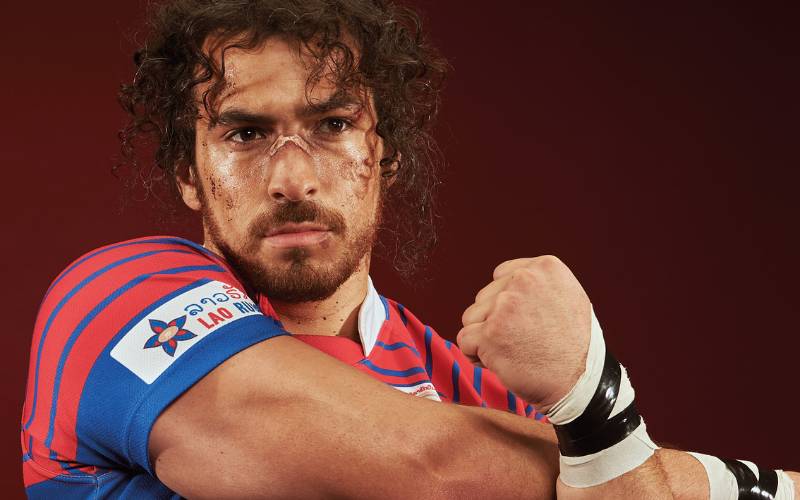
Attitude Magazine, Photographer: Anthony Grassetti Hair & Makeup: Erica Gomes
Hi Devin, thanks for chatting with us. Can you tell us a bit about yourself?
My name is Devin Ibanez, and my pronouns are he/him. A little background about myself: I am a customer success manager at myGwork, and I started working with myGwork after I came out publicly in 2020. So, I came out publicly as the first ever openly gay Major League rugby player in the US. That led to me doing speaking engagements, sitting on panels for WorkPride and then going on to hosting panels too. Now, I’m full-time with myGwork, having moved across the world, from Boston to London, and I’m based here with my partner Fergus.
Can you share a bit about your rugby journey with us?
As I mentioned, in 2020, I came out publicly and was the first openly gay professional player in the US. But before that, I had been playing for over ten years. I was captain of my high school program at Brookline high school, and I was also captain of my university program. Then I went on to play semiprofessionally in Australia and New Zealand, which led to me representing the USA in 2017 at the World Maccabiah games, where I won gold with them.
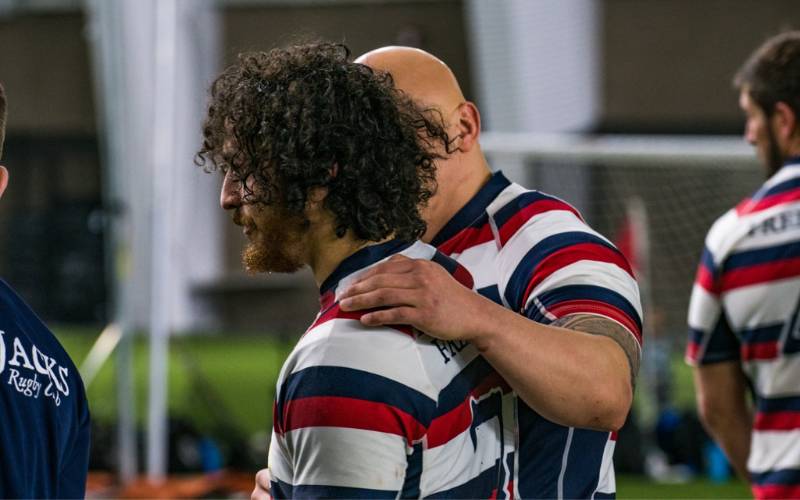
After that, I moved back to Boston, and in 2018, I won a division one national championship with my club Team Mystic River rugby. This led to me signing a contract and coming out publicly, and now I’m playing for Richmond rugby in London - still living the rugby dream as long as possible.
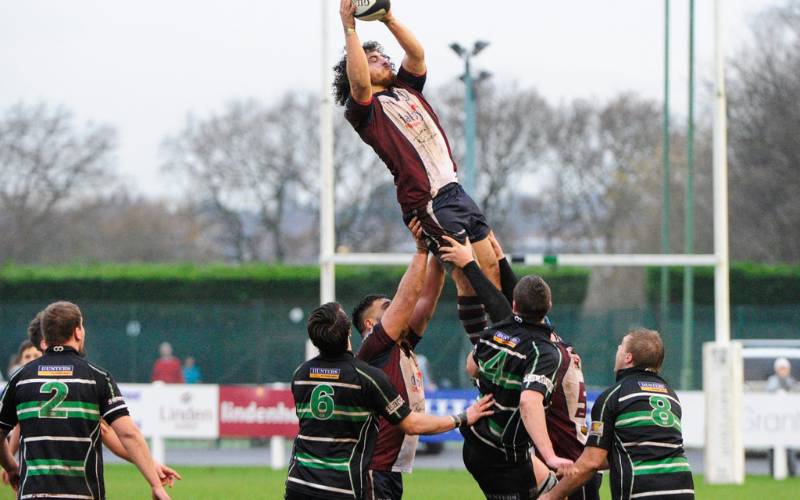
Photographer: Andy Standing
Do you have a favourite moment from your sporting career?
Definitely winning the World Maccabiah games in 2017. That was really cool. It was something I had initially tried out for in 2013 when I was 19 years old. I was one of the last players not to make the team. I was absolutely devastated. Fast forward to four years later, and I was one of the first players selected. We went on to make the gold medal final against South Africa, we were heavy underdogs, but we went on to upset South Africa by winning the gold medal for the first time in 20 years for the USA.
So that was probably my biggest highlight moment where I went from not even being a team member to turning it around and being one of the main contributors to winning gold four years later.
What helped you decide it was the right time to come out?
There were several sparks - it was something I wanted to do for a while but just put off. I came out at the very end of December 2020, right in the heart of the pandemic. I’d been separated from my partner for several months because of the travel bans. He was living in London, and I was living in Boston. I couldn’t play rugby anymore because everything was cancelled entirely. I’d been recovering from an injury, so I hadn’t had a chance to play in around a year. And then, to top it all off, my cousin was living with us during the pandemic, and he had a puppy named Ruby. One night when I went to training, I came back and found out Ruby had a massive seizure when she was taken for a walk and passed away.
I was just absolutely devastated because that was my last support system. I just completely shut down. There were weeks of struggling to get the motivation to get out of bed and just do basic tasks. So, I sat down and created this checklist of things that I needed to do daily just to function and make my life better. And then some longer-term goals – things that I knew were in my control that I could do to improve my life, and one of those was coming out publicly. After three or four weeks of being super depressed and not wanting to do anything, I saw coming out on the list, and I just decided to go for it. I wrote a post during my lunch break at work, and I just sent it out and never looked back.
What are some challenges you’ve faced as an LGBTQ+ player?
Before I came out, I think the biggest issue was that some of the club teams and my coaches were not inclusive at all. Particularly with their language, and they would say overtly homophobic things and make homophobic jokes that were just in very poor taste. So, I think one of the biggest challenges I always had was trying to separate the person from the coach and get everything I could from a rugby standpoint while disregarding everything they had to say from a personal standpoint. And I was able to do that and get something out of it. I think that took a very big toll on my mental health though. I had moments when I really wanted to quit rugby – not because I wasn’t enjoying playing or anything to do with the sport, but because I knew I shouldn’t have to deal with this. I shouldn’t have to deal with people in leadership positions just being absolutely awful.
And after I came out, there was more of a different challenge; everybody was incredibly supportive and vocally was very happy for me. But some of these people were the same people who, when I wasn’t out, were saying things that were not very inclusive. And so it became difficult for me to reconcile – their words, not necessarily matching up with their actions over the years.
That made it very difficult for me, and then also I was just starting to navigate how public do I be with this in terms of PDA when I bring my partner to a game and also just questioning in general, ‘When I introduce myself, do I tell them straight away that I’m openly gay?’ For example, if I approach a new team, is this something I should mention? But I’d say overall, it was a bigger issue before I came out in terms of just how it impacted me.
What do you think needs to change to create better inclusion in sports?
One of the biggest issues right now is getting people’s actions and behaviors to match their intent. I think there are a lot of organizations that brand themselves as this incredibly inclusive sport that anybody can play. And I think that they tend to just say that about themselves without actually thinking, ‘What steps are we taking to make that a reality?’
For example, taking a stronger stance on the language players use in training environments and committing to training around LGBTQ+ inclusion for coaches. It’s about asking what language will make your environment more inclusive. What are strategies you can do to attract LGBTQ+ athletes? I think that right now, it’s just very much an afterthought. And I think that since so much of rugby is centered around what makes straight cis men comfortable, they often lose sight of how marginalized groups feel in the same exact environment.
What is the role of allies in creating more inclusive sports teams?
Allies should be the ones who are pushing for change. It shouldn’t be on me to stand up in front of an entire group of my peers and explain exactly how I’m impacted by certain words or actions.
It really is on allies to take a proactive role and make sure that they’re educating themselves and thinking about things that will make others comfortable that maybe they haven’t otherwise thought of. If you can create changes in your environment in a way that will almost surprise somebody who comes into the space with how inclusive it is, that’s an incredible thing to shoot for. I think it’s just not an approach that many people have, especially in a sport. It tends to be that they address things as they come up, such as if they have a player from a specific demographic representative on their team, but that’s not good enough.
I think the biggest responsibility is around people educating themselves and taking the initiative, and not waiting for something to come up to make it urgent before they start
changing their behaviors and environments to make them inclusive.
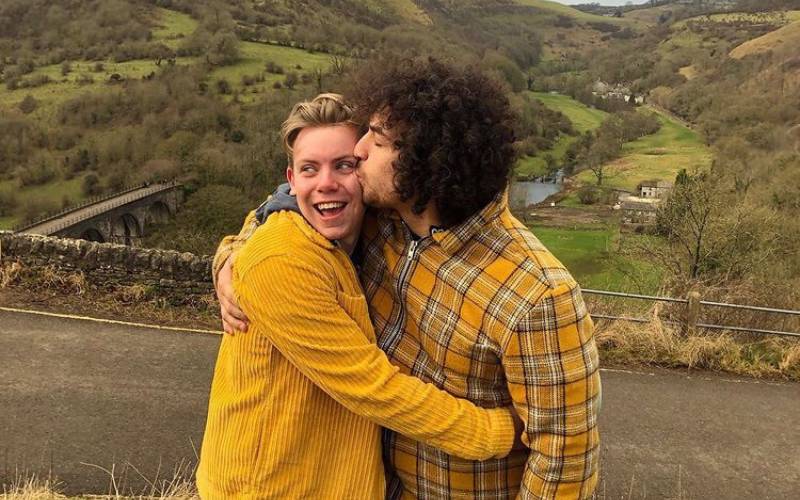
Devin and his partner, Fergus
Do you have any advice for young LGBTQ+ sports players?
I can only speak to my own experience, but what I found the most helpful was taking my journey at my own pace. Coming out at the age of 26 publicly, as I did, is considered late for most people, yet simultaneously earlier than when a lot of other people would feel comfortable coming out. So, I think one critical thing for me was never feeling like I had a specific timeline I needed to adhere to.
I will say that I definitely wish I had come out a little bit earlier. But one thing I really appreciate about how I handled my journey is that I waited until I decided it was the best thing for me. Getting to the point where you can just focus on what’s best for you and not take into account other people’s perceptions or opinions is really valuable.
What would you say is the most important aspect of sports to you?
The thing that originally drew me to rugby was the ability to express myself, think critically, be active, and use the creative part of my mind in a way where I can problem solve - I can be among the chaos and decide based on my judgement in the moment, what is the best thing to do. I think that’s what I always loved about rugby was just a chance to have a physical outlet, as well as this creative outlet. And I think that that’s something that’s just so incredibly important for any person. Not everybody’s creative or physical outlet is going to be rugby - I fully understand and acknowledge that - but every single kid and every person has a sport they can benefit from in some way, just to have that physical expression, as well as that sense of community.
In the end, the people I’ve met through rugby – all around the world – have been what is most important to me. It isn’t being able to play at a high level or winning a gold medal. Sure, those have been incredible things that have come out of it, but the thing that drew me in and kept me playing was the people, the way that rugby has allowed me to express myself, and how it has helped me grow as a person.