
Disability in the Workplace: Inclusive Tech Careers
January 28, 2026Facing both visible and invisible barriers at work can feel isolating, especially when your identity intersects as an LGBTQ+ professional with a disability. The constant challenge to prove your value while navigating bias and inaccessibility makes a truly inclusive tech workplace more than just a goal, it becomes a necessity. By understanding the dynamic interaction between health, environment, and identity, you gain powerful insights into how modern workplaces can truly support, empower, and celebrate your contributions on a global scale.

Defining Disability in the Modern Workplace
Disability represents a complex, dynamic interaction between individual health conditions and workplace environments. Modern workplace definitions recognize disability not as an individual medical limitation, but as a contextual experience shaped by societal barriers and systemic practices.

Understanding disability requires moving beyond traditional medical models to recognize the diverse ways individuals navigate professional spaces. Some disabilities are visible, while others remain invisible. This spectrum includes physical, sensory, cognitive, and neurological differences that impact how professionals engage with work environments. Inclusive workplace practices emphasize accommodating these differences rather than treating them as obstacles.
Key characteristics of modern disability understanding include recognizing that disability is:
- A natural part of human diversity
- Situational and contextual
- Influenced by environmental design
- Unique to each individual’s experience
Workplace disability frameworks now prioritize understanding individual strengths, providing adaptive technologies, and creating environments where neurodiversity and different physical abilities are viewed as valuable perspectives rather than limitations.
Pro tip: Approach workplace disability conversations with curiosity and respect, focusing on an individual’s capabilities rather than perceived constraints.
Types of Disabilities and Unique Barriers
Disabilities manifest across a diverse spectrum, challenging traditional workplace assumptions about ability and performance. Workplace disability research reveals complex interactions between different disability types and professional environments, demonstrating that no single experience represents the totality of disability.
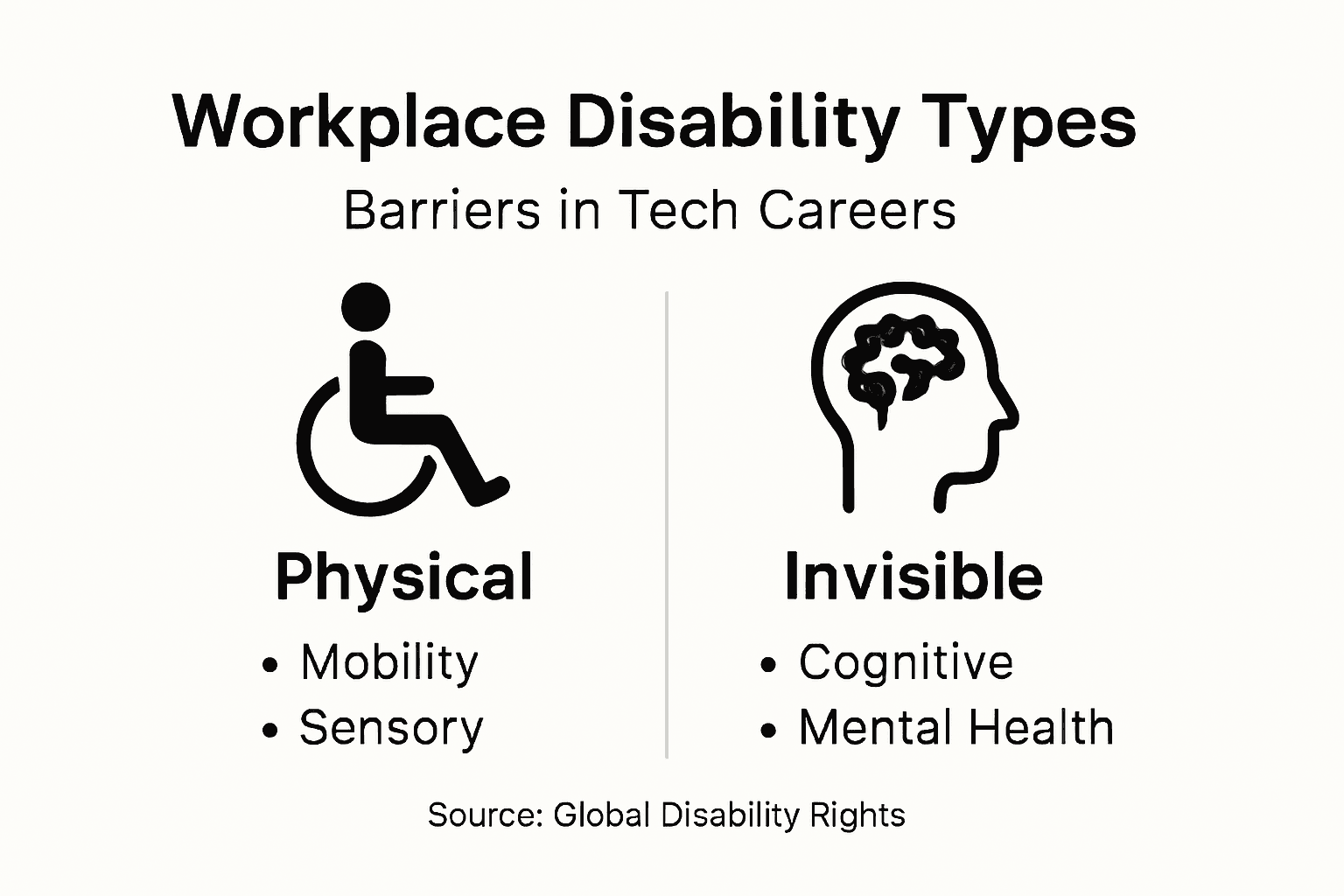
Primary disability categories include physical, sensory, cognitive, and psychological disabilities, each presenting unique workplace challenges. Physical disabilities might involve mobility limitations, while sensory disabilities could include hearing or visual impairments. Invisible disabilities such as chronic pain, neurodivergent conditions, and mental health challenges often remain unrecognized but significantly impact professional experiences.
Workplace barriers for different disability types include:
- Physical accessibility challenges
- Communication obstacles
- Technological compatibility issues
- Systemic discrimination and unconscious bias
- Limited understanding of accommodation needs
Recognizing these diverse experiences requires moving beyond generalized approaches and developing nuanced, individualized support strategies that respect each professional’s unique capabilities and potential contributions.
The following table summarizes common types of workplace disabilities and how tailored support strategies can enhance inclusion:
Pro tip: Approach disability accommodations as personalized solutions, not one-size-fits-all interventions.
Legal Protections for Disabled Employees Globally
Global workplace disability laws represent a critical framework for ensuring equal employment opportunities and protecting the rights of professionals with disabilities. These legal protections vary significantly across different countries, reflecting diverse cultural approaches to disability and workplace inclusion.
In the United States, key legislation like the Americans with Disabilities Act (ADA) mandates reasonable accommodations and prohibits workplace discrimination. Digital accessibility laws have expanded to cover technological environments, recognizing that workplace accessibility extends beyond physical spaces to include digital platforms and communication tools.
Key global legal protections typically address:
- Non-discrimination in hiring and promotion
- Mandatory workplace accommodations
- Protection against harassment
- Equal pay and opportunity standards
- Accessibility requirements for physical and digital workspaces
International frameworks like the United Nations Convention on the Rights of Persons with Disabilities provide additional guidance, encouraging countries to develop comprehensive legal protections that recognize disability as a fundamental aspect of human diversity and workplace equity.
Here’s a comparison of legal protections for employees with disabilities in different workplace contexts:
Pro tip: Research specific legal protections in your region, as disability rights can vary significantly between different jurisdictions.
Reasonable Accommodations in Tech Roles
Workplace disability accommodations in technology roles represent a critical strategy for enabling professionals with disabilities to maximize their potential and contribute meaningfully to innovative environments. These accommodations go beyond simple adjustments, serving as essential bridges that connect individual capabilities with workplace requirements.
Tech industry accommodations can range from hardware and software modifications to flexible work arrangements. Inclusive technology design emphasizes creating adaptive solutions that support diverse working styles and neurological differences. These might include ergonomic workstations, screen reading software, voice-to-text technologies, noise-canceling headphones, or customized input devices.
Key considerations for effective accommodations include:
- Individualized assessment of specific needs
- Collaborative dialogue between employee and employer
- Ongoing evaluation and adjustment of support strategies
- Cost-effective solutions that enhance productivity
- Maintaining professional confidentiality
Successful accommodation strategies transform workplace environments from potentially restrictive spaces to dynamic, inclusive ecosystems that value each professional’s unique approach to problem-solving and innovation.
Pro tip: Document your specific accommodation needs clearly and professionally, focusing on how these adjustments will enhance your work performance.
Intersectionality: LGBTQ+ and Disability Challenges
Workplace diversity challenges reveal that professionals with intersecting marginalized identities experience exponentially complex barriers in tech environments. LGBTQ+ professionals with disabilities navigate multiple layers of potential discrimination, facing unique challenges that extend far beyond individual identity categories.
Psychological workplace research highlights the compounded barriers these professionals encounter, including:
- Increased risk of workplace harassment
- Higher rates of career advancement obstacles
- Limited professional networking opportunities
- More frequent microaggressions
- Complex identity-based psychological stress
Navigating these intersectional challenges requires comprehensive strategies that recognize the nuanced experiences of professionals who exist at multiple marginalized identity crossroads. Organizations must develop sophisticated, empathetic approaches that address systemic barriers while celebrating the unique perspectives these professionals bring to innovative work environments.
Successful inclusion means understanding that identity is not a checkbox, but a complex, dynamic experience that shapes professional potential and workplace interactions.
Pro tip: Build professional networks with other intersectional professionals who can provide targeted support and shared understanding of your unique workplace experiences.
Promoting Inclusive Culture Through Advocacy
Workplace disability advocacy represents a transformative approach to creating systemic change within professional environments. Effective advocacy goes beyond individual accommodations, challenging deeply entrenched organizational cultures and systemic barriers that marginalize professionals with disabilities.
Successful advocacy strategies require multi-dimensional approaches. Inclusive organizational practices demand intentional efforts that include:
- Leadership commitment and accountability
- Comprehensive disability awareness training
- Establishing robust employee resource groups
- Creating safe spaces for authentic dialogue
- Developing mentorship and sponsorship programs
Advocacy is not a singular event but an ongoing process of education, reflection, and institutional transformation. Tech organizations must recognize that true inclusion requires dismantling structural barriers, challenging unconscious biases, and actively amplifying the voices and experiences of professionals with disabilities.
Meaningful change happens when organizations move from passive tolerance to active celebration of neurodiversity and disability as core strengths that drive innovation and creativity.
Pro tip: Document and share your experiences to help build institutional knowledge and create pathways for future systemic improvements.
Unlock Inclusive Tech Careers for LGBTQ+ Professionals with Disabilities
Navigating the unique challenges of disability and intersectional identities in the tech workplace can feel isolating and overwhelming. This article highlights critical barriers such as accessibility needs, systemic bias, and the compounded hurdles faced by LGBTQ+ professionals who also live with disabilities. At mygwork.com, we understand the importance of recognizing these individual experiences and the power of inclusive environments that celebrate diversity as a strength.
Discover a community and job platform designed to empower you through connection and opportunity. Whether you seek resources for reasonable accommodations, a supportive professional network, or career advancement tailored to inclusive workplaces, mygwork.com offers meaningful solutions. Take control of your professional journey today by joining a space where your identity and abilities are valued. Explore jobs, showcase your unique talents, and engage with organizations that prioritize equity and inclusion. Start building your future now by visiting mygwork.com.
Frequently Asked Questions
What is the modern understanding of disability in the workplace?
Modern definitions of disability recognize it as a complex interaction between individual health conditions and workplace environments, shaped by societal barriers rather than just medical limitations.
How can workplaces accommodate employees with disabilities?
Workplaces can accommodate employees with disabilities by providing adaptive technologies, flexible work arrangements, and individualized support strategies that respect each professional’s unique capabilities.
What are some common types of disabilities in the workplace?
Common types of disabilities in the workplace include physical, sensory, cognitive, psychological, and invisible disabilities, each presenting unique challenges and requiring tailored support strategies.
How does intersectionality affect professionals with disabilities?
Professionals with intersecting identities, such as LGBTQ+ individuals with disabilities, face compounded barriers in the workplace, including increased risks of harassment and career advancement obstacles.