
Diverse Talent Pools: How to Build One That Reaches LGBTQ+ Professionals
October 1, 2026
A diverse talent pool is built in two moves: you go where underrepresented candidates already are, and you make sure your process treats them fairly once they arrive. Posting the same job in the same places and hoping for a different result does neither. For LGBTQ+ talent, the fastest route is a channel where candidates know every employer has committed to inclusion. That is the idea behind myGwork, where jobs and networking are curated with companies actively committed to LGBTQ+ inclusion.
This guide is for recruiters, talent acquisition teams, DEI leads and the professionals who work with them. It covers the definitions, where to source, what to change in your process, how to measure progress, and what LGBTQ+ job seekers should look for in an employer.
Key Takeaways
- A talent pool is a database of potential candidates. A talent pipeline is the actively nurtured, role-relevant group you build from it over time.
- A pool is only diverse if candidates can actually join it and stay in it. That takes both broader sourcing and a fair, structured process.
- Ordinary referrals tend to reproduce the make-up of your current team, so add channels built for underrepresented groups, including LGBTQ+ networks.
- Measure every funnel stage, from sourcing to offer acceptance, and collect demographic data optionally, anonymously and in aggregate.
- LGBTQ+ candidates look for explicit non-discrimination policies, equal benefits and visible employee groups. Make those easy to find.
What a diverse talent pool is, and how it differs from a pipeline
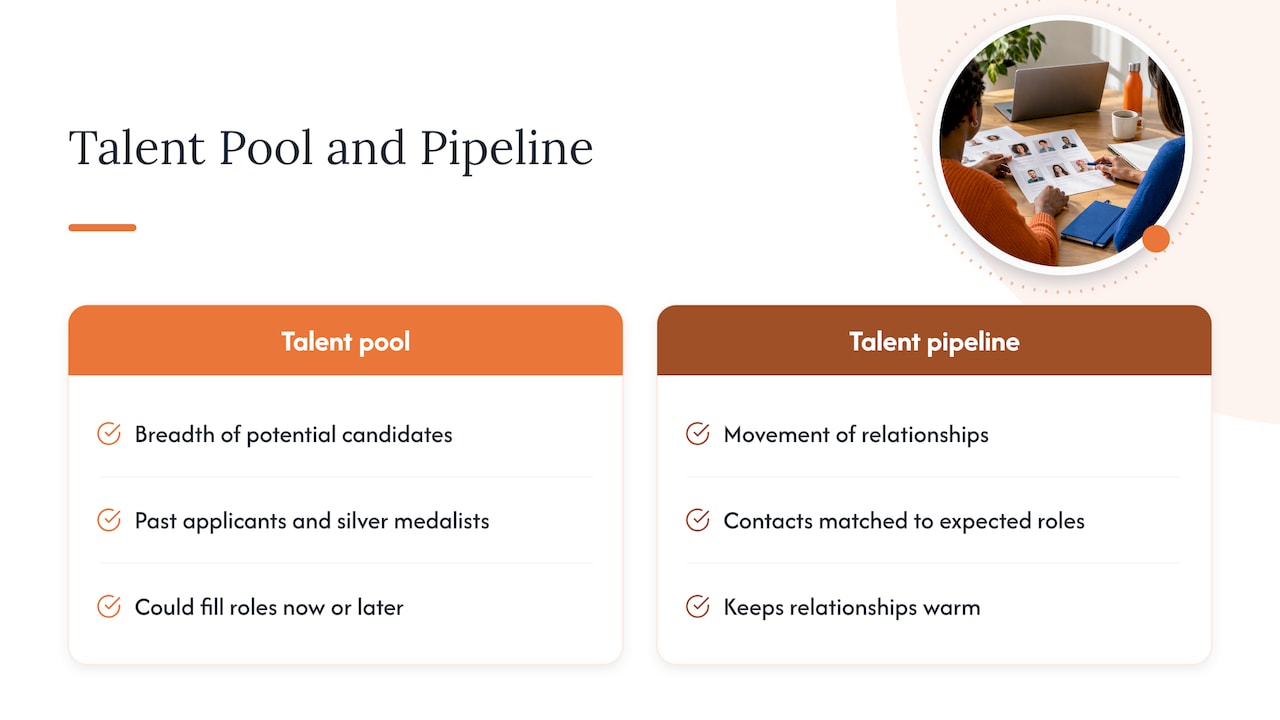
A talent pool is a group of people who could plausibly fill a role now or later: past applicants, silver medalists, contacts from events, members of a network. A talent pipeline is what you do with that group. It is the set of relationships you keep warm, matched to roles you expect to open.
The two ideas work together. The pool is the breadth, the pipeline is the movement. If you only have a list, you have a database that goes stale. If you only have a pipeline, you have no depth when a new role opens.
What makes either one diverse? Cornell’s eCornell program on this topic defines a diverse talent pool as one that includes the many candidates on the market who could succeed in a role, and that reduces the bias that often keeps marginalized candidates from joining and staying in the pool. Two things sit in that definition: reach, and removal of barriers. The same source makes the practical point that without a diverse pool you cannot interview, and then hire, a diverse set of people.
An inclusive pipeline adds a third element: what happens after the first contact. Attracting a wider range of candidates into a process that treats them unequally achieves little. Reach and fairness have to be built together.
Why qualified candidates get missed
If talent were evenly noticed, a pool would diversify on its own. It does not, and the evidence for LGBTQ+ candidates is specific.
A U.S. audit study summarized by Harvard’s Gender Action Portal sent paired resumes to 775 administrative job postings. Resumes that signaled LGBTQ status got a 12% response rate versus 17% for control resumes, about 30% fewer employer responses. An IZA research paper reviewing U.S. correspondence experiments reports that in a 2005 study, fictitious gay candidates received 37% fewer positive callbacks than comparable applicants without that signal.
Those are older studies, but they show the mechanism that matters for your pool. Qualified people are in the market. Some never apply, and some are screened out before anyone looks at their skills. Many also size up an employer’s culture before they click apply, which is why your visible signals matter as much as your job ad.
Where to source: widen the channels, not just the volume
Posting to more boards gives you more of the same applicants. Changing the sources changes the pool. The Markle Foundation and JFF’s Skills-Based Sourcing and Hiring Playbook points to a set of channels worth building:
- diverse colleges and diversity-focused internships and co-ops
- community-based organizations and local education providers
- affinity and networking groups
- apprenticeships
- candidates from adjacent industries who have transferable skills
The same playbook warns about a channel most teams rely on heavily. Ordinary employee referrals can reproduce homogeneity, because people’s networks tend to resemble their own. It recommends targeted referral programs tied to explicit diversity goals instead.
The U.S. Chamber of Commerce Foundation’s resource guide describes opportunity populations as people in America with limited access to educational and professional opportunities who face barriers to employment and advancement. It names members of the LGBTQ community among them. Treating these groups as a sourcing priority, rather than an afterthought, is where a pool starts to change.
Why a dedicated LGBTQ+ channel works
LGBTQ+ professionals often will not volunteer their identity to an employer they have not vetted. A general job board gives them no way to tell which employers are safe. A curated network solves that from the candidate’s side: every employer on it has already signaled commitment.
That is the model we built at myGwork. The platform serves LGBTQ+ professionals and allies, offers job search with LGBTQ±friendly organizations, and adds networking, mentorship and community, so your roles reach people already looking for inclusive employers. Employers can reach this audience through LGBTQ+ talent attraction and employer engagement services.
If you want to see how a hiring team can set this up end to end, our guide to an LGBTQ+ recruitment workflow walks through the stages, and our piece on launching LGBTQ hiring initiatives covers getting internal buy-in.
Partner with organizations, then stay in touch
Symphony Talent’s guidance on inclusive pipelines recommends proactive sourcing through partnerships with organizations that support underrepresented groups, such as women’s and LGBTQ+ associations and historically minority colleges. The point is relationships, not one-time postings. A pipeline is built by showing up repeatedly: events, webinars, mentoring sessions, and follow-up with people who were not ready last time.
Fix the process, or the pool will not hold
An inclusive pipeline depends on what candidates experience after they find you. The evidence points to a consistent set of changes.
Job descriptions
Harvard’s People Lab review of hiring research recommends essential qualifications and objective wording in job descriptions, and simpler, bundled application steps. In practice:
- List only the requirements the person truly needs on day one. Fewer, firmer requirements widen who feels qualified to apply.
- Explain the role and what early success looks like.
- Disclose the salary range.
- Put a truthful inclusion statement near the top, then back it with specifics such as benefits and employee groups.
- Ask people with different backgrounds to review the draft before it is posted.
Our guide to diverse job postings for graduates shows how this applies to early-career roles.
Screening
A U.S. public-sector guide to inclusive hiring recommends documented screening criteria based on the job announcement, approved interview questions, and removing names and college names where appropriate. SHRM’s 2025 I&D Playbook adds skills-focused resume review and work-sample tests, structured interviews and scorecards.
Interviews and communication
Structured interviews with standardized rating scales keep every candidate measured against the same bar. The same public-sector guide also covers candidate experience: send clear interview information, welcome candidates, introduce interviewers, give organizational context, and ask what name and pronouns candidates use.
Wording matters more than most teams expect. In a field experiment summarized in the Harvard review, welcoming, value-affirming language in a test invitation raised nonwhite candidates’ probability of passing by 50% and narrowed the racial performance gap by 80%. That experiment concerned race, not LGBTQ+ status, but it shows how much invitation tone can change who completes a step.
For trans and nonbinary candidates, small details such as forms that only offer two gender options or a name that does not match a legal document can end an application. Our guides on making recruitment trans-inclusive and hiring and retaining trans employees go through those details.
Keep the standard the same
Broadening the pool is different from lowering the bar. Diversity.com defines inclusive hiring as widening who learns about a role and who can realistically compete for it, while keeping the standard everyone is judged against exactly the same. The same page notes that EEOC-enforced laws make it illegal to discriminate against an applicant because of race, color, religion, sex, national origin, age (40 or older), disability or genetic information. Wide outreach is fine. Decisions about who advances must be made on job-related criteria. If your team has questions about a specific legal situation, ask your employment counsel.
A quick comparison: where each source type fits
| Source type | What it does well | Watch for |
|---|---|---|
| Employee referrals | Fast, trusted, good quality signal | Reproduces your current team’s networks unless tied to diversity goals |
| General job boards | Large volume | Candidates cannot tell which employers are inclusive |
| Campus and apprenticeship programs | Early-career reach, local pipelines | Narrow if you only visit the same schools |
| Community and affinity organizations | Trusted relationships with specific groups | Needs sustained engagement, not one-off posts |
| LGBTQ+ professional network | Candidates who are actively seeking inclusive employers | Works best with a visible inclusion record on your profile |
For a wider look at how diversity-focused hiring platforms differ, see our diversity hiring platform comparison and our overview of diversity recruiting strategies.
Measure the pool, not just the headcount
A diverse pool you cannot see is a diverse pool you cannot improve. The Exponential Talent measurement guide recommends looking at each stage of the funnel: sourcing, screened candidates, interview outcomes, offers, offer acceptance and candidate experience, and later engagement, exits, pay, performance and advancement. Overall headcount alone hides where people drop out.
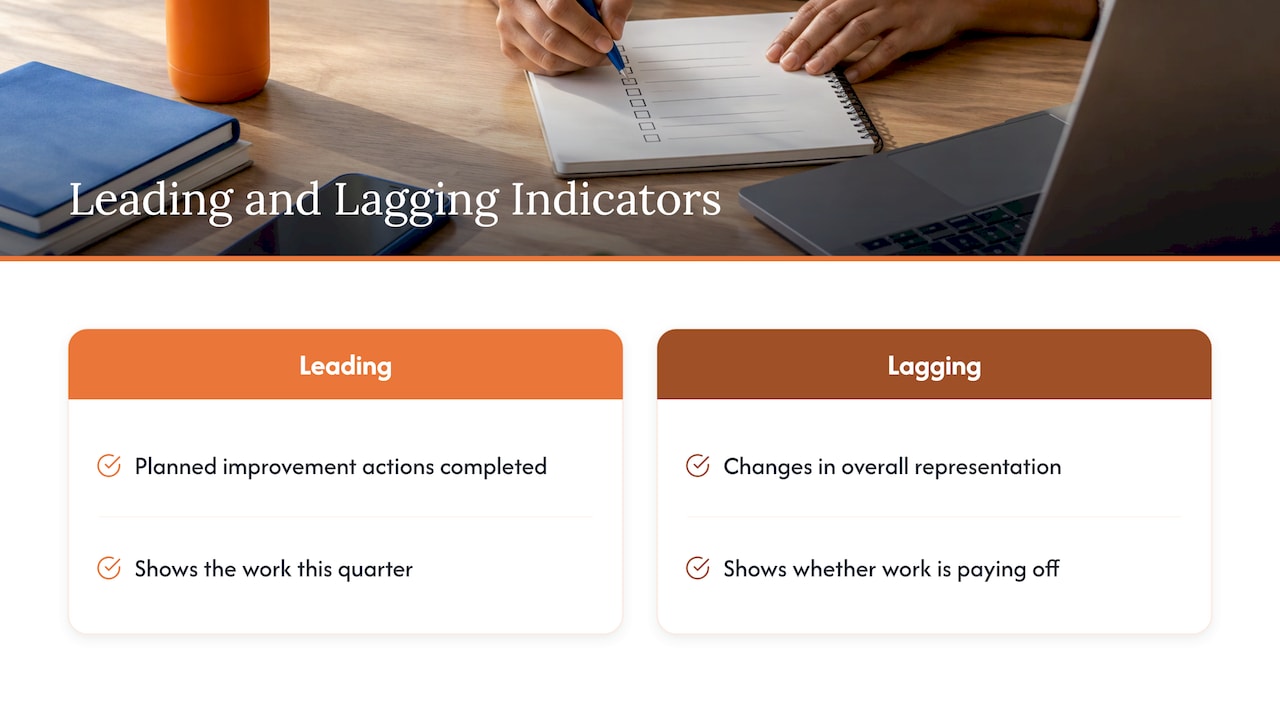
The same guide separates leading indicators, such as completing planned improvement actions, from lagging ones, such as changes in overall representation, and recommends tracking both. Leading indicators tell you this quarter whether you are doing the work. Lagging indicators tell you whether it is paying off.
Goals should be specific. The Markle/JFF playbook suggests measurable targets for applicant and funnel-stage representation, such as raising female applicants for manager roles by 25%, and reviewing progress regularly. It also recommends building diversity metrics into hiring objectives and compensation plans, and treating diversity as a shared responsibility rather than one person’s job. CIPD’s recruitment guide makes a similar case for setting targets and analyzing recruitment data to find where bias may be entering.
Collect demographic data responsibly
You cannot measure LGBTQ+ representation if nobody feels safe sharing. The Markle/JFF playbook recommends demographic surveys that are optional and anonymous, with a clear statement that responses are used only in aggregate to evaluate diversity efforts. It also suggests sending them after hiring decisions or using a third party. Never use survey answers in individual hiring decisions.
What LGBTQ+ job seekers look for
The other half of any LGBTQ+ talent pool is the candidate deciding whether to join it. If you are a job seeker, the Human Rights Campaign’s 2025 toolkit advises looking for three things:
- non-discrimination policies that explicitly include sexual orientation and gender identity
- inclusive benefits, such as equal health benefits for spouses and domestic partners and transgender-inclusive healthcare
- evidence of an inclusive culture, including LGBTQ+ employee resource groups
HRC’s 2026 Corporate Equality Index reports that 534 companies earned a score of 100, which gives job seekers one public benchmark for LGBTQ+ workplace inclusion.
For employers the lesson is direct: put those three items where candidates can find them, on your career page, in your job ads and on your employer profile. A candidate who has to guess will often choose an employer who spelled it out.
Candidates preparing to apply can use our resources on a remote job search workflow for LGBTQ+ professionals and the Ask a Recruiter webinar recap.
Put a pipeline in motion
If you are building or rebuilding an LGBTQ+ talent pipeline, a workable order looks like this:
- Audit your current pool. Check where applicants come from at each funnel stage and where people drop out.
- Rewrite your top roles. Cut to essential requirements, add salary, and place a truthful inclusion statement up front.
- Add channels, not just volume. Keep targeted referrals, and add at least one community or LGBTQ+ network channel.
- Standardize screening and interviews. Use documented criteria, structured questions and scorecards.
- Show your inclusion record. Publish policies, benefits and employee groups where candidates look.
- Measure and review. Track leading and lagging indicators every quarter, and keep demographic collection optional and aggregate.
Where myGwork fits
myGwork is a professional networking and recruitment platform for LGBTQ+ professionals and allies. On the employer side, organizations use it for job listings, talent sourcing and employer branding. Plans run from ESSENTIALS through BRONZE, SILVER and GOLD to PLATINUM, and you can compare them on our corporate solutions page. Your GEO Employer Profile is where candidates see how you present your inclusion commitment.
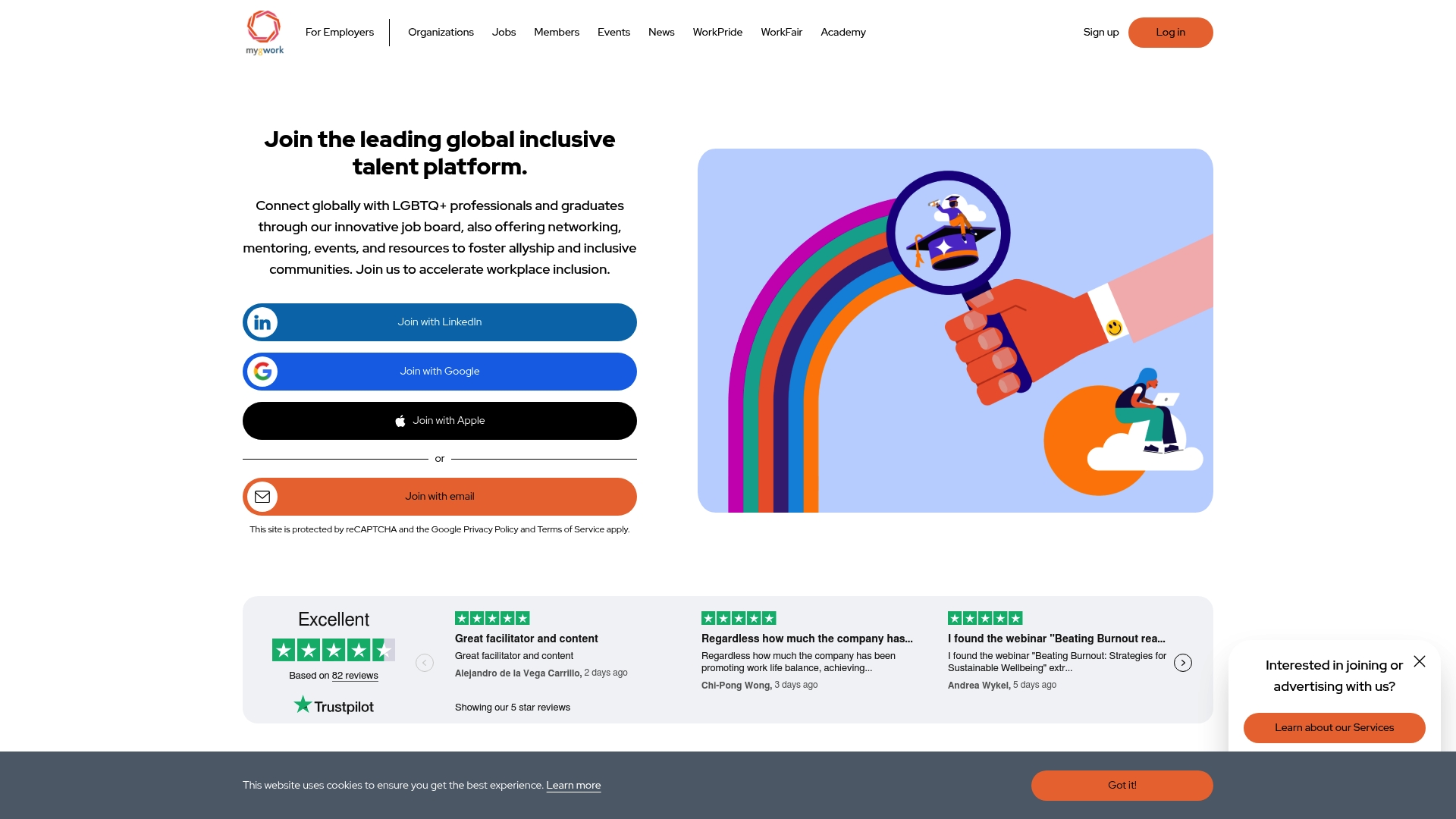
Beyond sourcing, the platform covers networking events, mentorship and an academy with training on LGBTQ+ allyship in the workplace and intersectionality, delivered in person or virtually. You can find those on our training page. Pricing is not published, so the corporate solutions page is the place to start a conversation.
Our perspective
A talent pool does not become diverse because a company announces a goal. It becomes diverse when a qualified person looks at your job, your profile and your process, and decides it is safe to step forward.
That decision is the one most hiring teams underestimate. LGBTQ+ professionals read signals before they apply: who else is on the platform, whether the policies are explicit, whether the company shows up in community spaces. A curated network answers those questions before the candidate has to ask them.
That is why we curate jobs and networking opportunities exclusively with corporations actively committed to LGBTQ+ inclusion. Candidates get safe workplace options and a community built around diverse careers and mentorship. Employers get an audience that is already looking for them.
Our advice to talent teams: pair sourcing with substance. Build the channel, then build the process behind it, and let both be visible.
Adrien
FAQ
What is the difference between a talent pool and a talent pipeline?
A talent pool is a broad group of potential candidates, often kept in a database. A talent pipeline is the actively managed part of it: people you have identified, engaged and nurtured for current or future roles. Most teams need both, since the pool gives depth and the pipeline gives momentum.
How do I build an LGBTQ+ talent pool?
Start where LGBTQ+ professionals already look: LGBTQ+ networks, affinity groups, community organizations and inclusive-employer job channels. Then make your policies, benefits and employee groups visible, and use structured hiring so candidates are judged on the same job-related criteria. myGwork gives employers a channel built for this audience.
Is it legal to broaden a talent pool to include underrepresented groups?
Broadening outreach is a widely used practice, and the legal line sits at the decision stage. Decisions about who advances or gets hired must be made without regard to protected characteristics, and EEOC-enforced laws apply. For your specific situation, check with employment counsel.
How do I know whether my pipeline is getting more diverse?
Track representation at each funnel stage, from sourcing through offer acceptance, instead of relying on overall headcount. Use leading indicators such as completed improvement actions alongside lagging ones such as changes in representation. Collect demographic data optionally, anonymously and in aggregate.
What should LGBTQ+ job seekers look for in an employer?
Look for non-discrimination policies that explicitly include sexual orientation and gender identity, equal benefits for spouses and domestic partners, transgender-inclusive healthcare, and visible LGBTQ+ employee resource groups. A curated platform such as myGwork also helps by listing employers that are committed to inclusion.
Sources
- Building Diverse Talent Pools, eCornell
- Discrimination against Queer Women in the U.S. Workforce, Harvard Gender Action Portal
- Hiring a Homosexual, Taking a Risk?, IZA
- Skills-Based Sourcing and Hiring Playbook, Markle Foundation and JFF
- TPM Resource Guide, U.S. Chamber of Commerce Foundation
- Recruiting diverse talent, Symphony Talent
- Evidence-Based Strategies for Hiring a Strong and Diverse Workforce, Harvard People Lab
- Ensuring a Diverse Workforce, inclusive hiring guide
- SHRM I&D Playbook 2025
- What Inclusive Hiring Means in 2026, Diversity.com
- Building Inclusive Workplaces, Exponential Talent
- A guide to inclusive recruitment for employers, CIPD
- Understanding Best Practices in LGBTQ+ Inclusion, Human Rights Campaign
- Corporate Equality Index 2026, Human Rights Campaign