
Diversity Certification: Impact on LGBTQ+ Careers
January 1, 2026Most American corporations now highlight workplace diversity, yet only about one in four employers worldwide achieve formal diversity certification. For LGBTQ+ professionals, this certification proves an organization’s real commitment to equity, beyond just words. Understanding what diversity certification involves can help you pinpoint workplaces where your identity is respected and your career growth is a priority. This guide demystifies key certification types, requirements, and benefits to support your advancement.

Key Takeaways
Defining Diversity Certification in the Workplace
Diversity certification represents a strategic organizational commitment to creating inclusive workplace environments. At its core, this process involves systematically evaluating and documenting an organization’s efforts to support and advance diversity across multiple dimensions. European workplace diversity strategies highlight that certification goes beyond simple compliance, functioning as a comprehensive assessment of an organization’s cultural competence.
The certification process typically encompasses four critical macro-categories of diversity: psycho-physical characteristics, cultural backgrounds, socio-economic contexts, and professional abilities/experiences. These categories help organizations develop nuanced approaches to workplace inclusion that recognize the multifaceted nature of human identity. Emerging research on workplace design suggests that effective diversity certification requires more than surface-level policies, demanding genuine structural transformation and consistent monitoring.
For LGBTQ+ professionals, diversity certification serves as a critical indicator of organizational commitment. It provides tangible evidence that an employer values representation, actively works to eliminate barriers, and creates pathways for career advancement. Key components often include non-discrimination policies, inclusive recruitment practices, employee resource group support, leadership accountability, and ongoing diversity training initiatives.
Pro tip: When evaluating potential employers, look beyond diversity certification logos and request specific details about their implementation strategies and measurable outcomes.
Major Types of Diversity Certification Explained
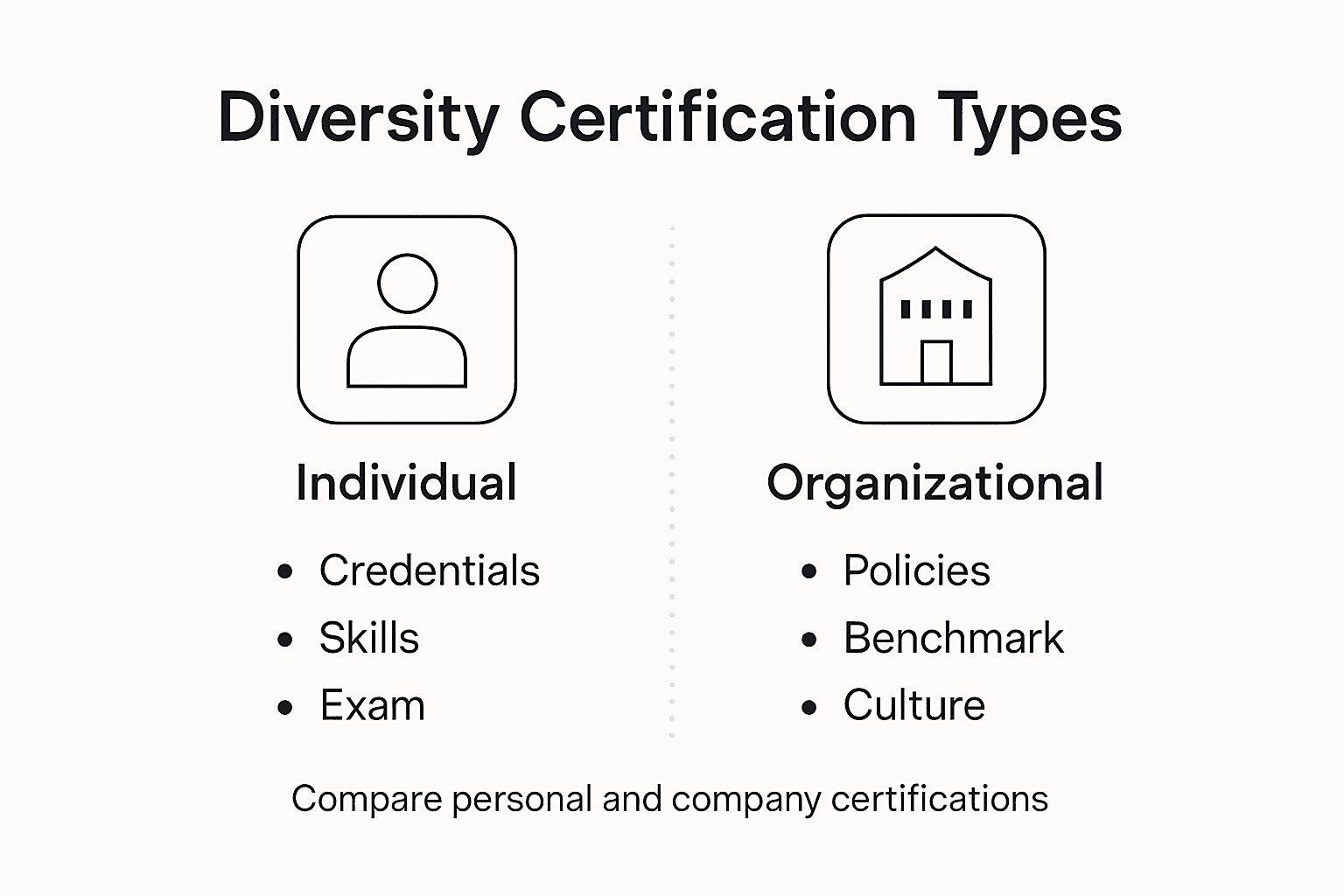
Diversity certification programs can be broadly categorized into two primary types: individual professional certifications and organizational certification standards. Prominent diversity certification programs demonstrate the complexity and depth of these approaches, each designed to address different aspects of workplace inclusivity and professional development.
Individual Professional Certifications represent targeted credentials that validate a professional’s expertise in diversity and inclusion strategies. The Institute for Diversity Certification offers two notable credentials: the Certified Diversity Professional (CDP) and the Certified Diversity Executive (CDE). These certifications require rigorous training, comprehensive examinations, and demonstrate an individual’s commitment to understanding complex diversity dynamics within organizational contexts.
Organizational diversity certifications take a broader approach, assessing and benchmarking entire company cultures and systemic inclusion practices. These certifications evaluate multiple dimensions including recruitment processes, leadership representation, employee experience, and structural policies. Examples include the EDGE certification and Global Diversity and Inclusion Benchmarks, which provide comprehensive frameworks for measuring and improving organizational inclusivity across different business sectors.
Pro tip: Research multiple certification types and choose credentials that align most closely with your specific career goals and professional development trajectory.
Here’s a comparison of individual versus organizational diversity certifications for workplace inclusion:
Processes and Key Requirements for Certification
Diversity certification processes are complex, multifaceted journeys that demand rigorous preparation and comprehensive understanding of inclusion strategies. Professional diversity certification requirements typically involve several critical stages, including educational prerequisites, specialized training, and comprehensive examinations that validate an individual’s expertise in diversity and inclusion.
For individual professional certifications, candidates must typically demonstrate a combination of academic background, professional experience, and specialized knowledge. The certification process often includes completing preparatory courses, passing comprehensive exams that cover global business diversity issues, and committing to ongoing professional development. Most certifications require recertification every three years, ensuring professionals remain current with evolving diversity and inclusion best practices.

Global workplace equity benchmarks reveal that organizational certifications follow an equally rigorous path. These certifications demand extensive third-party audits that meticulously evaluate multiple dimensions of workplace inclusivity. Key assessment areas include workforce representation, pay equity, career progression opportunities, and systemic cultural inclusiveness. Organizations must provide robust, data-driven evidence of their commitment to diversity, undergoing periodic reviews to maintain their certification status.
Pro tip: Document your diversity and inclusion experiences, projects, and impact throughout your career to build a compelling portfolio that supports certification applications.
Costs, Time, and Renewal Considerations
Diversity certification involves significant financial and time investments that professionals must carefully evaluate. Certification fees for professional diversity credentials can range from approximately $900 to $2,100, covering preparatory courses, study materials, and examination costs. These expenses typically include online training modules, comprehensive study guides, and the actual certification examination.
The recertification process is a critical component of maintaining professional diversity credentials. Most certifications require renewal every three years, which involves accumulating 60 continuing education units and paying a renewal fee. Certification renewal mechanisms demonstrate the importance of continuous learning, with renewal fees typically around $50 per cycle. Professionals who fail to complete required continuing education or miss renewal deadlines may face additional challenges, such as retaking comprehensive exams or completing supplemental educational requirements.
Time commitment is another crucial consideration for LGBTQ+ professionals pursuing diversity certification. The entire certification process typically spans 6 to 12 months, depending on individual study pace, professional experience, and chosen certification level. This timeline includes preparatory coursework, self-study, examination preparation, and the actual certification assessment. Professionals should anticipate dedicating approximately 10 to 15 hours per week to successfully complete the certification process while maintaining their current work responsibilities.
Pro tip: Create a dedicated study schedule and financial savings plan at least six months before beginning your diversity certification journey to manage both time and cost requirements effectively.
Benefits for LGBTQ+ Employee Advancement
Diversity certification creates transformative opportunities for LGBTQ+ professionals by establishing structured pathways for career progression and workplace inclusion. Corporate diversity research demonstrates that organizations with comprehensive certification programs achieve significant advancements for LGBTQ+ employees, including robust non-discrimination protections, transgender-inclusive healthcare benefits, and meaningful family formation support.
Workplace environments that prioritize diversity certification fundamentally reshape professional experiences for LGBTQ+ talent. Global LGBT+ workplace studies reveal that certified inclusive workplaces dramatically improve employee engagement by creating environments where LGBTQ+ professionals feel safe, valued, and empowered to be authentically themselves. These supportive cultures directly correlate with increased job satisfaction, reduced workplace stress, and enhanced career mobility.
The tangible benefits of diversity certification extend beyond individual experiences to systemic workplace transformation. Certified organizations typically implement comprehensive strategies including leadership accountability, inclusive recruitment practices, mentorship programs, and cultural competency training. These initiatives not only support LGBTQ+ employees but also create institutional frameworks that actively challenge discriminatory practices and promote equitable career advancement opportunities.
Pro tip: Actively seek employers with documented diversity certifications and ask specific questions during interviews about their LGBTQ+ inclusion strategies and career development support.
For reference, key benefits of diversity certification for LGBTQ+ employees include the following:
Common Pitfalls and What to Avoid
Tokenistic inclusion remains one of the most significant challenges in diversity certification processes. Research on diversity implementation strategies reveals that many organizations fall into the trap of superficial compliance, creating performative diversity initiatives that lack genuine commitment to systemic change. These approaches often involve minimal representation, short-term visibility tactics, and insufficient structural support for marginalized professionals.
LGBTQ+ professionals should be particularly vigilant about identifying organizations that practice shallow diversity approaches. Critical red flags include limited leadership diversity, absence of intersectional perspectives, inconsistent non-discrimination policies, and diversity programs that do not translate into meaningful career advancement opportunities. Genuine inclusive environments demonstrate sustained commitment through transparent accountability mechanisms, comprehensive training programs, and measurable progress in representation across organizational levels.
Effective diversity certification requires moving beyond checkbox compliance to create transformative workplace cultures. This demands holistic strategies that address systemic barriers, provide ongoing education, and create meaningful pathways for professional development. Organizations must actively challenge existing power structures, develop robust mentorship programs, and create environments where LGBTQ+ professionals feel genuinely supported and empowered to contribute their full potential.
Pro tip: During interviews, ask specific, probing questions about the organization’s diversity metrics, leadership representation, and concrete actions taken to support LGBTQ+ career advancement.
Empower Your LGBTQ+ Career with Genuine Diversity Support
Navigating the challenges of workplace inclusion and finding employers who truly value diversity certification can feel overwhelming. The article highlights critical issues like tokenistic inclusion, lack of leadership accountability, and superficial diversity initiatives that leave LGBTQ+ professionals without real career advancement. If you are looking for authentic connections to companies committed to measurable diversity practices, mygwork.com is your gateway.
Join a professional network designed exclusively to elevate LGBTQ+ voices and careers. At mygwork.com, you can access job opportunities with organizations that prioritize inclusive cultures and have proven commitments to diversity beyond just certification logos. Connect with like-minded professionals, discover employers with transparent diversity strategies, and learn about unique career resources tailored to your experience. Don’t settle for less when it comes to your professional journey. Take the next step in your career today by exploring the platform at mygwork.com and find the support you deserve.
Frequently Asked Questions
What is diversity certification in the workplace?
Diversity certification is a strategic commitment within organizations to foster inclusive workplace environments by evaluating and documenting efforts to support and advance diversity across various dimensions.
How does diversity certification benefit LGBTQ+ professionals?
For LGBTQ+ professionals, diversity certification indicates an employer’s commitment to representation and inclusivity, as it often includes policies that promote non-discrimination, supportive healthcare benefits, and career advancement pathways.
What are the main types of diversity certification?
Diversity certification can be categorized into two main types: individual professional certifications, which validate a person’s expertise in diversity strategies, and organizational certifications that assess a company’s overall inclusivity practices.
What are common pitfalls to avoid when evaluating diversity certified organizations?
Common pitfalls include tokenistic inclusion where organizations only implement superficial diversity initiatives without genuine commitment. Look for organizations with measurable progress, transparent accountability, and ongoing support for marginalized professionals.