Diversity Hiring Events: How to Use Them in 2026
October 1, 2026
A diversity hiring event works when both sides arrive prepared and the employers in the room are really hiring and really inclusive. For LGBTQ+ professionals, that means choosing events where employers have been vetted. For employers, it means showing up with open roles, decision-makers and a follow-up plan. This guide covers both sides, with real examples from the United States.
Key Takeaways
- Diversity hiring events bring employers committed to inclusive hiring together with underrepresented groups, including LGBTQ+ professionals, in person or online.
- Job seekers should research 5 to 10 employers beforehand, bring resumes, rehearse a short pitch and send a thank-you email afterward.
- The strongest events vet employers: they must be actively hiring and show LGBTQ+ inclusion beyond a statement.
- Employers get results when decision-makers attend, roles are listed and follow-up happens within days.
- Allies and career organizations can match job seekers with employers based on how open each person wants to be about their identity.
What counts as a diversity hiring event
A job fair, in the US Department of Labor’s description, is an event where employers and recruiters meet potential candidates to share company information and current openings. Fairs vary in size, industry and format, in person or online, and some target specific groups such as veterans or students.
A diversity hiring event is the same idea with a purpose: connecting a specific community with employers who say they want to hire it. The community might be LGBTQ+ professionals, Black professionals, people with disabilities, veterans or people of color, and many events welcome several groups at once. The Human Rights Campaign notes that businesses increasingly take part in recruiting events for LGBTQ+ students and professionals, because attendees get to meet employers clearly interested in hiring them.
That last point is what separates these events from a general job fair. You do not have to guess whether the person across the table is comfortable with who you are.
Formats you will see
| Format | What it looks like | Best for |
|---|---|---|
| Community career fair | A single-day, in-person fair run by a community center or Pride organization, with a limited number of affirming employers | Job seekers at any level who want a local, low-pressure start |
| Campus event | A showcase or reverse career fair at a university where student groups meet employers | Students, recent graduates and staff |
| Professional conference with a career expo | A multi-day conference for a profession, such as law or business, with recruiters on site | Mid-career professionals and graduate students |
| Virtual fair | Online booths and chats, often with a registration step | Remote searches and people who cannot travel |
| Dedicated population event | A fair built around one group, such as transgender or non-binary job seekers | Candidates who want an environment designed around their specific needs |
The examples in the research show how varied these are. A Twin Cities Pride career fair in Minnesota is in person only, with 20+ employers from tech, finance, nonprofits and creative arts, and it offers a free wardrobe service with gender-affirming business clothing so there is no dress-code barrier. A Santa Clara University showcase for students, staff and faculty uses a reverse career fair, where student organization leaders sit at tables and employers come to them.
For job seekers: before, during and after
You will get far more from a two-hour fair if you treat it as a set of short, planned conversations. CareerOneStop’s guidance gives a reliable base, and below it adds what matters specifically for LGBTQ+ candidates.
Before the event
- Pick 5 to 10 target employers. CareerOneStop advises researching companies in advance rather than walking the floor at random. Look at their open roles, and check whether they have named LGBTQ+ inclusion practices such as benefits, employee resource groups or a track record of recruiting at community events.
- Write one or two questions per employer. Ask how they hire people with your skill set. Add a question about how the team supports LGBTQ+ staff day to day.
- Prepare materials. Bring several resume copies, and if you work in a creative or technical field, work samples. Twin Cities Pride suggests bringing resumes, work samples and cover letters.
- Rehearse an elevator pitch. Thirty seconds: who you are, what you do well, what role you want.
- Decide how open you want to be. Some candidates lead with their identity and some do not. You control that. Decide beforehand how you will answer a question about community involvement or employee groups, so you are not improvising.
At the event
Talk to your top choices first, while recruiters are fresh. Collect a business card or contact detail from every conversation and jot down one specific thing you discussed. Do not skip the employers outside your target list if the line is short: a conversation with a recruiter who is not hiring for your role can still lead to a referral.
Meeting in person matters. At a large Texas job fair, an outreach director for a congressional office told the Fort Worth Report that talking with a recruiter is totally different from an online application, because recruiters can see your personality. For a candidate whose resume looks like many others, that is a real advantage.
After the event
Send a thank-you email within a day or two. CareerOneStop’s advice is to remind the contact who you are, note what you discussed and ask about next steps. Then apply formally to the role you discussed, and mention the conversation in your message.
How to tell whether an event and its employers are really inclusive
Not every event that carries a diversity label has been screened. A few signals help.
Employer vetting. OPEN Foundation in Madison, Wisconsin, runs career fairs for LGBTQ+ job seekers and allies with affirming employers only. Its participating employers must be actively hiring, provide a list of open roles and demonstrate commitment to LGBTQ+ inclusion. That is a useful standard to look for when you read any event page: are employers screened, and are real roles listed?
Support for attendees. Look for services that show the organizers have thought about your experience: free resume reviews, a career closet with professional clothing, a quiet wellness space, or a clear note on accessibility. OPEN’s fairs offer all three of those. These details tell you more than the event’s name.
Intersectionality. New York City’s WORK IT manual for workforce providers warns that LGBTQI+ people who are also people of color, disabled or female-identified may face discrimination on multiple levels. If that describes you, look for events and employers that address more than one dimension of identity, and ask recruiters how their inclusion work covers it.
Employer follow-through. At the booth, ask what happens after you apply, who you would report to and how the company supports LGBTQ+ employees. Specific answers about benefits, groups and policies are a good sign. If you want a broader view of where to look, our guide to LGBTQ+ job search apps compares the options, and our list of support resources for career success covers what to line up around your search.
For employers: making an event worth the booth fee
A booth can cost less than you think. OPEN Foundation’s published 2026 pricing for its employer booths ranges from $150 to $550 for nonprofits, $400 for small businesses under 100 employees and $600 for enterprises, including a six-foot table, two to three representatives and promotion to its community. The cost that matters is the time of your team and whether the people you send can make decisions.
Send the right people
WomenHack’s research on events says they produce hires when decision-makers attend and follow-up happens within days. A recruiter who can only collect resumes will lose candidates to one who can book an interview on the spot. Bring a hiring manager, and ideally a member of your LGBTQ+ employee group who can talk honestly about daily life at the company.
Bring real roles
OPEN requires employers to provide a list of available roles. Do the same wherever you go. A candidate who travels to a fair and finds no relevant opening will not trust your next invitation. Post the roles ahead of time and make them easy to find in your online listings.
Show commitment beyond a statement
Candidates compare what you say at the booth with what they see online. The Human Rights Campaign observes that a new generation entering the workforce has higher expectations of fairness than earlier cohorts, pushing employers past non-discrimination policies and inclusive benefits toward actively recruiting LGBTQ+ workers. Have your benefits, policies and employee groups documented and ready to discuss.
Run a fair process after the event
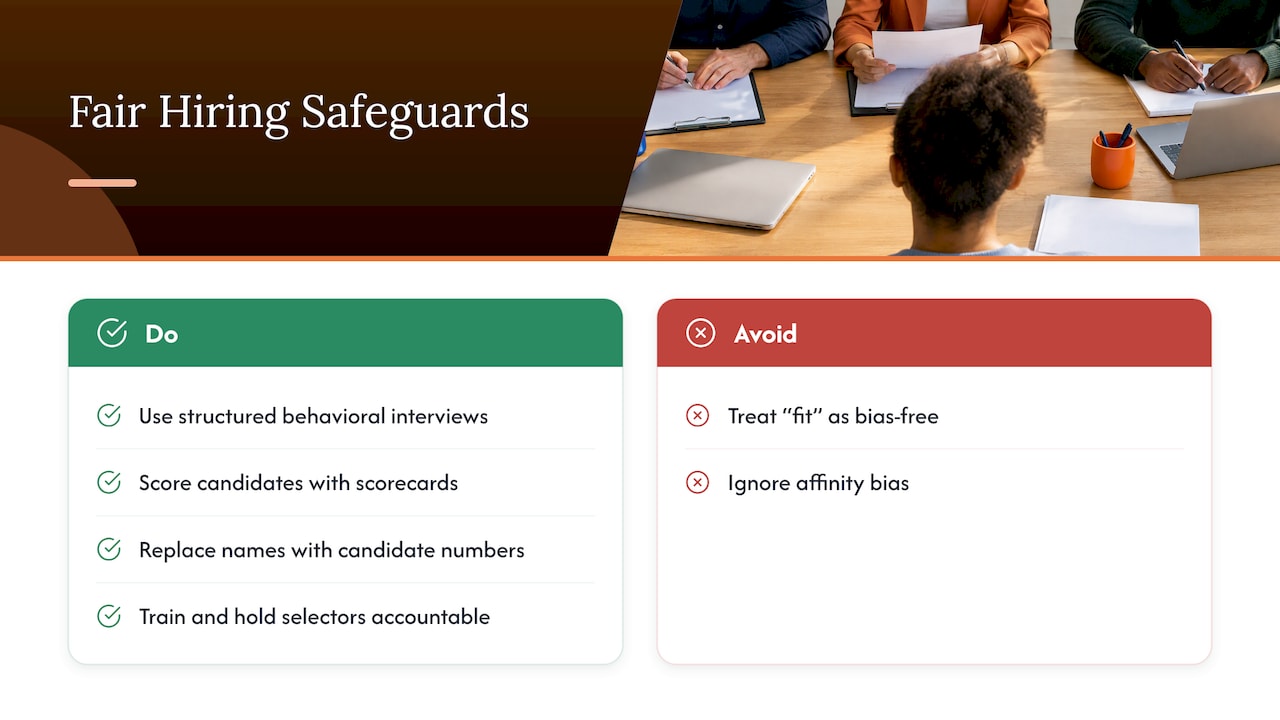
The Employers Council’s DEI guide recommends structured interviews with behavioral questions and scorecards, replacing candidate names with numbers to reduce bias, and scrutinizing the word fit as a possible proxy for bias. It also names affinity bias, being drawn to people like us, as one of the most common selection biases, and recommends training and accountability. A diversity event brings candidates in the door. A structured process decides whether they are evaluated fairly.
Track every event hire in your applicant tracking system so you can see which events pay off, and revisit the numbers before you renew a booth. For the full process behind this, see our LGBTQ+ recruitment workflow guide, and for drafting listings that reach the right graduates, how to create diverse job postings.
Diversity recruitment campaigns: examples that show the approach
A campaign is a series of connected actions, and an event is often its centerpiece. Two examples from the research show how focused a campaign can be.
A job fair for one community. In 2019, Philadelphia International Airport partnered with TransWork, a program of the Independence Business Alliance, to host a job fair for transgender, non-binary and gender-expansive individuals. It was held at a community center, and the airport’s roughly 200 private businesses and federal agencies were part of the employment picture. The lesson: pairing an employer base with a trusted community partner, in a venue the community already uses, removes much of the distrust that keeps candidates away.
A community center’s repeated fairs. The Sacramento LGBT Community Center’s Economic Justice Program reports that it held four career fairs in a year, bringing over 50 employers and 250+ job seekers together and producing over fifty employment connections. It pairs fairs with coaching, resume review and personal branding. Fairs work best as one step in a longer support pathway, not a one-off.
The common thread: a clear audience, a trusted host, screened employers and support before and after the day itself.
Allies and career organizations: how to help
If you support LGBTQ+ job seekers as a coach, counselor or colleague, the most useful thing you can do is match people with employers thoughtfully. New York City’s WORK IT manual directs workforce providers to match participants based on their interests, including their comfort with being open about their LGBTQI+ identity, and the employer’s environment and openness. It also advises gathering participant information sensitively and discreetly. Never assume a person wants to be out at work, and never share their identity with an employer without their say.
The need is concrete. OPEN Foundation reports that 1 in 7 LGBT adults in Wisconsin lived in poverty in 2021, and 1 in 4 LGBT people of color. Employment support is not a nice extra for many in the community.
Allies who work inside employers can also help by pushing for the structures described above: listing roles, sending decision-makers, and supporting mentorship. Our recap on mentors who matter shows how mentoring supports career growth.
Where myGwork fits
myGwork is a professional networking and recruitment platform for LGBTQ+ professionals and allies. We curate jobs and networking opportunities exclusively with corporations actively committed to LGBTQ+ inclusion. Our offering includes job listings, mentorship, and virtual and in-person networking events for LGBTQ+ professionals, students and allies. We have also run WorkFair, a jobs event for LGBTQ+ students and recent graduates with inclusive employers worldwide.
For employers, our plans (Essentials, Bronze, Silver, Gold and Platinum) on the corporate solutions page cover recruitment marketing and talent sourcing. Our services page lists LGBTQ+ talent attraction, employer engagement, event promotion, video production and sponsored content. Visit mygwork.com to explore jobs and events or to talk with us about reaching LGBTQ+ talent.
If you are starting an initiative from scratch, our guide on launching LGBTQ+ hiring initiatives is a practical next read, and onboarding steps for inclusive workplaces covers what happens after the offer.
Our perspective
A hiring event is a few hours. A candidate’s trust takes much longer to earn, and it starts with the employers in the room.
That is why we curate jobs and networking opportunities only with corporations actively committed to LGBTQ+ inclusion. A professional should not have to wonder whether a booth is welcoming. The question is answered before the first conversation.
We also think the best results come when events are connected to everything around them: listings that stay visible after the day ends, mentorship that helps people grow, and employer branding that shows what working somewhere is like. For employers, that means plans and services built around reaching LGBTQ+ talent all year. For candidates, it means a community and a set of opportunities that continue long after the fair.
Adrien
FAQ
What is an LGBTQ+ recruiting event?
It is a job fair, conference expo, campus showcase or virtual event built to connect LGBTQ+ professionals and allies with employers interested in hiring them. Some, like OPEN Foundation’s fairs, admit only vetted, affirming employers. Others are part of larger conferences with recruiters on site.
What does DEI hiring mean?
DEI hiring refers to recruiting and selection practices aimed at diversity, equity and inclusion. In practice that includes reaching underrepresented communities, using structured interviews with scorecards and holding hiring teams accountable for fair evaluation. The Employers Council guide lists these steps for US employers.
How should I prepare for a diversity job fair?
Research 5 to 10 employers, prepare questions, bring several resume copies, rehearse a short pitch and collect contact details. Afterward, send a thank-you email that mentions what you discussed and asks about next steps. CareerOneStop, run by the US Department of Labor, recommends this routine.
Do I have to be out to attend?
No. You decide how much to share, and many events welcome allies too. Plan ahead how you will answer questions about your involvement in community groups, so you feel in control of the conversation.
How do employers measure whether an event worked?
Track hires from each event in your applicant tracking system, and note how quickly your team followed up. Compare events by hires and cost, and keep the ones where decision-makers met candidates and roles were open.
Sources
- Job Fairs | CareerOneStop
- Career Fairs | OPEN Foundation
- Home | OPEN Foundation
- HRC | LGBTQ+ Recruitment
- Employer’s Guide to Diversity, Equity, and Inclusion | Employers Council
- WORK IT | City of New York
- Queer Career Resource & Job Fair | Twin Cities Pride
- Authentic Connections | Santa Clara University
- Economic Justice Program | Sacramento LGBT Community Center
- Philadelphia International Airport hosting trans job fair | Transadvocate
- North Texas Job Fair returns to Globe Life Field | Fort Worth Report