
Diversity Hiring Guide: Steps to Inclusive Recruitment Success
October 1, 2026
Did you know that almost half of job seekers from minority backgrounds feel discouraged from applying due to biased recruitment practices? Creating a fair hiring process matters for organizations aiming to attract top talent and build an inclusive team. By examining each step, from job descriptions to interviews and beyond, you can uncover hidden barriers and design a recruitment strategy that welcomes skilled candidates from every background.
Table of Contents
- Step 1: Assess Current Hiring Practices For Bias
- Step 2: Design Inclusive Job Descriptions And Outreach
- Step 3: Implement Structured, Unbiased Interview Processes
- Step 4: Engage Diverse Talent Pools And Partnerships
- Step 5: Verify And Measure Diversity Hiring Outcomes
Quick Summary
| Key Point | Explanation |
|---|---|
| 1. Audit Hiring Practices for Bias | Regularly evaluate recruitment processes to identify and eliminate biases that may discriminate against candidates. |
| 2. Use Inclusive Job Descriptions | Craft job postings that utilize neutral language to attract a diverse array of applicants, focusing on skills rather than specific demographics. |
| 3. Implement Structured Interviews | Standardize interview processes and scoring systems to minimize unconscious bias and ensure fair assessments of all candidates. |
| 4. Engage Diverse Talent Pools | Actively reach out to diverse organizations and communities to broaden your candidate pool and promote inclusivity in recruitment. |
| 5. Measure Diversity Hiring Outcomes | Track and analyze diversity metrics regularly to understand hiring efficacy and make informed improvements to recruitment strategies. |
Step 1: Assess Current Hiring Practices for Bias
Understanding potential biases in your recruitment process is crucial for creating a fair and inclusive workplace. In this step, you’ll conduct a comprehensive evaluation of your current hiring practices to identify and eliminate discriminatory patterns.
According to research from Brookings, employers must carefully examine their hiring tools for potential biases, particularly when utilizing AI systems. Start by performing a thorough audit of your recruitment workflow. Review job descriptions for language that might unintentionally exclude certain candidates, analyze candidate screening processes, and examine interview protocols.
Cardiff University studies reveal widespread discrimination against marginalized applicants, underscoring the importance of this assessment. Key areas to scrutinize include:
- Demographic representation in candidate pools
- Candidate evaluation criteria
- Interview panel composition
- Recruitment channel diversity
Consider engaging an external diversity consultant who can provide an objective perspective and help identify blind spots in your current approach. Their expertise can uncover subtle biases that internal teams might overlook.
Remember that bias assessment is not a one-time event but an ongoing process of continuous improvement. By systematically examining and refining your hiring practices, you create pathways for more equitable recruitment that welcomes talent from all backgrounds.
Step 2: Design Inclusive Job Descriptions and Outreach
Crafting job descriptions that welcome diverse talent is a critical step in building an inclusive recruitment strategy. In this section, you will learn how to transform your job postings into inviting opportunities that attract candidates from all backgrounds.
According to CIPD, employers should prioritize neutral language and avoid gendered wording to create truly inclusive job descriptions. Start by auditing your current job postings for potentially exclusionary terminology. Replace words that might inadvertently signal preference for a specific gender, age group, or background. For example, swap out terms like “rockstar” or “ninja” with more professional and inclusive descriptors that focus on skills and qualifications.
Buckinghamshire University research suggests removing “desirable” criteria can prevent deterring qualified candidates. Instead of creating a laundry list of requirements that might discourage potential applicants, focus on essential skills and core competencies. Consider using language that emphasizes learning potential and growth opportunities.
Key strategies for inclusive job descriptions include:
- Use gender neutral pronouns
- Focus on required skills rather than extensive experience
- Highlight your organization’s commitment to diversity
- Provide clear information about accommodations for candidates with disabilities
Pro tip: Have diverse team members review your job descriptions to provide perspective and identify potential barriers. Their insights can help you create more welcoming and accessible job postings.

By reimagining how you communicate job opportunities, you open doors for talented professionals who might have previously felt excluded from your recruitment process.
Step 3: Implement Structured, Unbiased Interview Processes
Creating a fair and consistent interview process is essential for identifying top talent while minimizing unconscious biases. In this step, you will learn how to design an interview approach that evaluates candidates objectively and equitably.
Research from UMass highlights the importance of utilizing structured interviews and standardized scoring systems to mitigate potential biases. Develop a comprehensive interview framework that includes:
- Predetermined questions for all candidates
- Clear evaluation criteria
- Consistent scoring rubrics
- Multiple interviewers for different perspectives
UC Berkeley HR emphasizes the critical need for training hiring committees on managing implicit bias. Consider implementing workshops that help interviewers recognize and counteract their unconscious prejudices. This training should focus on:
- Recognizing personal biases
- Understanding impact of unconscious stereotyping
- Developing objective assessment techniques
- Creating inclusive interview environments
A practical approach involves creating a standardized interview scorecard that focuses on specific skills and competencies. Each interviewer should independently score candidates using the same criteria, then compare notes to ensure a comprehensive and fair assessment.
Pro tip: Implement a blind review process where personally identifying information is removed from initial candidate evaluations. This helps ensure that candidates are judged solely on their qualifications and potential.
By adopting these structured interview methods, you create a more equitable path to identifying exceptional talent while demonstrating your commitment to diversity and inclusion.
Step 4: Engage Diverse Talent Pools and Partnerships
Building a truly inclusive recruitment strategy requires proactively reaching beyond traditional hiring channels and creating meaningful connections with diverse professional communities. This step will guide you in expanding your talent acquisition approach to attract exceptional candidates from varied backgrounds.
According to University of Essex, employers should strategically post job openings on diverse platforms and perform targeted outreach to encourage a broader applicant pool. This means moving beyond generic job boards and connecting with:
- LGBTQ+ professional networks
- Disability employment organizations
- Multicultural professional associations
- University career centers serving underrepresented communities
- Specialized job boards focused on diverse talent
Imperial College recommends implementing anonymized application processes to eliminate unconscious bias. This approach allows candidates to be evaluated purely on their skills and potential, creating a more equitable initial screening process.
Pro tip: Develop genuine partnerships with diversity focused organizations. Attend their career events, offer mentorship programs, and create internship opportunities that demonstrate your commitment to inclusive recruitment.
By intentionally expanding your talent acquisition strategy, you transform recruitment from a transactional process into a meaningful pathway for building a truly representative workforce.
Step 5: Verify and Measure Diversity Hiring Outcomes
Evaluating the effectiveness of your diversity recruitment strategies is crucial for continuous improvement and meaningful change. This step will help you develop a robust system for tracking and analyzing your hiring diversity metrics.
Research from the University of Arizona Health Sciences emphasizes the importance of regularly reviewing hiring practices and outcomes to identify and address unconscious biases. Implement a comprehensive tracking system that captures key diversity indicators such as:
- Candidate demographic representation
- Interview progression rates
- Hiring success rates across different demographic groups
- Retention rates for diverse hires
- Promotion and career advancement patterns
Create a quarterly diversity hiring dashboard that provides transparent insights into your recruitment performance. This dashboard should not just collect data but help you understand the underlying patterns and potential areas of improvement. Consider breaking down metrics by:
- Department
- Role level
- Recruitment channels
- Candidate source
Pro tip: Establish clear benchmarks and goals for diversity hiring. These should be specific measurable and time bound. Review these goals quarterly and be prepared to adjust your recruitment strategies based on the insights you gather.
Remember that measuring diversity hiring is not about meeting quotas but creating genuine pathways for talented professionals from all backgrounds to succeed in your organization.
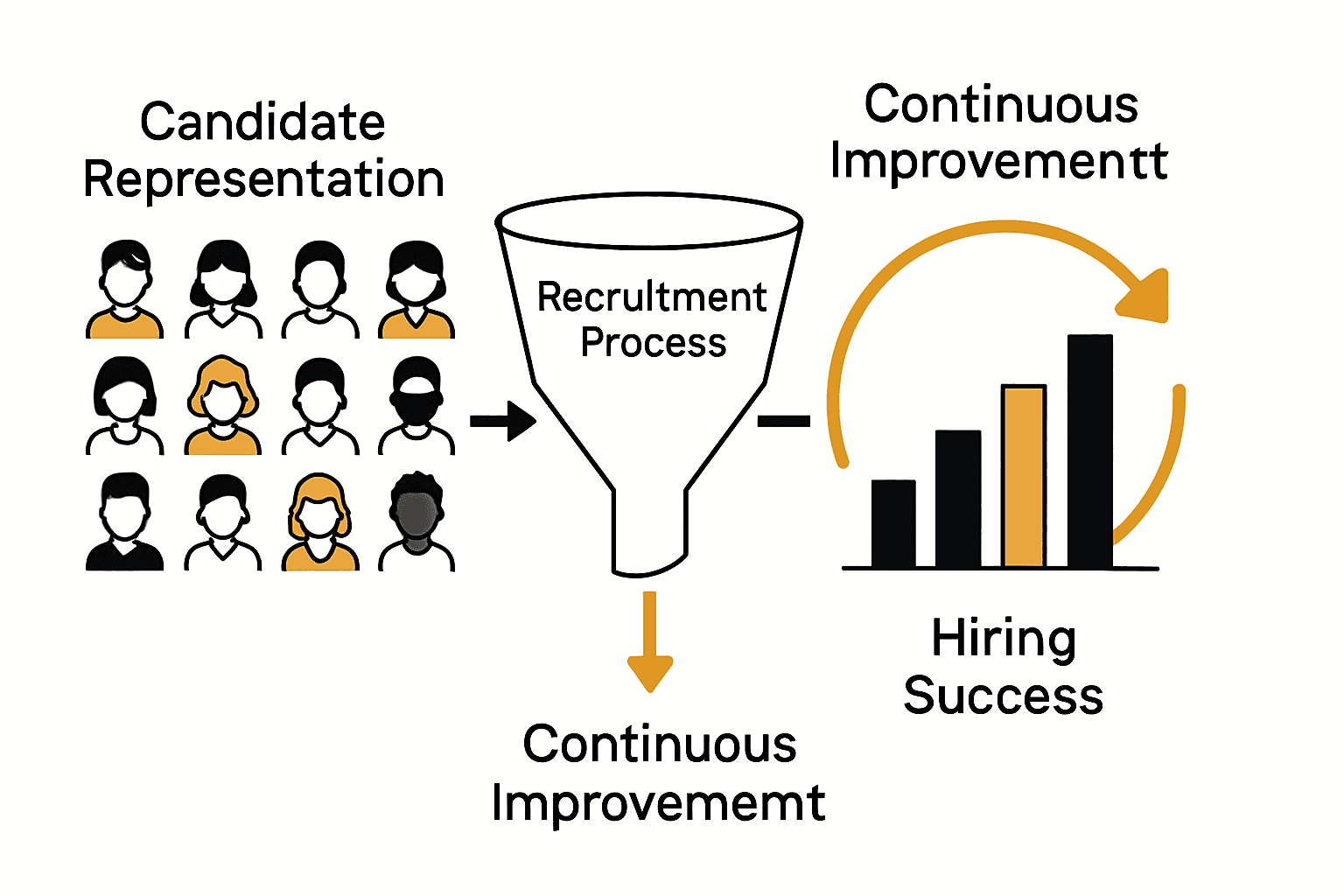
Build a More Inclusive Workforce with Targeted LGBTQ+ Connections
Creating truly unbiased hiring processes is a vital step toward meaningful diversity as outlined in the Diversity Hiring Guide. Many organizations face challenges like eliminating unconscious bias, expanding outreach to underrepresented talent pools, and designing structured interviews that ensure fairness. If you want to address these pain points and boost your success with inclusive recruitment, connecting with specialized platforms is essential.
Discover how mygwork.com empowers employers to reach LGBTQ+ professionals through a unique community-driven network committed to diversity and inclusion. By partnering with this platform, you gain access to a rich talent pool, inclusive recruitment tools, and resources tailored to reduce hiring bias while celebrating diversity. Take the next step today by visiting mygwork.com and start transforming your hiring strategy into one that fosters genuine equality and representation.
Frequently Asked Questions
How can I assess biases in my current hiring practices?
To assess biases in your hiring practices, conduct a thorough audit of your recruitment workflow. Review job descriptions, candidate screening processes, and interview methods to identify any patterns of discrimination or exclusion.
What should I include in inclusive job descriptions?
Ensure your job descriptions focus on required skills and qualifications without using gendered or exclusionary language. Prioritize neutral wording and highlight your organization’s commitment to diversity, making the role welcoming to all candidates.
How do I structure an unbiased interview process?
Implement a structured interview framework by using predetermined questions and clear evaluation criteria for all candidates. Train your hiring committee to recognize their biases, and use a standardized scoring rubric to ensure consistency in evaluations.
What are effective ways to reach diverse talent pools?
Expand your recruitment efforts by posting job openings on specialized job boards and networking through diverse professional organizations. Actively engage in partnerships with these communities to foster genuine connections and encourage applications from underrepresented groups.
How can I measure the effectiveness of my diversity hiring strategies?
To measure your diversity hiring effectiveness, create a tracking system to capture key metrics such as candidate representation and hiring success rates. Regularly review this data, aiming to establish specific diversity hiring targets and adjust your strategies quarterly based on the insights gathered.
What actions can I take to ensure continuous improvement in my hiring practices?
Establish a feedback loop by regularly assessing your recruitment processes and engaging diverse team members for input. Set measurable goals and review these quarterly to make necessary adjustments, leading to a more equitable hiring environment.