
Diversity recruiting explained: key strategies and benefits
December 8, 2025Over three quarters of executives now see workforce diversity as vital for business success. Yet, real progress depends on more than meeting quotas or checking boxes. Building diverse teams means rethinking old hiring habits and opening doors that were once closed. This guide unpacks what diversity recruiting really means, why it matters at every level, and how organizations can move from good intentions to real results.

Defining Diversity Recruiting and Its Purpose
Diversity recruiting represents a strategic approach to talent acquisition that goes beyond traditional hiring methods. Diversity recruiting is fundamentally about intentionally seeking candidates from varied backgrounds, experiences, and perspectives to create a more representative and dynamic workforce. According to oxford-review, this practice involves “actively seeking out and hiring candidates from a variety of backgrounds, perspectives, and experiences to ensure an inclusive workforce.”
At its core, diversity recruiting aims to dismantle systemic barriers that have historically limited professional opportunities for marginalized groups. By proactively creating pathways for underrepresented professionals, organizations can build teams that reflect the rich complexity of human experience. This approach recognizes that diversity is not just a moral imperative but a strategic advantage that drives innovation, creativity, and organizational performance.

The purpose of diversity recruiting extends far beyond simple numerical representation. Drawing insights from ALA, we understand that such initiatives fundamentally seek to “address the documented underrepresentation of minority professionals” across various sectors. This means creating intentional strategies that:
- Expand recruitment channels to reach diverse talent pools
- Eliminate unconscious bias in hiring processes
- Create inclusive job descriptions that welcome varied candidates
- Develop mentorship and support systems for underrepresented professionals
- Build organizational cultures that genuinely value different perspectives
Ultimately, diversity recruiting is about transforming workplace ecosystems. It’s not just about hiring different people but creating environments where those individuals can thrive, contribute meaningfully, and see genuine pathways to professional growth and leadership.
Types of Diversity Recruiting Initiatives
Diversity recruiting initiatives encompass a wide range of strategic approaches designed to build more inclusive and representative workforces. According to thejoas, these strategies are “essential for achieving human resource diversity within multicultural work environments” and involve targeted practices that go beyond traditional hiring methods.
Some key diversity recruiting initiatives include:
- Targeted Outreach Programs: Actively engaging with professional networks, educational institutions, and community organizations that serve underrepresented groups
- Inclusive Job Descriptions: Crafting job postings that use neutral language, highlight organizational commitment to diversity, and remove unnecessary barriers to application
- Structured Interview Processes: Implementing standardized interview protocols that minimize unconscious bias and focus on skills and potential
- Diversity Talent Pipelines: Developing long-term relationships with diverse talent pools through internships, mentorship programs, and early career development initiatives
One innovative approach to diversity recruiting comes from the technology sector. As highlighted by arxiv, organizations are experimenting with creative recruitment methods like affirmative hackathons. These events specifically target underrepresented groups - such as software developers with disabilities - creating dedicated spaces for talent discovery and professional opportunities.
Beyond event-based approaches, successful diversity recruiting requires a holistic strategy. This means looking beyond single hiring events and creating sustainable mechanisms that:
- Continuously evaluate and improve recruitment processes
- Build inclusive workplace cultures that retain diverse talent
- Provide meaningful career development opportunities
- Demonstrate genuine commitment to equity and representation
By embracing these multifaceted initiatives, organizations can transform their recruitment approach from passive compliance to active celebration of workforce diversity.
To learn more about our mission of supporting inclusive professional environments, check out our about us page.
How Diversity Recruiting Works in Practice
Diversity recruiting moves beyond theoretical concepts into practical, actionable strategies that transform organizational hiring approaches. Algorithmic hiring technologies have emerged as a sophisticated tool in this process, with research from arxiv highlighting how employers are increasingly adopting these technologies throughout the recruitment pipeline to enhance fairness and representation.
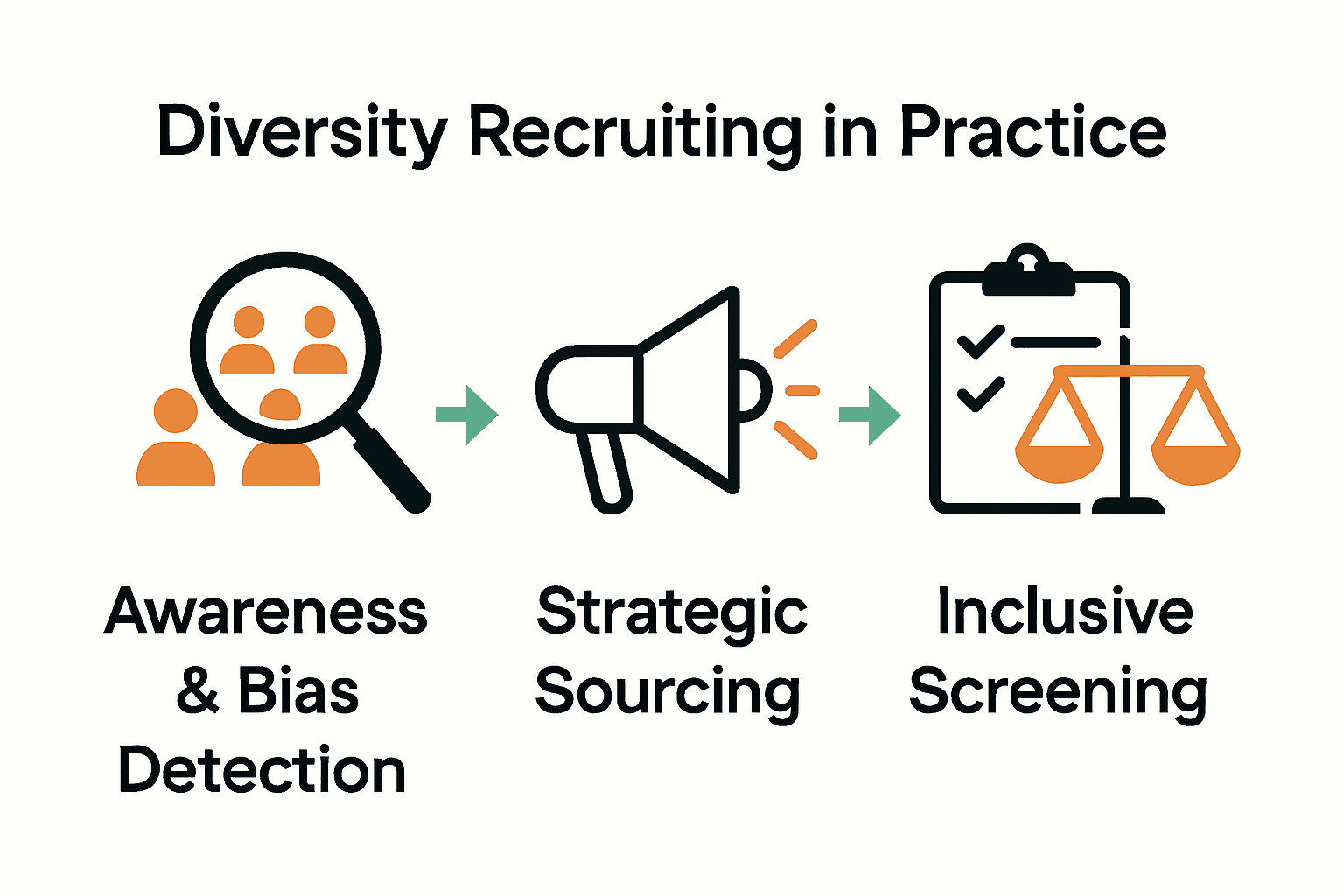
The practical implementation of diversity recruiting involves several key stages:
- Awareness and Bias Detection: Conducting comprehensive organizational assessments to identify existing demographic gaps and unconscious biases
- Strategic Sourcing: Expanding recruitment channels to include diverse professional networks, community organizations, and targeted platforms
- Inclusive Screening: Developing standardized evaluation criteria that focus on skills, potential, and objective qualifications
- Structured Interview Processes: Creating interview protocols that minimize individual bias and provide equal opportunities for all candidates
Technological innovations are playing a crucial role in this transformation. As illustrated by arxiv, tools like the Entrofy algorithm demonstrate how data-driven approaches can optimize diversity in candidate selection. These sophisticated systems help organizations systematically enhance workforce representation while maintaining transparency and accountability.
Successful diversity recruiting requires a holistic approach that goes beyond individual hiring decisions. Organizations must create comprehensive ecosystems that:
- Develop inclusive workplace cultures
- Provide mentorship and career development opportunities
- Implement ongoing diversity and inclusion training
- Establish clear metrics and accountability for diversity goals
Ultimately, diversity recruiting is an ongoing journey of organizational growth and transformation. For professionals and organizations committed to building more inclusive workplaces, contact our team to explore how we can support your diversity recruiting initiatives.
Legal Considerations for Inclusive Hiring
Legal compliance is a critical foundation for effective diversity recruiting, requiring organizations to navigate complex regulatory landscapes while promoting genuine inclusivity. According to arxiv, the adoption of algorithmic hiring technologies introduces significant legal considerations, particularly concerning fairness and potential systemic biases in recruitment processes.
Key legal considerations for inclusive hiring include:
- Equal Employment Opportunity (EEO) Compliance: Ensuring hiring practices do not discriminate based on protected characteristics
- Reasonable Accommodation: Providing accessible application and interview processes for candidates with disabilities
- Algorithmic Fairness: Implementing hiring technologies that do not perpetuate historical discrimination
- Documentation and Transparency: Maintaining clear records of recruitment decisions and selection criteria
- Privacy Protection: Safeguarding candidate personal information throughout the recruitment process
Research from ijlmh highlights that companies adopting systematic, business-led approaches to inclusion are making significant progress in creating legally compliant and equitable recruitment strategies. This involves developing comprehensive frameworks that go beyond mere compliance to create genuinely inclusive workplace environments.
Navigating the legal landscape of diversity recruiting requires a proactive and holistic approach. Organizations must:
- Regularly audit recruitment processes for potential bias
- Provide ongoing training on legal requirements and inclusive practices
- Develop clear, objective selection criteria
- Create mechanisms for addressing potential discrimination
- Stay informed about evolving legal standards and best practices
Ultimately, legal considerations in diversity recruiting are about more than avoiding potential litigation. They represent an opportunity to build more equitable, innovative, and representative workplaces. For organizations seeking guidance on developing legally sound diversity recruiting strategies, contact our team to explore comprehensive support and consulting services.
Common Challenges and Mistakes to Avoid
Diversity recruiting is a nuanced process fraught with potential pitfalls that can undermine even the most well-intentioned initiatives. According to tidsskrift, organizations frequently encounter challenges due to informal recruitment methods and subjective judgments that can inadvertently perpetuate existing demographic imbalances.
Common challenges in diversity recruiting include:
- Unconscious Bias: Allowing personal preferences to influence candidate selection
- Tokenism: Recruiting diverse candidates without creating genuine inclusion
- Narrow Recruitment Channels: Relying on traditional networks that limit candidate diversity
- Insufficient Organizational Support: Failing to create systemic structures that support diverse talent
- Performative Diversity: Treating diversity as a checkbox rather than a meaningful organizational transformation
Research reveals complex dynamics in diversity initiatives. Wikipedia highlights a critical insight: mandatory diversity training can sometimes paradoxically increase discrimination and prejudice, underscoring the need for carefully designed, voluntary approaches that genuinely foster understanding and inclusion.
To avoid these pitfalls, organizations must:
- Implement structured, objective evaluation processes
- Develop comprehensive diversity and inclusion strategies
- Create mentorship and support systems for underrepresented professionals
- Continuously educate leadership about unconscious bias
- Measure diversity outcomes beyond initial recruitment
Successful diversity recruiting requires ongoing commitment, self-reflection, and a genuine desire to create meaningful change. Organizations must move beyond surface-level approaches and commit to deep, systemic transformation. For guidance in navigating these challenges, contact our team to explore strategic diversity recruiting solutions.
Transform Your Diversity Recruiting Strategy with Inclusive Connections
Diversity recruiting is essential for building workplaces where every individual can thrive. The article highlights key challenges like unconscious bias, narrow recruitment channels, and the need for genuine inclusion rather than tokenism. If you want to break down systemic barriers and create a dynamic, fair hiring process that attracts diverse talent, specifically from LGBTQ+ communities, you need more than traditional methods.
Discover how myGwork empowers organizations and professionals with a dedicated platform that connects LGBTQ+ talent to inclusive employers. Our professional network and specialized job board help you access underrepresented candidates, foster real belonging, and build authentic career pathways. Start elevating your diversity recruiting strategy right now and join a community that values inclusion at every level. Visit myGwork to explore resources, create meaningful connections, and attract diverse talent today.
Frequently Asked Questions
What is diversity recruiting?
Diversity recruiting is a strategic approach to talent acquisition that intentionally seeks candidates from various backgrounds, experiences, and perspectives to create a more inclusive workforce.
What are the benefits of diversity recruiting?
The benefits of diversity recruiting include enhanced innovation, creativity, improved organizational performance, and the ability to dismantle systemic barriers that limit opportunities for marginalized groups.
What common challenges do organizations face in diversity recruiting?
Organizations often face challenges such as unconscious bias, tokenism, reliance on narrow recruitment channels, and a lack of genuine organizational support for diversity and inclusion initiatives.
How can organizations ensure effective diversity recruiting practices?
Organizations can ensure effective diversity recruiting by implementing structured interview processes, crafting inclusive job descriptions, expanding recruitment channels, and providing mentorship for underrepresented professionals.