
Employee Resource Groups: Boosting LGBTQ+ Inclusion
February 4, 2026Every LGBTQ+ professional knows the difference it makes when you truly feel seen and supported at work. As today’s global companies expand their diversity efforts, understanding Employee Resource Groups becomes essential for building real connections and advancing workplace inclusion. This guide breaks down the evolution of ERGs from grassroots support networks to strategic business assets, revealing how these groups can empower you, shape culture, and drive meaningful community engagement no matter where you work.

Employee Resource Groups Defined and Debunked
Employee Resource Groups (ERGs) represent powerful grassroots networks within organizations designed to support marginalized employees while driving meaningful workplace inclusion. These volunteer-led communities originated as informal support systems and have since evolved into strategic assets for corporate diversity initiatives.
Traditionally, ERGs emerged as employee-led community networks focused on creating safe spaces for underrepresented professionals. Their initial purpose centered on reducing workplace discrimination and expanding opportunities for marginalized employees across various demographic groups.
Core Components of ERGs include:
- Supporting employees with shared identities
- Creating professional networking opportunities
- Providing leadership development platforms
- Advocating for inclusive organizational practices
- Contributing to recruitment and retention strategies
Modern ERGs have transformed from purely supportive networks into strategic organizational resources. Effective ERGs balance member needs with business objectives, offering leadership development opportunities by empowering members to manage programs, budgets, and organizational initiatives.
Key Characteristics of Successful ERGs:
- Voluntary participation
- Clear organizational alignment
- Measurable impact on company culture
- Strong executive sponsorship
- Transparent governance structures
By connecting professionals across demographic boundaries, ERGs help organizations create more inclusive environments where diverse talents can thrive. They serve as critical mechanisms for professional development, mentorship, and cultural transformation.
Pro tip: When joining an ERG, approach involvement strategically by understanding both personal growth opportunities and potential organizational impact.
Major Types and Common Structures
Employee Resource Groups (ERGs) have evolved into sophisticated organizational networks with diverse structures and purposes. Different types of ERGs reflect the multifaceted nature of workplace diversity, addressing unique professional and personal experiences across various employee demographics.
Primary ERG Categories include:
- Identity-Based Groups
- Ethnicity and race
- Gender
- LGBTQ+ communities
- Veterans
- Disability networks
- Professional Development Groups
- Early career professionals
- Mid-career leadership networks
- Women in leadership
- Emerging industry professionals
- Wellness and Well-being Groups
- Mental health support
- Physical wellness networks
- Caregiver support
- Work-life balance initiatives
Successful ERG structures typically involve comprehensive leadership roles that ensure strategic alignment and meaningful impact. These roles often include program managers, executive sponsors, communication leads, and treasurers who help guide the group’s mission and operational effectiveness.
Typical ERG Leadership Structures:
- Volunteer leadership team
- Executive sponsor from senior management
- Clear governance and charter
- Defined goals and metrics
- Regular reporting mechanisms
Each ERG type serves distinct purposes, from fostering professional connections to addressing systemic workplace challenges. The most effective groups maintain a delicate balance between grassroots authenticity and strategic organizational objectives.
Here’s a summary of how different ERG types align with organizational goals:
Pro tip: When designing an ERG, prioritize clear communication channels and align group objectives with broader organizational diversity and inclusion strategies.
How ERGs Function Day-to-Day
Employee Resource Groups operate through dynamic volunteer-driven ecosystems that create meaningful workplace connections. Daily ERG operations involve strategic community-building activities designed to support professional development, networking, and organizational inclusion.
Key Daily Functions include:
- Hosting networking events
- Organizing educational workshops
- Facilitating mentorship programs
- Coordinating professional development sessions
- Supporting employee wellness initiatives
- Creating safe dialogue spaces
- Advocating for organizational policy improvements
Volunteer leadership plays a critical role in ERG functionality. Typical roles such as program managers, event coordinators, and communication specialists work collaboratively to design and implement engaging group activities that align with broader diversity and inclusion objectives.
ERG Leadership Responsibilities:
- Plan monthly meeting agendas
- Develop strategic annual goals
- Manage communication channels
- Track group engagement metrics
- Collaborate with executive sponsors
ERG case studies demonstrate consistent interaction drives organizational culture transformation. These groups create opportunities for employees to connect beyond traditional workplace interactions, fostering a sense of belonging and mutual support.

Executive sponsors provide crucial infrastructure support, offering resources, visibility, and strategic guidance that help ERGs translate grassroots enthusiasm into meaningful organizational change.
Pro tip: Develop a structured communication plan that ensures consistent engagement and transparent reporting of ERG activities to maintain momentum and organizational support.
Legal and Organizational Frameworks
Employee Resource Groups operate within complex legal and organizational landscapes that require strategic navigation of corporate policies, diversity regulations, and workplace inclusion standards. Understanding these frameworks is critical for creating sustainable and impactful ERG initiatives.
Key Legal Considerations for ERGs:
- Compliance with Equal Employment Opportunity regulations
- Adherence to workplace discrimination prevention laws
- Protection of employee privacy rights
- Alignment with corporate diversity and inclusion policies
- Maintaining voluntary participation standards
- Ensuring transparent governance structures
Organizational frameworks for ERGs typically involve multilayered governance mechanisms that balance employee-driven initiatives with strategic corporate objectives. This requires carefully designed charters that outline group purposes, operational guidelines, and performance expectations.
Organizational ERG Governance Components:
- Formal charter development
- Executive sponsorship agreements
- Defined leadership selection processes
- Performance and impact measurement protocols
- Budgetary allocation and resource management
Legal protections play a crucial role in ensuring ERGs can function effectively without risking discrimination or workplace marginalization. Organizations must create inclusive environments that respect employee autonomy while maintaining professional standards and corporate objectives.
Successful ERG frameworks balance organizational requirements with employee empowerment, creating spaces for authentic representation and meaningful professional development.
Compliance Strategy Elements:
- Regular legal review of ERG practices
- Clear communication of group objectives
- Documented decision-making processes
- Transparent reporting mechanisms
- Consistent ethical standards enforcement
The most effective ERGs integrate legal compliance with genuine community-building principles, transforming potential regulatory constraints into opportunities for meaningful workplace inclusion.
Pro tip: Develop a comprehensive ERG charter that explicitly outlines governance structures, legal compliance mechanisms, and clear communication protocols to prevent potential organizational misunderstandings.
Key Benefits and Advocacy Roles
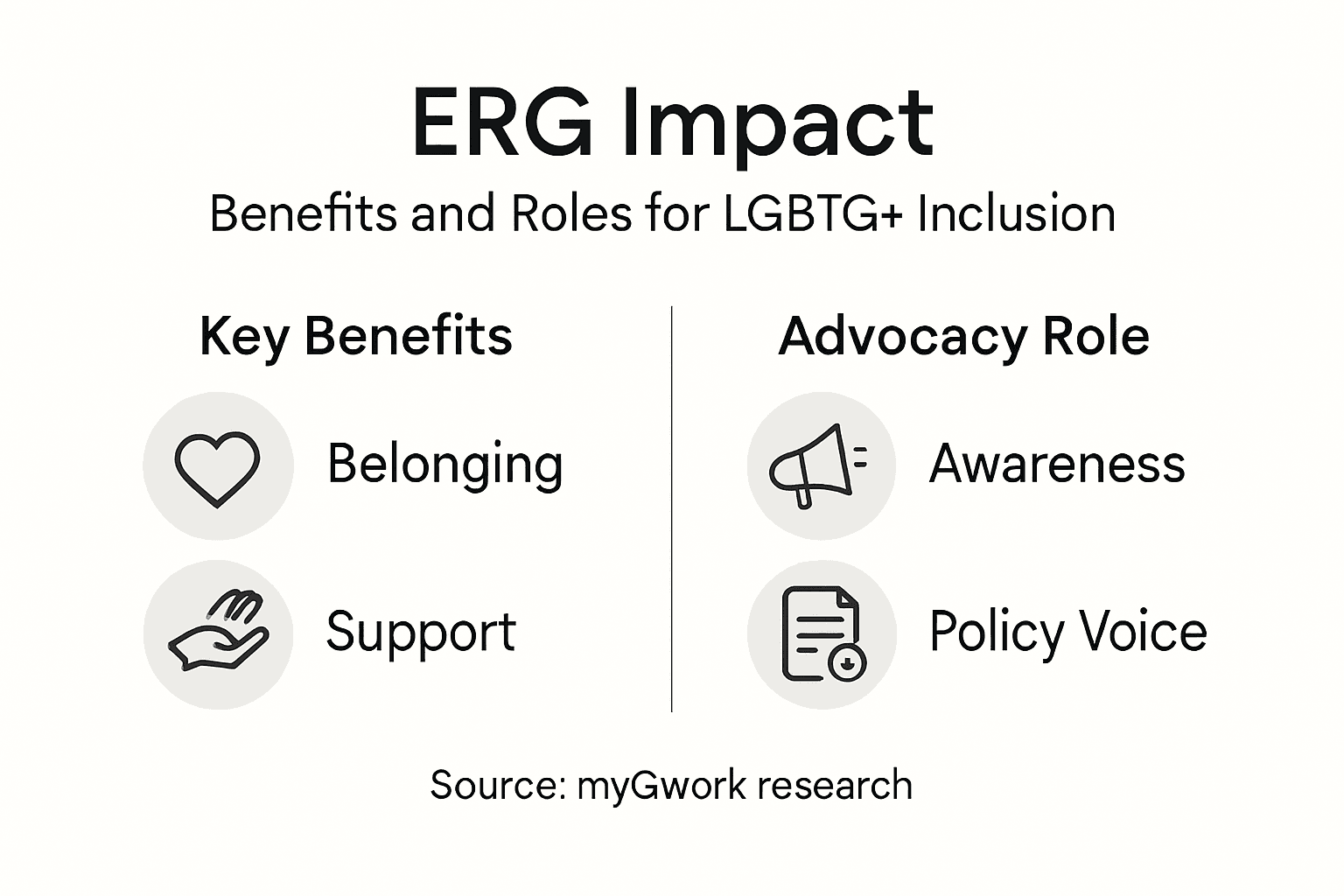
Employee Resource Groups represent transformative organizational platforms that extend far beyond traditional networking mechanisms. LGBTQ+ ERGs provide critical support environments that foster workplace belonging, reduce professional isolation, and drive meaningful cultural change.
Organizational Benefits of ERGs:
- Enhanced employee engagement
- Improved talent retention rates
- Strengthened diversity and inclusion initiatives
- Increased workplace psychological safety
- Development of leadership skills
- Expanded professional networking opportunities
- Improved organizational innovation
Advocacy represents a core function of ERGs, enabling marginalized professionals to drive systemic workplace improvements. These groups serve as crucial conduits for translating employee experiences into actionable organizational strategies, challenging existing workplace norms and promoting equitable practices.
Key Advocacy Dimensions:
- Policy transformation
- Cultural awareness development
- Institutional representation
- Professional development support
- Intersectional community building
ERGs transform workplace dynamics by creating platforms where marginalized voices become catalysts for meaningful organizational evolution.
Beyond internal organizational impacts, ERGs play significant roles in external representation, helping companies demonstrate genuine commitment to diversity and inclusion. They serve as critical bridges between organizational leadership and employee experiences, translating complex interpersonal dynamics into strategic developmental opportunities.
Systemic Impact Mechanisms:
- Developing inclusive leadership pipelines
- Creating mentorship networks
- Challenging discriminatory workplace practices
- Generating organizational learning opportunities
- Promoting transparent communication channels
Pro tip: Approach ERG participation as a strategic professional development opportunity, focusing on both personal growth and organizational transformation.
Risks, Challenges, and What to Avoid
Employee Resource Groups represent powerful diversity initiatives, but they also encounter complex organizational challenges that require strategic navigation. LGBTQ+ workplace experiences reveal significant systemic obstacles that can undermine ERG effectiveness and employee engagement.
Common ERG Risks and Pitfalls:
- Token representation without substantive change
- Volunteer burnout
- Leadership misalignment
- Limited organizational commitment
- Lack of measurable impact
- Potential marginalization of participants
- Inconsistent executive support
Potential challenges emerge when organizations treat ERGs as performative diversity checkboxes rather than genuine transformation platforms. Authentic ERG development requires deep institutional commitment beyond surface-level initiatives, demanding consistent resources, strategic alignment, and meaningful organizational integration.
Key Potential Failure Points:
- Insufficient leadership accountability
- Lack of clear performance metrics
- Inadequate funding and resources
- Minimal executive sponsorship
- Absence of structural empowerment mechanisms
ERGs can become ineffective when they are treated as peripheral activities rather than core strategic diversity mechanisms.
Warning Signs of Problematic ERG Implementation:
- Minimal budgetary allocation
- No formal recognition in corporate policies
- Lack of measurable inclusion objectives
- Inconsistent meeting schedules
- Limited cross-departmental collaboration
- Absence of leadership development pathways
Organizations must cultivate environments where ERGs are viewed as critical strategic assets, not peripheral diversity experiments. This requires ongoing commitment, transparent communication, and genuine institutional introspection.
Consider these common ERG risks and effective mitigation strategies:
Pro tip: Regularly conduct comprehensive ERG effectiveness audits, gathering candid feedback from participants to identify potential systemic improvement opportunities.
Empower LGBTQ+ Inclusion with Employee Resource Groups and mygwork
Navigating the challenges of building authentic LGBTQ+ Employee Resource Groups requires more than passion it demands intentional strategies that connect people and drive real impact. If you are striving to create supportive communities that go beyond tokenism and burnout, and empower marginalized voices within your organization, understanding how to leverage grassroots networks and executive sponsorship is key. This article highlights how ERGs can be powerful conduits for advocacy and leadership development but also stresses the need for clear governance and measurable impact — exactly the areas where mygwork.com supports professionals and organizations.
Unlock the full potential of your LGBTQ+ ERG by joining mygwork, the premier professional networking platform dedicated to LGBTQ+ workforce inclusion. Through our community hub and specialized job board, you can connect with like-minded advocates, discover diversity-driven job opportunities, and equip your ERG with strategic resources and event access to amplify your influence. Act now to transform workplace inclusion from well-meaning intention into meaningful action. Explore how building your network on mygwork can fuel both personal growth and lasting organizational change.
Frequently Asked Questions
What are Employee Resource Groups (ERGs)?
Employee Resource Groups (ERGs) are voluntary, employee-led groups within organizations that support marginalized employees, promote workplace inclusion, and drive diversity initiatives. They are designed to create safe spaces and networking opportunities for underrepresented individuals.
How do ERGs benefit LGBTQ+ employees?
ERGs for LGBTQ+ employees provide critical support, foster a sense of belonging, reduce professional isolation, and advocate for inclusive policies. They also create mentorship and networking opportunities, helping individuals to develop leadership skills within the organization.
What are the common challenges faced by ERGs?
Common challenges faced by ERGs include token representation, volunteer burnout, inadequate organizational commitment, and inconsistent executive support. These factors can undermine the effectiveness and engagement levels of the ERGs.
How can organizations ensure the success of their ERGs?
To ensure success, organizations should prioritize clear communication, executive sponsorship, adequate resources, and meaningful performance metrics. Regular audits and feedback from members can also help to identify areas for improvement and maintain enthusiasm within the group.