
Encouraging allyship towards non-binary people in the workplace
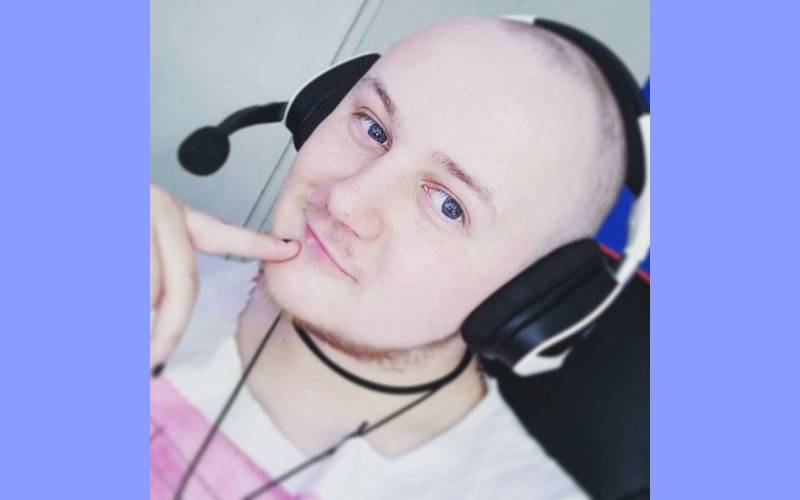
July 5, 2024Jazz McCoull, Senior Bid Writer for Mercer Marsh Benefits, spoke to myGwork about authentic allyship towards the non-binary community. They discuss why it is important to hold open discussions in the workplace about gender identity, and offers advice for closeted non-binary professionals who want to express their true selves.
Can
you please tell us a bit about yourself and your career?
My name is Jazz McCoull (they/them), and I’m a Senior Bid Writer for Mercer Marsh Benefits,
producing responses to requests for proposals for benefits management services.
Though I am new to the field of bid writing, having started less than two years
ago, I am by no means new to writing in general: prose, poetry, journalism and
academic writing are all areas of interest to me. Outside of my career, I am a
keen lover of fiction across all media, a published poet, and an avid gamer.
More than anything else, I enjoy writing fiction, and writing about fiction.
What does allyship
to the non-binary community look like to you?
Existence outside of the gender binary is not a remotely new concept: it’s well-established that variations of non-binary identities exist throughout history across many cultures. Despite this, the idea of being neither exclusively male nor female is consistently received as an oddity in the present day, or much worse. It is my view that the first priority for non-binary allyship is to normalise and naturalise the existence of people outside the gender binary, and this is done by questioning what purpose such a binary serves in the first place. I believe that when we view gender as more than a set of two boxes defined by biological characteristics, we can lay out the foundations for non-binary identities being viewed as no more curious or alarming than any other.
Why is it important
to have conversations on non-binary inclusion in the workplace?
Many non-binary
people feel safer presenting as their assigned gender at birth in the workplace
due to fears of rejection, harassment or physical danger, which are by no means
misplaced. Often, they choose to do this despite a huge amount of personal discomfort
and an enormous toll on their mental well-being. Our careers and the ways we
make a living form a huge part of our lives, in terms of the major events that
shape them, down to the daily routines we follow. It is absolutely critical that non-binary people
feel safe and enabled to be naturally themselves, rather than hide away for
what amounts to a massive portion of their life.
Posting pronouns in
email signatures and Zoom tags may feel minor or superfluous, and maybe even a
little embarrassing, but it makes an enormous difference to colleagues who find
that they need to do so to avoid being misgendered. Additionally, inclusive
language (for example, a little more ‘good morning everyone’ and a little less
‘good morning ladies and gentlemen’) can help to circumvent feelings of
alienation and ostracisation.
Can you tell us a
bit about your experience coming out at work?
I came out as
non-binary between jobs at different places of work, so I introduced myself at
my next job by my new name with non-binary pronouns, and no-one knew the
difference! Naturally, this isn’t feasible for most people, and sadly even
being known only by a particular name and identity is no safeguard against
being misgendered. I have found that people are broadly accepting, with the odd
mistake here and there which I don’t especially find too much of a problem. It’s
more hurtful when people address me by the pronouns they presume fit my
appearance, ignoring the label I present in calls and emails so on. It’s my
view that when these people experience that their behaviour is not being
accepted as normal or harmless by their colleagues, that is when they will
endeavour to correct it.
What advice would
you give to a non-binary person nervous about coming out at work?
Your safety and
well-being are the most important things you can prioritise, so always put them
first. If, in your assessment, coming out as non-binary would compromise those
things, you should by no means force yourself to do it out of a sense of obligation.
That said, being
able to be yourself can make an absolutely enormous difference to the way you
feel. It’s about weighing the situation as it’s presented, doing what you can
with it, and ultimately making the decision that will be best for you overall.
It doesn’t have to be an ‘all-or-nothing’ situation, either! If you’re closer
with some colleagues than others, and feel more comfortable around them, you
could always ask them to refer to you by another name or pronouns in one-to-one
conversation, rather than feeling like you have to push the boat all the way
out at once.
What are some of the
biggest challenges we still have in creating an inclusive workplace and how do
you think we can overcome these?
Complacency and
ignorance are powerful things. It’s a universally accepted principle that an
object at rest will remain at rest – that is to say, if we don’t take actions
to change things, nothing will change. By taking smaller, measured steps
towards a grander objective of inclusion and acceptance, we can shift the tide
such that remaining complacent with the status quo is no longer the easier
option, and therefore not the one to which people are more likely to default.
Did you have any
positive non-binary representation growing up? What was the impact of this?
I’m sorry to say I
didn’t, and I’m not even that old. Non-binary representation in media has, for
a long time, been relegated to aliens and robots – the idea that a human being
could be something other than male or female seemed to be too much of a stretch
for even fictional realms, in most cases. However, I’m glad to say that seems
to be changing now. It’s extremely refreshing to hear non-binary pronouns being
used in some popular media at the moment: even when it’s just a little
thrown-in one here and there, it still makes a difference. Definitely still
waiting on my mainstream blockbuster with an enby lead, though!