
Ethical non-monogamy and the rise in non-traditional relationships
August 1, 2024By Zoë Schulz
For better, for worse, richer or poorer, monogamy has always been at the heart of how we couple up. An often unspoken contract, presumed from the start of a relationship: it’s what sets apart a situationship and serious commitment.
However, it might not be quite as simple as this, at least not for everyone. Many couples are beginning to question whether monogamy needs to be present for a loving relationship to grow. Traditional marriage may tell you differently, but non-traditional love has always existed, and it seems ethical non-monogamy, otherwise known as ENM, may be slowly creeping out of the shadows and into the mainstream, but will this be a passing fad or a permanent shift?

An umbrella term for anything outside of monogamy, ENM encompasses a range of relationship types from open marriages, throuples, polyamory and more. Distinct from cheating, it’s the practice of dating and loving more than one person, where everyone involved is aware and consenting. At its core is the belief that love is abundant and that multiple relationships do not invalidate one another.
Earlier this year, Hinge became one of the first mainstream dating apps to give people the option to add ENM to their profile. The new feature means that their twenty-three million users can add this under their ‘relationship style,’ and has been hailed as a breakthrough win for the ENM community. This comes at the same time as we are seeing a considerable rise in alternative dating apps, such as Feeld, that have been created specifically to connect those exploring non-monogamy. Founded by couple Ana Kirova and Dimo Trifonov when they wanted to date past the boundaries of monogamy and found there was a lack of spaces to do so.
“I don’t think there’s just one way to be happy or one way to connect with people,” says Kirova, the app’s CEO and co-founder. “I’m not trying to prescribe one type of dating. But I want you to question what’s considered the norm and whether it’s working for you.”
The couple weren’t alone in their desire to push the boundaries of what they’ve been told love should look like, with recent research showing 43% of millennials say that their ideal relationship is non-monogamous and 38% of people aged 18 to 24 being open to polyamory.
Effy Blue, relationship coach and co-host of the Curious Fox podcast, predicts dating apps catering to those outside of monogamy will only grow. “Similar to specific apps tailored to sexual orientation such as Grindr and Her, having specific apps tailored to relationship orientation such as Feeld would certainly make it easier for ENM folks to find like-minded partners,” she says.
“These apps can offer safer spaces where folks are less likely to have to explain or defend their relationship styles.”

There are many ways to practice ENM and a growing number of resources to support those wanting to explore this as an alternative relationship option. Polyamory can also lead you on a journey of self-discovery, explains relationships expert Jessica Alderson of So Synced. It’s an opportunity to better understand your personal needs, boundaries, values, and communication skills, she adds, as well as building a support system that works for you.
“Seeing as polyamory allows people to explore multiple romantic and emotional connections simultaneously, they can provide a broader range of emotional support, intimacy and companionship,” says Alderson. “Engaging in open and honest conversations about desires, boundaries, and expectations can help people develop strong communication skills, which can benefit all areas of life, not just relationships.”
That’s not to say it’s an easy route; for many it can mean unlearning what you are taught love should look like. Not to mention majority of the media we consume often idolizes monogamous love and our legal, religious, and social structures are built around it. “Polyamorous people are discriminated against because of their relationships,” explains Susan Wright, who has identified as non-monogamous for decades. “If it comes out at work, polyamorous people can be harassed or even sexually harassed. You can also have child custody issues.”
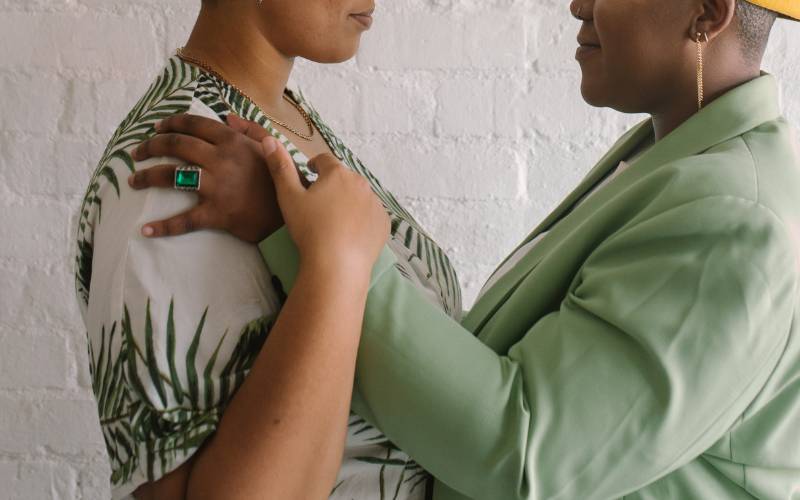
Despite this, history has taught us just because something differs from our societal norms, this doesn’t inherently make it wrong. Research shows ENM and monogamous relationships report equal relationship satisfaction, trust, commitment, and psychological health. On top of this, people in ENM relationships may, in fact experience greater trust, intimacy, friendship, and honesty, as well as fewer issues with jealousy.
Experiencing less jealousy may not make sense at first glance – you are purposefully putting yourself into situations that are likely to trigger an emotional reaction. However, there is also often a focus on communication and trust. Many of those in ENM relationships find it brings awareness to any personal insecurities that they are then able to work through – hence why it is often seen as a catalyst for self-discovery.
Looking inward to build a secure sense of self, along with learning to ask for what you need from a partner, can give any relationship a strong foundation. Plus, consciously choosing a relationship setup that works for you rather than inheriting what you’ve been taught by society can be empowering for many.
“For most folks, I believe non-monogamy offers an opportunity to live a different lifestyle that aligns more with how their hearts feel rather than what society has deemed appropriate,” Wright adds.
Who we love and how we approach relationships impact every part of our lives. Questioning monogamy and designing relationships that work for you, rather than inheriting the systems we have been given, is a radical act in itself. Although it is unlikely ENM will ever overtake monogamy, as traditional gender roles and expectations continue to be challenged, so too may the societal pressure to conform to monogamous relationships.