Exploring coaching and mentoring at Vodafone
January 28, 2025Mentoring is an incredibly important practice here at Vodafone, we strongly believe that mentoring is a mutually beneficial relationship to foster and support career development. At Vodafone we have an online platform called WeMentor that employes can use in order to find a mentor or a mentee from across the business. We also have a platform called Coach Connected which is a similar set up but exclusively for coaching, rather than mentoring relationships. We also have an LGBTQ+ Buddy Programme which users can access through WeMentor. These platforms are explicitly promoted to our D&I networks to ensure we can better support the career development opportunities of all employees.
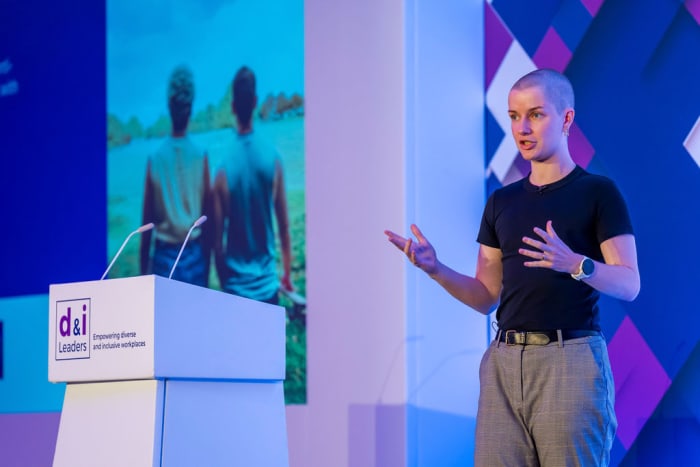
I’m Ella (they/them) I work in the Diversity and Inclusion team at Vodafone and have been practicing Coaching at Vodafone since May 2024. I saw an opportunity at Vodafone to undertake a Level 5 Apprenticeship in coaching and as I had some experience with coaching at my last company, leapt at the opportunity!
Since starting the programme in May I have learned so much about the practice of coaching, and the associated tools, techniques and models coaches can use to support their clients. The main question I’ve asked since beginning this course is “What’s the difference between coaching and mentoring?”. The way I like to think of it is that a mentor will provide you with guidance, suggestions, solutions based on their knowledge. Whereas a coach will use questions to empower the client to explore options and find the answer for themselves.
I have a handful of clients that I’m currently working with to build up my experience and when I started looking for clients I intentionally approached our LGBTQ+ Friends Network here at Vodafone. I know that some LGBTQ+ people seek support and guidance from members of the community and wanted to therefore offer that opportunity directly to them. I also can appreciate that there can be a pre existing level of understanding amongst some LGBTQ+ people that can make the initial stages of forming a coaching relationship easier to navigate.
The main reason I became a Coach is because I genuinely enjoy connecting with people, building relationships and empowering others to fulfill their true potential. What I love about coaching specifically is the focus on empowering others, it removes myself as being the voice of authority and therefore I am there to question, and help my coachee to unlock their own thoughts and ultimately make decisions for themselves.
Coaching isn’t easy and there are definitely a few challenges to navigate. The first and probably most obvious one is slipping into mentoring rather than coaching. Sometimes a client will ask me a direct question seeking advice, which is more of a mentoring relationship, so I have to be really conscious to steer the conversation back onto coaching. In order to do this there are a number of models, tools and techniques I have at my disposal. Through practice with my clients, these models become easier and more natural to use which makes the conversations much easier.
The other challenge is when I have a pre-existing working relationship with the individual, it can be harder to stay in the coaching space and not to blur those lines when coaching colleagues that I know well. This is something I’m exploring with my clients and have clear contracts in place so that we have a mutual understanding of what the sessions will entail.
In terms of the ‘ideal coachee’, I would say the clients I enjoy working with most are incredibly open minded and reflective. The coaching practice relies on the client really driving the conversation and reflecting on situations, options, thoughts etc, so having a willingness to reflect and explore is key.
In addition to coaching, I would also be open to mentoring people in the future as I have definitely benefitted from mentors supporting me in previous roles.