
For LGBTQ+ People, Coming Out is a Lifelong Process
September 28, 2022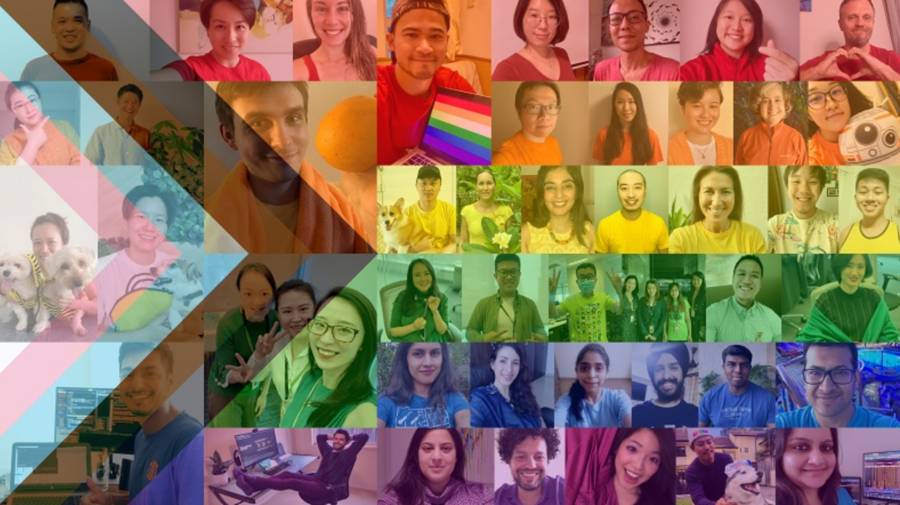 Bloomberg employees in APAC celebrate Pride from home
Around the world, LGBTQ+ equality and
acceptance have made incredible strides. Yet, even in countries with the most
progressive laws and attitudes, there is still a long way to go before LGBTQ+
people are no longer made to feel like the “other.”
Pride Month serves as a reminder of where
we’ve been and where we’re headed: more countries are passing same-sex marriage
laws and more employers are implementing workplace discrimination policies. On
the social front, more young people feel comfortable coming out to family and
friends. However, the idea that being straight and cis-gender is
“the norm” is still pervasive, and can lead to tokenism without genuine regard
for LGBTQ+ representation and inclusion. This assumption, that everyone is
straight and cis-gender unless stated otherwise, can put many LGBTQ+ people in
a difficult position. Equally complicating is the fact that heteronormativity is
deeply embedded in society and the way people socialize, making it even more
difficult for LGBTQ+ people to navigate a variety of spaces.
The impact of the COVID-19 pandemic has
been especially challenging for
members of this community, resulting in feelings of isolation and a lack of
connection. The ability to gather and build ties, both in and outside the
workplace, provides a necessary outlet for members of this group, but social
distancing measures around the world have made those opportunities impossible
for the near future. The lack of positive social connections, coupled with
quarantining in non-LGBTQ+ affirming environments, could have a significant
negative impact on their mental health.
Constantly evaluating
“The ‘default setting’ of the world is very
heterosexual,” says Meng Xu, a Bloomberg Customer Support representative in
Tokyo. “Just imagine that you have to fight the world on a daily basis.”
As a result of this heteronormativity, and
in addition to the ubiquity of gender normativity, coming out is an exhausting,
lifelong process for LGBTQ+ people. In every new environment, with every new
person, members of the LGBTQ+ community must endure the stressful, complex, and
emotional experience of determining whether it is safe to reveal their gender
and/or sexual identity.
We work on purpose. Come find yours.
It’s also important to consider the issue
from a global perspective. While progress has been made, it is still illegal to
be LGBTQ+ in
70 countries. Fear and safety continue to be concerns, and coming out
becomes an even more complex experience, with real safety risks to be
considered. This fear is often amplified for those members of the LGBTQ+
community who belong to more than one marginalized
group.
If a person also happens to belong to other
marginalized groups because of their race, ability, socioeconomic status, or
any other factor, their individual experience is cumulative and much more
complex. This undoubtedly takes a toll on mental health, especially during such
uncertain and isolating times.
The prevalence of hetero and gender
normativity means that even safe, accepting environments must make it clear
that they are welcoming.
Beyond the office
Of course, these situations stretch far
beyond the workplace. Ajay Bhandaram, a Portfolio & Risk Analytics Product
Manager in New York, says that whenever he spends time with new people, he
finds it helpful to ask questions about their family, friends, education, and
religion before deciding whether to be truly himself in their presence.
In addition to deciphering the beliefs of
strangers, LGBTQ+ people are also regularly put in the position of having to
decide whether to correct someone when they make an improper assumption about
them.
“There’s always an internal discussion of,
‘Do I correct? Is it worth it?’,” says Ami Levine, who works in Supply Chain in
New York. “I think it’s educational for some people, but it also puts me at a
very vulnerable position, which is a conflict sometimes.”
Back in the closet
Ami is not alone in feeling that
awkwardness is a limiting factor in her freedom to be herself. In a survey about
first jobs, 62% of respondents who went back into the closet at their first job
did so because they thought it would be too awkward to discuss – in fact, it
was the number one reason cited. Comparatively, only 33% of respondents said
they re-closeted themselves because they feared being out would prevent them
from getting promoted.
“It used to be energy- and time-consuming.
I never could perform very well because every time, 100% of the time, I was
trying to be someone who I was not,” explains Danilo Mazzi, who works in Global
Data in Sao Paulo. “Once I came out and started working at Bloomberg, it
was so different because I didn’t need to give excuses or pretend to be someone
I’m not. And if you don’t as expend that much time hiding your personal life,
you perform that much better.”
This survey indicates that “policies that sit
on the shelf do not impact day-to-day work culture.” In office environments and
beyond, it is the discomfort and the awkwardness caused by going against
heteronormative assumptions that we still have to work hard to eliminate.
This shift in thinking is not easy,
particularly as stay at home orders have limited opportunities to directly
challenge office culture. Establishing different habits and expectations, even
while working from home, can help make the world a more comfortable, inclusive
place for LGBTQ+ people – in the remote workplace and everywhere else.
How to actively affirm the LGBTQ+ community
The notions of LGBTQ+ acceptance and
tolerance are important, and progress is being made; globally, the
average level of acceptance of LGBTQ+ people has increased over the last few
decades. Building on this momentum and shifting to an active affirmation of
LGBTQ+ people will help ease the burden of continually coming out to new people
in new situations.
Signaling to people that you are safe,
open, and welcoming can save them from undertaking the stressful emotional
labor of finding out for themselves. Bhandaram emphasizes “how emotionally
draining it is to come out again and again.”
Here are a few things you can do to make it
clear that LGBTQ+ people are welcome (and that discrimination of any kind is
not tolerated):
Ask new people you meet what their pronouns
are, rather than guessing based on their appearances.
Add visual indicators to a space that show
it is safe, while taking care to be authentic and avoid token gestures. For
example, you can hang up a pride flag by your window or wear a rainbow
bracelet.
Shift the language you use when asking
questions about others’ personal lives and avoid making assumptions about a
person’s identity. Rather than asking if they have a boyfriend, girlfriend,
husband, or wife, use gender-neutral language: are they seeing anyone? Do they
have a partner?
It’s important to communicate and check in
on one another during isolating times. Reach out, ask how your LGBTQ+
co-workers and friends are doing, and be invested in their answers.
Continue to build authentic connection with
LGBTQ+ colleagues, friends and family. Show your support for LGBTQ+ communities
more widely by helping organizations that advance LGBTQ+ people and supporting
LGBTQ+ businesses.
These changes may seem small, but they can
make a world of difference for the mental health, comfort, and overall
inclusion of LGBTQ+ people.
We all have the power to make it easier on our co-workers, classmates, friends, children, and family members. Shifting toward active affirmation doesn’t mean that whenever you meet someone new, you must make it immediately clear that you are accepting. It means when you have the opportunity to avoid making an assumption, take it. When you have the ability to not be a bystander and expressly show support, do it.