
George House Trust on Supporting People Living with HIV and Authentic Workplace Allyship
November 29, 2022George House Trust (GHT) is a service providing support for those living with HIV. Ahead of World AIDS Day, myGwork reached out to discuss their work, their vision, and their hopes for the future. With tips on how to help combat stigma, and advice for those who want to show their allyship to the community, GHT offers a helpful insight into what we can all do to support those living with HIV.
Could you tell us a little bit about your charity and the work that you do?
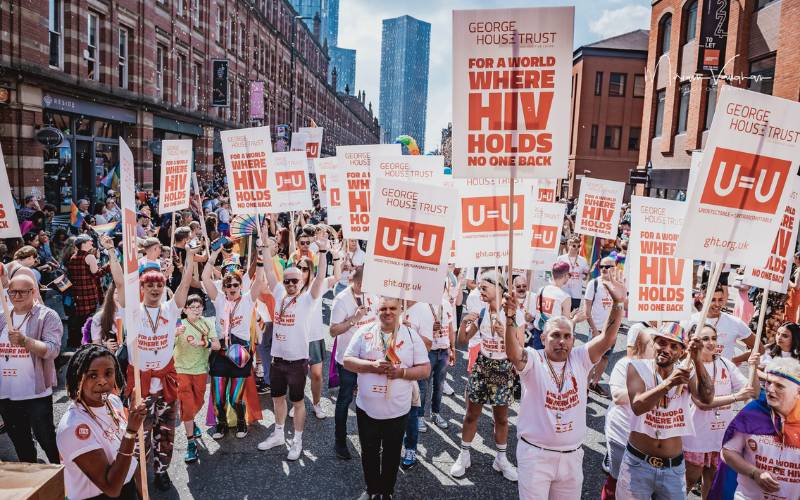
George House Trust’s vision is a world where HIV holds no one back. We provide information, advice and support to people living with and affected by HIV and everything we do is built around inspiring people to live healthily and confidently with HIV. We provide a wide range of support services so people can get the help they need when they need it - whether it’s someone newly diagnosed or someone who’s been living with HIV for a long time.
There are 100 dedicated volunteers at George House Trust who tirelessly support us to deliver the quality services we offer. Established in 1985 by six gay men in response to the HIV epidemic in the 1980s and 1990s, there have been remarkable medical and social changes around HIV since those early years.
HIV is now a long-term health condition that is easily managed with regular, effective treatment. People who are on effective treatment with an undetectable amount of HIV in their blood can’t pass HIV on through sex. This is known as ‘undetectable = untransmittable’ or ‘U=U’. Despite the transformational changes and huge progress around HIV testing and treatment, some people still face HIV stigma and discrimination in work, education, and healthcare, as well as rejection and judgement from people close to them.
HIV stigma is still a real issue and here at George House Trust, we’re here to provide the vital support needed to combat that.
HIV Human (Immunodeficiency Virus) weakens the human immune system and, if left undiagnosed and untreated, can cause damage to the immune system leaving people vulnerable to other infections.
There is no cure or vaccine for HIV, however, thanks to effective treatment HIV is like many other long-term health conditions. It’s easily manageable with regular, effective treatment and people living with HIV can lead long, healthy, confident lives.
HIV treatment effectively reduces the amount of the virus in the body to the point where it cannot be detected. This means that people who are on effective HIV treatment with an undetectable viral load cannot pass HIV on during sex. Undetectable equals untransmissible.
Wear A Red Ribbon
Wear a red ribbon, every day – on your work lanyard, on your favorite jacket or on your work bag. It’s a really simple ask, but it does make an impact. It shows that you support people living with HIV, and you’re ready to have a conversation about how HIV has changed and tell people all about ‘Undetectable = Untransmittable’.
Donate
How can we help battle the stigma still attached to HIV in society?
HIV treatment has made huge advances, however public perceptions and societal knowledge have not kept up at the same pace. A 2021 National AIDS Trust report found that only 16% of the public are aware of what U=U means. Being undetectable is the reality for most people living with HIV in the UK.
Talk about HIV as a health condition, just like other long-term conditions such as diabetes. It’s manageable with treatment and you can’t pass it on (U=U).
Challenge HIV stigma and discrimination when you see or hear it with your HIV and U=U knowledge.
In 2022, George House Trust launched a language guide to help people to use the best words and phrases to help reduce HIV stigma.
What can workplaces do to provide support for employees living with HIV?
HIV is not a barrier to any form of employment in the UK. People living with HIV are covered under the Equality Act 2010 which prohibits discrimination within employment and recruitment. People living with HIV do not have to share their status with employers but if they do, they have a right to request reasonable adjustments and to expect that their employer will handle this information sensitively and in line with GDPR legislation.
Discrimination does still occur in workplaces across the country and this is normally the result of ignorance. As an employer it’s your reasonability to be up to date with relevant laws and best practice. Workplaces can access tailored George House Trust training sessions for employers and employees, delivered by our Positive Speakers.
Employers can show their support to people living with HIV through fundraising and awareness-raising activities for George House Trust or your local HIV charity. World AIDS Day is every year on December 1st and is an opportunity to stand in solidarity with people living with HIV.

What do you think is the next course of action to improve conditions for people living with HIV in wider society?
Looking locally, we’ve got to get serious about HIV stigma and the impact it has on people’s lives. Most people in the UK are living well with HIV and have an undetectable viral load, it’s a long-term manageable condition.
The challenge is that people’s memories are clouded with historic references to death, infection and that’s compounded by the fact that the populations identified as most at risk at that time were gay men, drug users, sex workers and black men and women.
We can’t hide from the fact that homophobia, racism and prejudice play a part. De-bunking myths and educating the wider population on the fact that anyone can contract HIV, it’s good to test for HIV and it’s important to know your status are really simple ways of helping people to understand that HIV has changed. If we normalize testing for HIV just like we do for cholesterol and other health conditions that need monitoring and managing, we’re halfway there. Looking more globally, then we have to consider the impact of inequality, poverty and access to treatment and care.
HIV and the response is a global issue, that’s why the UNAIDS global efforts to improve access and remove barriers are so important. The international Fast Track Cities initiative has created a network of cities and countries working collaboratively towards the goal of ending new transmissions of HIV and AIDS related deaths globally.
The UK is faring well and we need to ensure that the investment and attention of the international community is focused on ensuring that there is equity in the global response so that we can all live in a world where HIV holds no one back.
Join myGwork for our World AIDS Day panel on December 1 at 16:00 GMT, where we will talk with people living with HIV about their experience in the workplace, the progress of HIV testing/treatment, and the work that still needs to be achieved.
Keep up to date with the latest myGnews