
Godfrey Sealy: a bold voice of Trinidad and Tobago's AIDS activism
February 12, 2025Words by Miguela Gonzalez, Global Senior Director of Diversity, Equity, and Inclusion at Danaher.
Godfrey Sealy, artist and AIDS activist
If you spent any time in Trinidad and Tobago in the 1980s or 90s, you knew the name Godfrey Sealy. Most of us admired him, some were wary of him and everyone talked about him; he was impossible to ignore.
For me, growing up in a home where the arts were the air we breathed, Sealy was spoken about with nothing but admiration. My father, Anson Gonzalez, was a poet laureate; our circles were filled with artists, and in that world, Sealy was a known force of nature. He was a theatre producer, a sharp creative mind, and a man who was openly gay and openly HIV-positive.
It was clear that his public persona was something of an act of defiance. HIV/AIDS at the time was misunderstood; it was shrouded in stigma and fear. And yet, Godfrey Sealy remained right in the middle of it all, refusing to dim his light or lower his voice.
Sealy was a director, producer, and playwright who went way beyond the spectacle. He used theatre to push against bigotry, complacency and silence, particularly when it came to sexuality and HIV/AIDS.
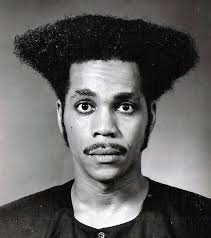
In 1988, his play One of Our Sons is Missing became part of the Rural AIDS Project, taking HIV/AIDS awareness to communities across the Caribbean. His work wasn’t confined to small, insular spaces. His plays were staged internationally, including at the International AIDS Conference in Montreal.
At a time when most people were still skirting around the issue, he was putting it front and center, forcing audiences to look at what they’d rather ignore.
But it wasn’t just his theatre work that made him a a force to be reckoned with; it was his sheer audacity in being public about his HIV status.
In a region where many people who were diagnosed with HIV opted for silence, Sealy chose something different. He chose to educate, advocate and make noise. He worked with organizations like UNAIDS, CAREC, UNDP, PAHO, and CARICOM, influencing regional HIV/AIDS policy and outreach programs. He co-founded Community Action Resource (CARE), providing support for those living with HIV, including sex workers and LGBTQ+ people who had nowhere else to turn.
His career appeared to be unhindered by his status, as he collected several accolades for his work. But he said that his openness sometimes came at a price. One particular instance was when he was denied state funding in Trinidad due to his medical condition. He also left the country in 2001 because of institutional discrimination, and pursued opportunities in Miami, New York, and London. But in the end, he chose to return home. There, he opened his home, nicknamed Bohemia, to artists and activists alike. He was aware that he was on a ticking clock, and he was determined to touch, and save, as many lives as he could with his time left.
Godfrey Sealy’s work didn’t go unnoticed. He was awarded the CARICOM Champion for Change Award for his HIV/AIDS advocacy. His legacy is also recognized by the National Black Justice Coalition’s Ubuntu Biography Project, which honors Black LGBTQ+ pioneers.
He passed away in April 2006 at just 46 years old, but his impact lingers. The conversations he forced open, the walls he knocked down and the lives he changed by being visible still matter today.
For me, Godfrey Sealy’s life was a masterclass in successfully breaking unspoken rules.
To be fair, I was lucky. I grew up in a household and in circles where his name was met with respect. But I also knew that wasn’t the case everywhere. Not everyone saw him as a hero. Trinidad at the time was a place of contradictions… vibrant and expressive, maverick and innovative… but deeply conservative when certain norms, particularly those influenced by religion, were challenged.
Sealy sat right at the heart of that contradiction. And he didn’t back down.
His refusal to be silent and his desire to educate, support and uplift communities that were the target of derision, shaped how I came to understand visibility, resilience, the power of taking up space in a world that would prefer for you to shrink… and the importance of taking others on that journey with you.