
Help support Hackney’s first community-run, fully accessible queer pub to open its doors
July 3, 2026Friends of the Joiners Arms (FOTJA) has spent the past decade transforming the loss of a beloved queer pub into a bold experiment in community ownership, accessibility and collective care. Now, as they prepare to open Hackney’s first community-run, fully wheelchair-accessible LGBTQIA+ pub and performance space, they’re in a crucial final push to get the doors open and sustain the venue for the long term.
In this interview, myGwork spoke with FOTJA about how the organisation began, what makes this new space different, why accessibility and community ownership are non-negotiable principles, and how supporters of all kinds can help turn a long-held vision into a permanent home for queer culture in East London.
For those who don’t know you yet, what is Friends of the Joiners Arms, and why was it founded back in 2014?
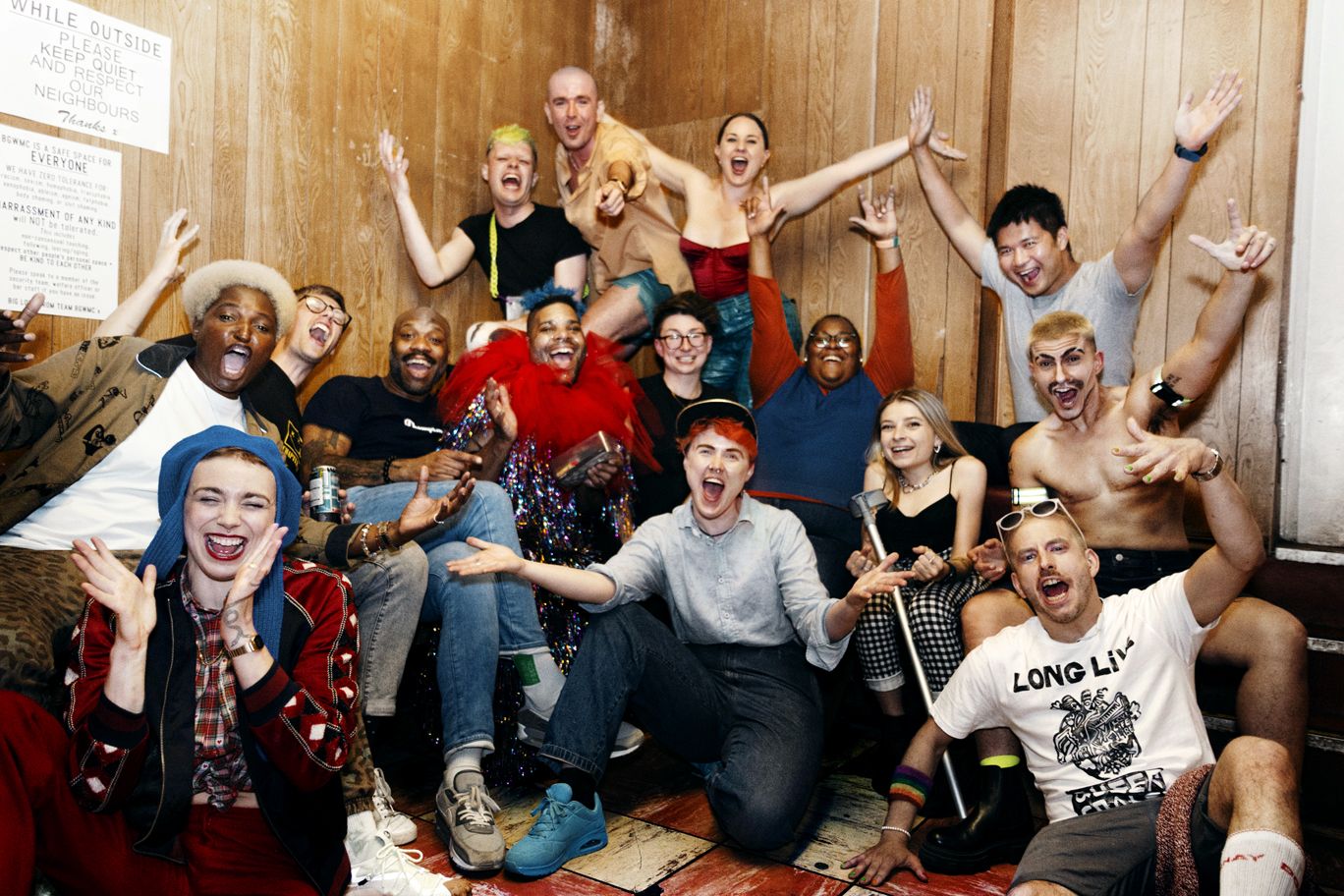
Friends of the Joiners Arms (FOTJA) is a community-led LGBTQIA+ organisation and Community Benefit Society (CBS) that was founded in 2014 in response to the closure of the historic Joiners Arms, a much-loved queer pub and cultural hub in East London. What began as a campaign to save a vital community space has grown into a movement dedicated to protecting, creating and sustaining LGBTQIA+ venues and community infrastructure across the city.
Today, we are owned by more than 2,000 community shareholders and governed by an elected Management Committee. Our work is rooted in community ownership, accessibility and inclusion, with a particular focus on those who are too often excluded from mainstream venues, including disabled LGBTQIA+ people, trans and non-binary communities, queer people of colour, and those experiencing economic hardship.
At the end of last year, we signed a 15-year lease on a venue in Hackney, bringing us one step closer to realising a decade-long vision. We are creating a wheelchair accessible, inclusive and community-run LGBTQIA+ venue: a permanent home for queer culture, connection, organising and celebration.
Now we need your help to open our doors and bring that vision to life.
What are you currently looking for from supporters and partners, and why is this support needed now?
We're currently seeking financial support, sponsorship, and in-kind contributions from supporters and partners to help us complete the final stage of our project and open our doors safely this July.
While we've made enormous progress, we've faced a number of setbacks and delays outside our control. The landlord's works took significantly longer than expected, and unexpected construction challenges - including substantial water ingress and the remedial works required to address it - have created considerable budget pressures during the final stages of delivery. These issues have resulted in significant additional costs for the project.
As a result, we're now in the final push to raise the funds needed to complete the venue and open successfully. Support at this stage will help ensure that this vital community asset not only opens its doors but remains sustainable for the long term, providing an inclusive, accessible space for some of London's most marginalised LGBTQIA+ communities.
One of our largest recent expenditures was the installation of heating, ventilation and air conditioning (HVAC) systems, which cost approximately £36,000. We are also seeking support to help cover a number of outstanding capital costs, including:
- A wheelchair-accessible stage
- Smoke alarms and fire engineering works
- Bar equipment and refrigeration
- Audio-visual equipment for performances and community events
- Internal decoration and painting
Every contribution helps bring us closer to opening an accessible, inclusive and community-run LGBTQIA+ venue in Hackney. This is the final stretch, and support now will have an immediate and lasting impact.
You can donate via this crowdfunder page
Can you paint a picture of this new space for us? What kind of place will it be, and who is it for?
The venue will be Hackney's first community-run, fully wheelchair-accessible LGBTQIA+ pub and performance space: a place where people can gather, celebrate, create, organise and simply feel at home.
At its heart will be a welcoming neighbourhood pub with capacity for around 120 people, designed to be accessible, affordable and genuinely inclusive. Alongside the pub, there will be a dedicated performance and cultural space hosting everything from cabaret, drag and live music to talks, screenings, workshops and community events.
But the space is about more than nightlife. We're creating a year-round community hub that will provide space for grassroots organisations, mutual aid groups, artists, activists and local residents to come together. It will offer opportunities for emerging queer performers and creatives, while also providing somewhere people can meet, connect and build community outside of commercial or exclusive environments.
Everything has been designed with accessibility at its core, from step-free access and wheelchair-accessible facilities to a commitment to creating a space that is welcoming to people who are often overlooked or excluded elsewhere.
While everyone is welcome, the space is being built with and for LGBTQIA+ communities, particularly disabled queer people, trans and non-binary communities, queer people of colour, and those facing economic barriers to participation. We want it to be a space where people don't just feel accepted, but truly belong.
You describe accessibility as being at the core of the design. What are some concrete accessibility features people will experience when they enter the building?
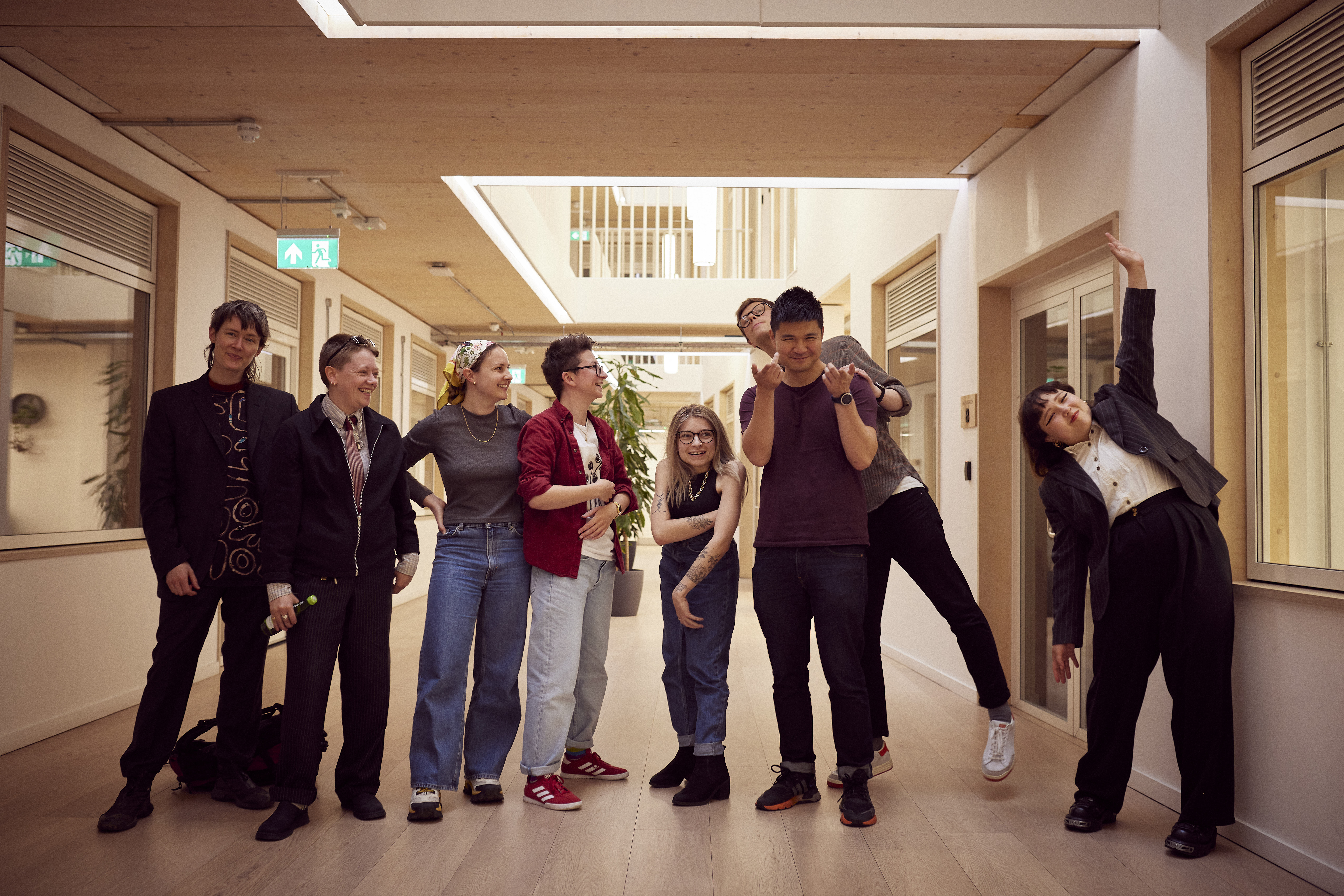
First, the physical environment is fully step-free, meaning there are no hidden level changes or “almost accessible” routes. Entrances, routes through the building, performance spaces, toilets, bar, and back-of-house areas are all designed so wheelchair users, people with pushchairs, and anyone with mobility needs can move through the space independently. We are particularly excited that the majority of the custom-build bar is at wheelchair accessible height allowing wheelchair users not only to use the bar as a customer, but to work behind the bar too. In addition, and as an outcome of our accessibility focus groups, we will have a wheelchair accessible toilet and two ambulant toilets - one lefthanded and the other righthanded. Inside, the atmosphere of the space is shaped with sensory needs in mind. Lighting is also carefully controlled to create a comfortable environment. More broadly, accessibility is not treated as a finish line but as an ongoing process. The building has been shaped through co-design with performers and accessibility teams, alongside organisations like FOTJA and Living Constructions. This means lived experience directly informs how the space continues to evolve, ensuring accessibility is embedded not just in the physical design, but in how the building is made and operated over time. It is also well-located close to Hackney Central station with step-free access throughout. An accessible stage is planned for phase 3 of the build, and is a specific area for which we are seeking funding.
You’re a community benefit society with over 2,000 community shareholders. How does community ownership shape the way the venue is run and who it’s accountable to?
Community ownership is at the heart of everything we do. As a Community Benefit Society with more than 2,000 community shareholders, we're accountable to the people who believe in and support our mission, rather than private investors or commercial shareholders seeking profit.
Many LGBTQIA+ venues are privately owned, which means key decisions are ultimately driven by a small number of owners and commercial priorities. Our model is different. Every shareholder has an equal voice, regardless of how much they've invested, and our elected Management Committee is responsible for ensuring that the organisation remains true to its social purpose.
Because we are community-owned, any profits generated by the venue will be reinvested back into the space and the community it serves, rather than being extracted for private gain. That could mean investing in accessibility improvements, subsidising community events, supporting grassroots organisations, commissioning artists and performers, improving facilities, or building the long-term resilience of the venue.
This structure allows us to prioritise social value over commercial returns. Rather than asking what will generate the most profit, we can ask what will have the greatest positive impact for LGBTQIA+ people and the wider local community. It gives us the freedom to create a venue that is affordable, accessible and genuinely accountable to the people who use it.
Most importantly, the space belongs to the community in a very real sense. Thousands of people have invested their time, money and energy to make this project happen. The space is being built and shaped by the community itself.
You already have backing from funders like the Greater London Authority and several foundations. What has that support enabled so far, and what stage are you at now?
We're incredibly grateful for the support we've received from the Greater London Authority and a number of charitable trusts and foundations. Their backing has been instrumental in helping us move from an ambitious community vision to a physical venue that's close to opening. The funding has also given our partners confidence that this project is viable, needed and capable of delivering long-term social impact.
We're now in the final stages of delivery. The vast majority of the construction work has been completed, and the venue is beginning to look and feel like the space we've spent years imagining. However, a combination of delays to landlord works and unexpected construction challenges has created additional costs and placed pressure on our final delivery budget.
As a result, we're now focused on raising the remaining funds needed to complete the fit-out, install key equipment, and ensure the venue can open safely and successfully this summer. This includes items such as accessibility features, fire safety systems, bar equipment, refrigeration, AV infrastructure and finishing works.
In many ways, this is the final push. The support we've already received has got us to the point where opening is within reach; the support we're seeking now will help us get over the finish line and ensure this inclusive asset can begin serving London's LGBTQIA+ communities for years to come.
For people and organisations who might not have large sums to give, what are the most meaningful ways they can support you?
Financial support is the most important thing for us right now. We're in the final stretch of the project, and even small donations can have a real impact in helping us complete the remaining works and open our doors. This has always been a community effort, so we're not just looking for major donors. Lots of smaller contributions add up and help us get over the finish line. For those who can't donate, we also run volunteer build days every Wednesday. Organisations can also support us through volunteering days, sponsorship or pro bono expertise. At this stage, any support - whether it's a donation, time, skills or simply helping spread the word - helps bring us closer to opening this inclusive LGBTQIA+ space.
What do you hope the venue will look like in five years’ time?
In five years’ time, we hope the venue is fully embedded as a vital part of London’s LGBTQIA+ infrastructure: a busy, welcoming and sustainable space that people feel genuine ownership over.
We want it to be a place that’s alive every week: hosting performances, club nights, community meetings, workshops, fundraisers and everyday social connection. A space where emerging queer artists can build their practice, where grassroots organisations can gather and organise, and where people can come simply to feel at home.
Crucially, we hope it remains as accessible and inclusive as it is on day one, continuing to centre disabled LGBTQIA+ people, trans and non-binary communities, queer people of colour, and those facing financial barriers. We hope the empowerment of these often marginalised communities will be reflected in the elected Management Committee positions overseeing the CBS.
We also want it to be financially stable and community-rooted, with strong local partnerships and a model that continues to reinvest any surplus back into the venue and its programming. The goal isn’t rapid expansion or commercialisation, but longevity: a space that still belongs to its community years down the line.
Ultimately, we hope that in five years’ time, the space feels less like a “new project” and more like an established home: a part of the fabric of queer life in London, shaped and sustained by the people who use it every day.