
How M&S empowers its employees to be their authentic selves
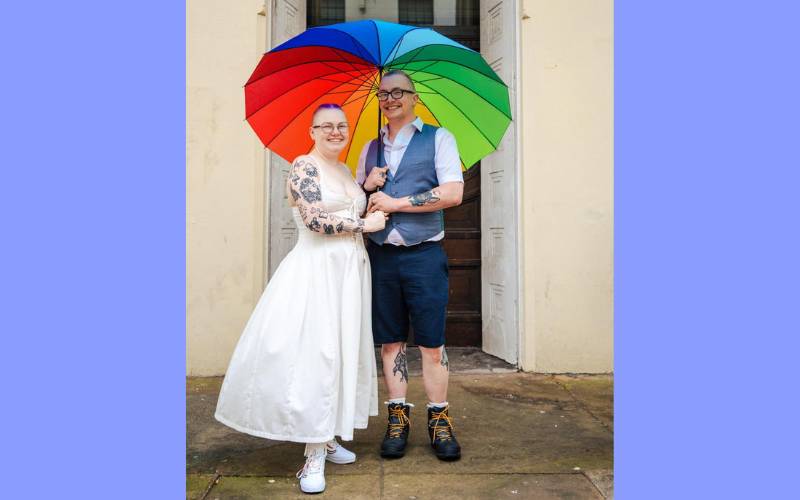
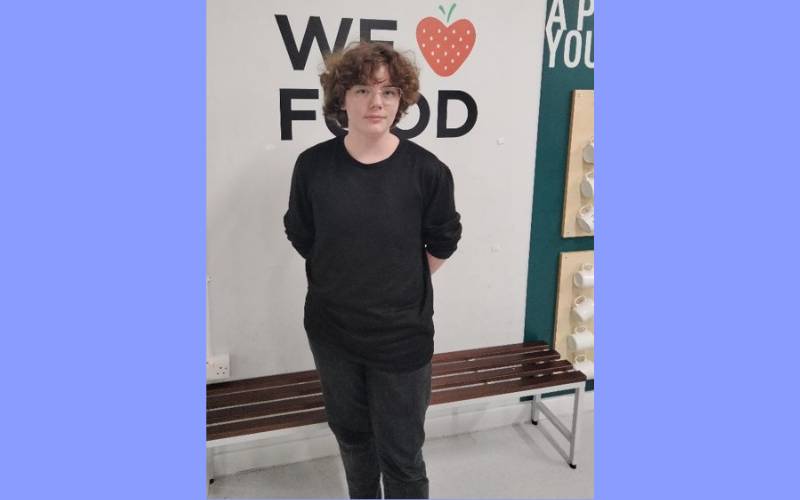
September 9, 2024In honour of National Coming Out Day, Jonathan Peterkin and Kaden Hogg from Marks & Spencer spoke to myGwork about their personal journeys, and how M&S strives to be an inclusive space for all to live freely in their authentic selves.
Please, tell us your coming out story. Have you had a good/bad experience because of your sexual orientation at home, school or work?
Jonathan: I started transitioning publicly when I was 15. I’m really lucky that my parents and immediate family are so supportive! But a lot of people weren’t.
I think certain people find it harder to deal with because they can’t ignore it. They can learn I’m queer and then put it aside for their own “peace of mind”, but they have to acknowledge my trans identity constantly by virtue of it existing, and because of that they feel like it’s being “shoved in their face”. Which is silly, and either way, I never understood why it was a huge deal! I’m still me. But a lot of people’s allyship kind of ends when they feel like you’re asking something of them. Despite that, it was worth it to feel like myself, and I would never take it back.
Kaden: I think it’s difficult to tell a coming out story because the truth is you never stop coming out. Every new situation you enter - every new job, new friend you meet, new partner - you are always coming out and sharing that part of yourself with someone new.
I wouldn’t say I have ever had a bad experience. Coming out about my sexuality was definitely easier than coming out about my gender (genderqueer) as I think it is something that people misunderstand and find more difficult to get their heads around. I still get misgendered and deadnamed by some of the people closest to me, but I guess it’s about what you are willing to tolerate and how much it impacts you as a person.
How does your organization support and empower its LGBTQ+ employees?
Jonathan: When I joined, I was very happy to see the effort M&S put in to support queer colleagues. They have eight different support networks for the colleagues to join, including the LGBTQ+ network. On my first day, my line manager had an open discussion on how I identify myself and preferred pronouns to use, which instantly made me feel really reassured that I was working for a business that understands the nuances of identity. M&S also offers everyone the opportunity to have their pronouns added to their name badge. There are posters about M&S initiatives and history lining the break room, including a guide to gender identity. Even during my induction, we were presented with hypothetical customer scenarios, one of which was about affirming a trans customer in the store.
Kaden: We have colleague networks that colleagues can get involved with. M&S also hosts lots of Pride events and attends Pride parades across the country.
Do you feel that by coming out you can encourage others to come out?
Kaden: I definitely think that coming out can help create a safe space for others. Being new in the business, I made sure from the outset to be completely myself and show who I am. I have shared a message on our store Teams channel as well letting people know a little bit about me. Hopefully being completely myself from the outset allows others to feel confident in coming forward too.
It has been proven that being out at work increases productivity. What other advantages do you see in coming out in the workplace?
Kaden: For me, it means being able to be me completely without having to think about hiding any aspects of my personality. It allows me the freedom to express myself and not have to hide anything.
What advice would you give the younger generations of LGBTQ+ people looking to get started in the industry?
Jonathan: I’m 18, so I guess I AM the younger generation. But still, I’d tell them to not let yourself get disrespected for the sake of a career. You shouldn’t have to sacrifice your personhood to move forward just because of who you are. Especially transgender people. I know so many of us are afraid to correct people on things like pronouns, but even though people might make a big deal of it, remember you’re not really asking a lot! A supportive work environment is a blessing- just stick it out and you’ll find your people.
Kaden: Good places of work should focus on your ability to do the job; your sexuality, gender, religion, whatever it is should have no impact on how you are treated in the workplace. Be bold and be yourself, if they don’t like that then they aren’t a very good company.
More and more organizations want their employees to bring their whole self to work. Would you consider working for an organization that does not?
Kaden: Not at all. I think that every person has something unique to bring to a workplace and if you’re not allowed to do that, we just become corporate robots. It’s the people that make the business and they should want to encourage everyone to get involved and influence the work culture.
In your opinion, how can an organization and its clients benefit from a diverse workforce?
Jonathan: Nobody likes a monolith. It’s hard to see the bigger picture when everyone’s looking at it from the same perspective. If every colleague is just a copy-pasted version of one another, then nobody will ever say anything interesting! Customers feel the same way- they want to talk to a colleague who can understand them.
Growing up, who was your LGBTQ+ role model?
Kaden: I wouldn’t say I really had one growing up, but in my early adulthood, I definitely looked up to Dan Levy. The world he created with Schitt’s Creek allowed me to see a world where I could be accepted, no questions asked and allowed me to see a perfect example of people being authentically, unapologetically themselves.
How do you think allies can support their colleagues coming out?
Kaden: Whether you’re an ally or a member of the community, it’s about creating an environment where everyone feels comfortable and safe, and allowing everyone to participate in that in that environment.