
How to Attract Diverse Talent for LGBTQ+ Inclusion
January 2, 2026For HR managers overseeing teams across Europe and North America, building LGBTQ+ representation is more than a value statement. Workplaces with visible LGBTQ+ inclusion report up to 20 percent higher employee satisfaction rates. This guide outlines practical steps so you can confidently diagnose gaps, deepen outreach, and set measurable goals for truly inclusive hiring.

Step 1: Assess current recruitment practices for inclusivity
Understanding and evaluating your organization’s recruitment practices is the critical first step toward building a truly inclusive talent pipeline for LGBTQ+ professionals. This process requires a comprehensive examination of existing hiring strategies to identify potential barriers and unconscious biases that might prevent diverse candidates from feeling welcomed.
Starting with a thorough audit, organizations must carefully analyze each stage of their recruitment workflow. Inclusive recruitment practices demand a systematic review of job descriptions, candidate sourcing channels, interview protocols, and selection criteria. Look for language that might unintentionally exclude LGBTQ+ candidates, such as gendered terminology or heteronormative assumptions. Examine your current job postings for inclusive language that signals genuine commitment to diversity, like explicitly stating nondiscrimination policies or highlighting employee resource groups.
Carefully assess your recruitment metrics to understand representation gaps. Track the diversity of your candidate pools, interview stages, and final selections. Are LGBTQ+ candidates proportionally represented? Are they progressing through interview stages at similar rates to other candidates? These data points will reveal where systemic barriers might exist in your current processes.
Pro tip: Conduct an anonymous internal survey to gather candid feedback from LGBTQ+ employees about their recruitment experiences and perceptions of your current hiring practices.
Step 2: Develop targeted outreach to LGBTQ+ networks
Building meaningful connections with LGBTQ+ professional networks requires strategic and authentic engagement that goes beyond surface level recruitment efforts. Your goal is to create genuine relationships that demonstrate your organization’s sincere commitment to diversity and inclusion.

Start by identifying and partnering with specialized LGBTQ+ professional associations, campus groups, and community organizations. Interdisciplinary training and engagement can help your recruitment team develop cultural competence and understand the unique experiences of LGBTQ+ professionals. Consider implementing targeted mentorship programs that create pathways for meaningful connections. These initiatives should focus on creating safe spaces where LGBTQ+ candidates can explore potential career opportunities without feeling marginalized.
Leverage multiple outreach channels to maximize your visibility within LGBTQ+ professional communities. Attend career fairs specifically designed for diverse candidates, sponsor LGBTQ+ professional development events, and ensure your recruitment materials authentically represent the diversity of your workforce. Showcase employee resource groups, highlight inclusive policies, and demonstrate tangible support for LGBTQ+ professionals through visible allyship and representation at leadership levels.
Pro tip: Develop a recruitment team that includes LGBTQ+ professionals who can provide authentic insights and help design more inclusive engagement strategies.
Step 3: Design inclusive job descriptions and branding
Crafting job descriptions that genuinely welcome LGBTQ+ talent requires a thoughtful approach that goes beyond surface level diversity statements. Your goal is to create job postings that signal authentic inclusivity and demonstrate your organization’s commitment to creating a supportive workplace environment.
Comprehensive job description strategies reveal that intentional language can dramatically improve diverse candidate attraction. Focus on neutralizing gendered language, removing unnecessary qualifications, and emphasizing skills over rigid requirements. Use gender neutral terms like spouse instead of husband or wife, avoid masculine coded words like competitive or dominant, and clearly articulate your organization’s commitment to equal opportunity. Highlight your existing diversity initiatives, employee resource groups, and explicit nondiscrimination policies to show LGBTQ+ candidates that they will be valued and supported.
Beyond written descriptions, your employer branding should consistently reflect a genuine commitment to inclusion. Showcase LGBTQ+ employees in marketing materials, feature leadership statements supporting diversity, and ensure visual representations reflect the true diversity of your workforce. Make certain your recruitment materials and career website demonstrate real representation not just performative allyship.
Pro tip: Conduct an external review of your job descriptions with LGBTQ+ professionals to identify potential unintentional barriers or exclusionary language.
Step 4: Implement bias-free interview and selection processes
Designing a recruitment process that eliminates bias requires intentional strategies that go beyond traditional hiring approaches. Your goal is to create a fair evaluation system that focuses on candidate skills, potential, and qualifications while minimizing unconscious prejudices that can limit diverse talent acquisition.
Structured interview methodologies provide a robust framework for reducing bias during candidate selection. Develop standardized interview questions that are directly linked to job requirements, ensuring every candidate experiences the same evaluation criteria. Create diverse interview panels that include LGBTQ+ representatives and allies who can provide multiple perspectives and challenge potential unconscious biases. Implement blind recruitment techniques where identifying information is removed from initial candidate screenings, allowing skills and experiences to take center stage. Train hiring managers to recognize and interrupt their own unconscious biases, focusing on objective skill assessment rather than subjective impressions.
Establish clear scoring rubrics that quantify candidate capabilities, making the selection process more transparent and equitable. Document interview feedback systematically, ensuring that evaluation criteria are consistent and defensible. Regularly audit your recruitment data to identify potential systemic barriers or patterns of unintentional exclusion. By creating a structured, intentional approach to candidate evaluation, you signal your organization’s genuine commitment to building a truly inclusive workplace.
Pro tip: Periodically conduct anonymous candidate surveys to gather feedback on your interview experience and identify potential areas of improvement in your selection process.
Step 5: Measure outcomes and refine diversity efforts
Successful LGBTQ+ inclusion requires more than good intentions it demands systematic measurement and continuous improvement. Your organization must develop robust metrics that go beyond surface level demographic tracking to truly understand and enhance workplace diversity.
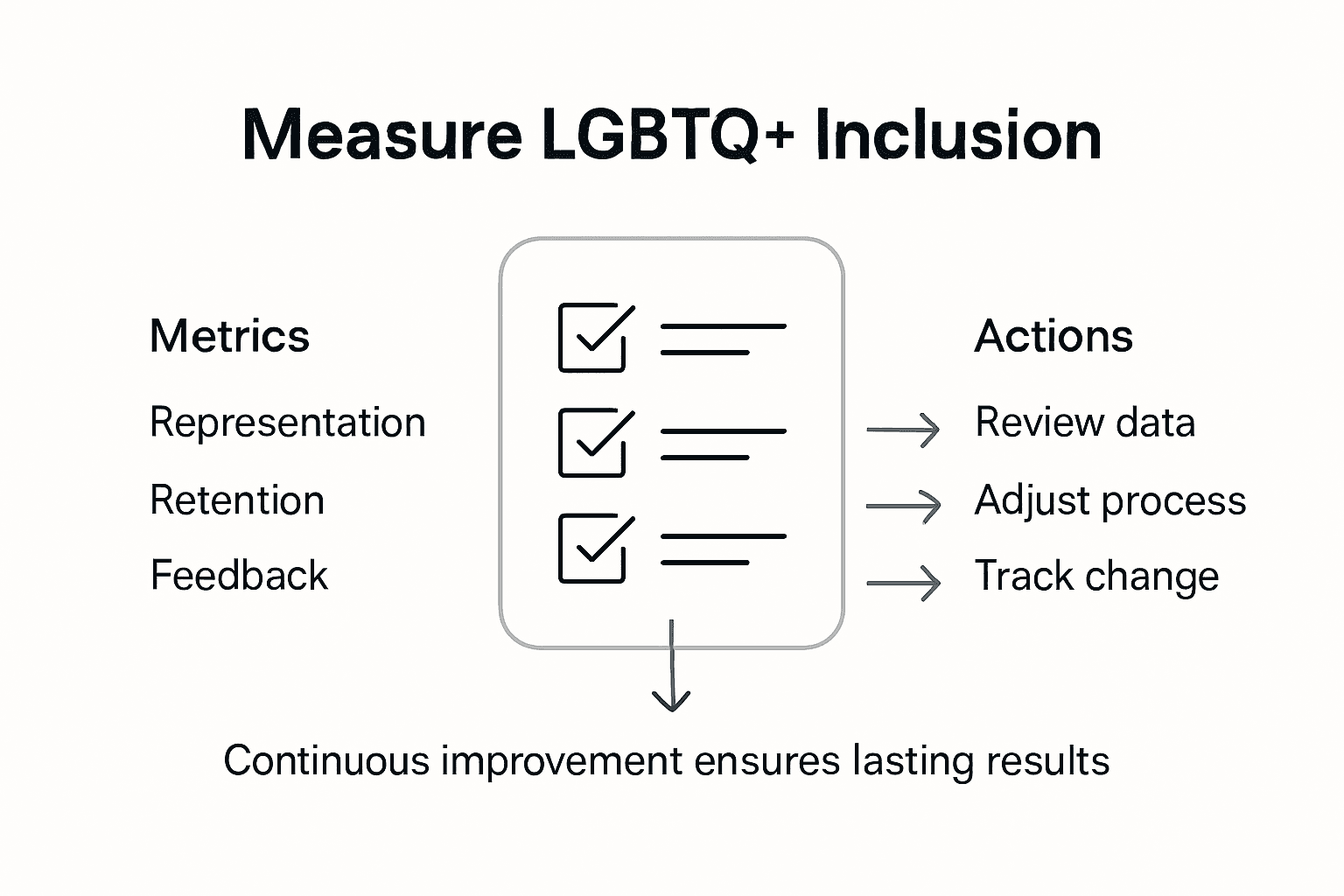
Strategic diversity measurement approaches provide a comprehensive framework for evaluating inclusion efforts. Start by establishing clear baseline metrics that capture both quantitative and qualitative dimensions of LGBTQ+ workplace experiences. Track key indicators such as representation across organizational levels, retention rates, promotion frequencies, and employee sentiment scores. Implement anonymous surveys that allow LGBTQ+ employees to share candid feedback about workplace culture, feeling of belonging, and perceived opportunities for advancement. Create mechanisms for regular data collection that allow you to identify trends, recognize progress, and quickly address emerging challenges.
Develop a dynamic feedback loop that transforms measurement into meaningful action. Regularly review collected data with cross functional teams including LGBTQ+ employee resource groups, human resources, and senior leadership. Use these insights to design targeted interventions addressing specific barriers or gaps identified in your analysis. Be transparent about your findings and communicate both successes and areas needing improvement to demonstrate genuine commitment to ongoing inclusion.
Below is a summary of essential metrics to track LGBTQ+ inclusion progress:
Pro tip: Establish an external advisory board of LGBTQ+ professionals to provide independent perspectives and help validate your diversity measurement strategies.
Here’s a comparison of strategies for inclusive recruitment and their intended business impacts:
Build Genuine LGBTQ+ Inclusion with Strategic Recruitment Solutions
Attracting diverse LGBTQ+ talent requires more than just intention. The article highlights critical challenges such as overcoming unconscious bias, designing inclusive job descriptions, and creating authentic outreach to LGBTQ+ networks. If your organization struggles with these pain points or seeks to measure outcomes transparently, it is essential to partner with platforms that understand the unique needs of LGBTQ+ professionals.
myGwork is a professional networking platform dedicated to connecting LGBTQ+ individuals with career opportunities while promoting true workplace inclusion. By leveraging the tools available at myGwork, your recruitment team can access a vibrant community, showcase inclusive employer branding, and extend targeted outreach to qualified LGBTQ+ candidates. This not only enhances representation but also fosters a culture of belonging and career advancement.
Here is your opportunity to transform your hiring process by tapping into a trusted LGBTQ+ professional ecosystem that supports every step of your inclusive recruitment strategy.
Start building an inclusive talent pipeline today with mygwork.com and explore how our platform can complement your ongoing diversity and inclusion efforts.
Discover authentic connections and inclusive hiring solutions on myGwork. Take action now to create a workplace where LGBTQ+ professionals feel truly welcomed and valued.
Frequently Asked Questions
How can I assess my organization’s recruitment practices for LGBTQ+ inclusion?
Start by conducting a thorough audit of your current hiring strategies to identify barriers and biases against LGBTQ+ candidates. Review job descriptions, interview protocols, and candidate metrics to pinpoint areas for improvement within the next 30 days.
What are effective ways to engage with LGBTQ+ professional networks?
Develop authentic partnerships with LGBTQ+ organizations and attend career fairs focused on diverse candidates. Actively participate in events and initiatives in your community to establish ongoing relationships with LGBTQ+ professionals within 60 days.
How should I write job descriptions that attract LGBTQ+ talent?
Craft job descriptions that use inclusive language, emphasize skills over rigid qualifications, and articulate your commitment to diversity. Aim to make these adjustments in your job postings within the next month to signal to candidates that they are welcomed.
What strategies can I implement to reduce bias during the interview process?
Use structured interview methodologies and diverse panels during candidate assessments to minimize unconscious bias. Implement blind recruitment techniques and train your hiring managers on unbiased evaluation practices to improve selection fairness over time.
How do I measure the effectiveness of my diversity efforts for LGBTQ+ inclusion?
Establish baseline metrics to track representation, retention rates, and employee feedback on workplace culture. Review and refine these metrics quarterly to identify progress and areas needing improvement in your diversity initiatives.
What kind of feedback mechanisms should I implement for continuous improvement?
Create anonymous surveys for LGBTQ+ employees to gather insights about their experiences and feelings of inclusion. Utilize this data regularly to inform and adjust your recruitment processes, striving for ongoing enhancements.