
How to Build Inclusive Hiring Process for LGBTQ+ Talent
February 5, 2026Recruitment processes often hide subtle barriers that make attracting diverse talent difficult, especially for LGBTQ+ candidates. For HR professionals working across borders, enhancing truly inclusive hiring practices is more than an aspirational goal. Applying an equality and diversity lens to every stage, from job design to candidate selection, enables multinational organizations to remove unconscious bias and create fair opportunities for every applicant. Adopting this approach helps build a workplace culture where every individual feels respected and valued.

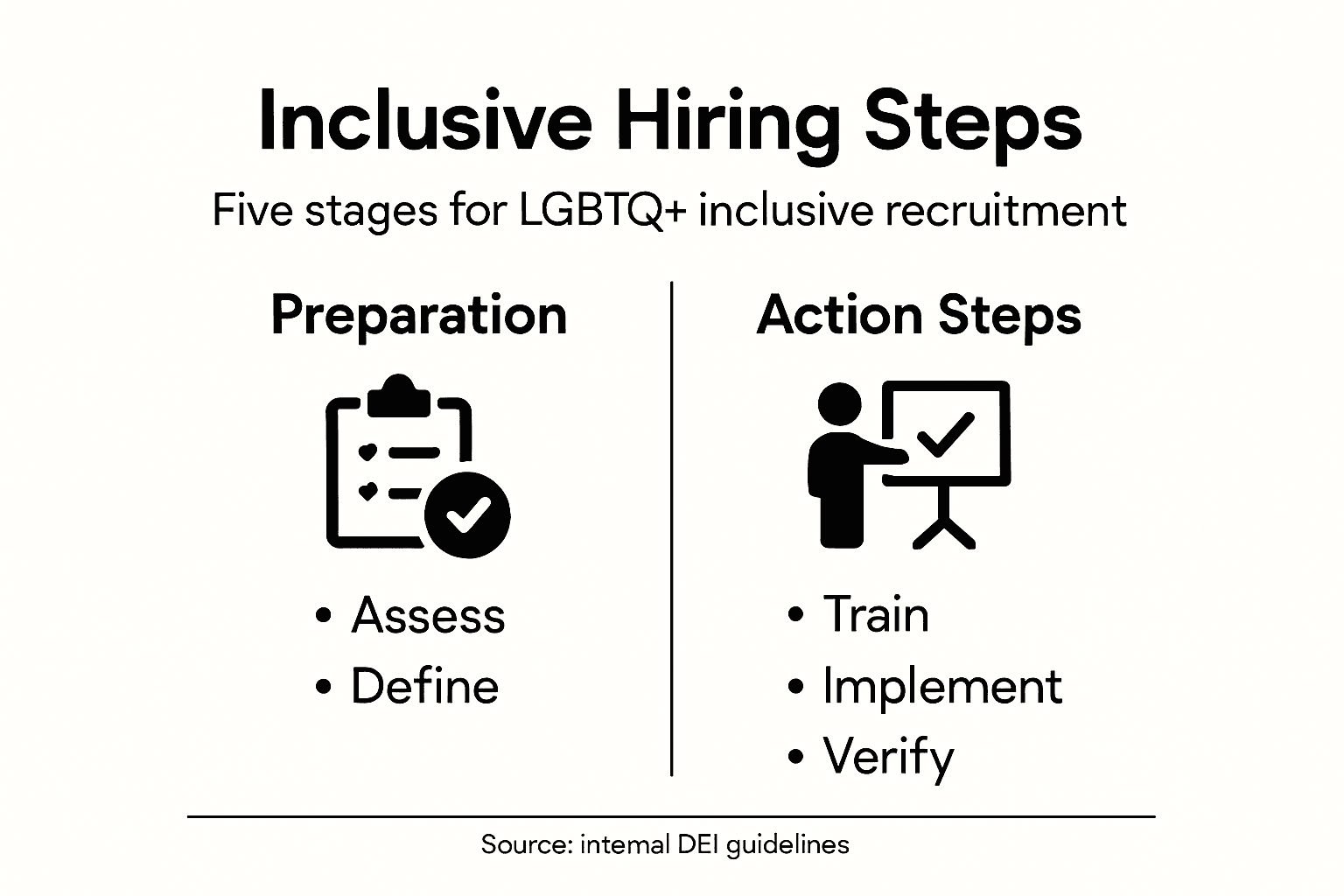
Step 1: Assess existing hiring practices for inclusivity
To build an inclusive hiring process for LGBTQ+ talent, your first crucial step is conducting a comprehensive audit of your current recruitment practices. This assessment will help you identify potential barriers and unconscious biases that might prevent diverse candidates from successfully navigating your hiring pipeline.
Start by thoroughly examining each stage of your recruitment process through an equality and diversity lens. The CIPD guide to inclusive recruitment recommends scrutinizing multiple dimensions of your hiring workflow:
- Analyze job descriptions for gendered language
- Review application forms for unnecessary personal information
- Examine interview questions for potential discriminatory content
- Check candidate evaluation criteria for hidden biases
- Assess diversity representation in your recruitment team
Organizations often unintentionally create exclusionary processes. By systematically reviewing each hiring stage, you can eliminate systemic barriers that might discourage LGBTQ+ candidates from applying or progressing through selection.
Here’s a comparison of traditional versus inclusive hiring practices and their impact on LGBTQ+ candidates:
Unconscious bias can significantly impact recruitment decisions, making a proactive and intentional approach to inclusivity essential.
Critical areas to evaluate include job advertisements, candidate screening methods, interview protocols, and selection criteria. Look for language that might inadvertently signal a non-inclusive workplace, such as gendered pronouns or heteronormative assumptions about family structures or relationship status.
Pro tip: Engage an external diversity consultant to provide an objective, third-party perspective on your current hiring practices and potential improvement areas.
Step 2: Define inclusive job descriptions and outreach strategies
Creating an inclusive hiring process requires thoughtful crafting of job descriptions and strategic outreach that genuinely welcomes LGBTQ+ talent. Your goal is to develop communication that not only eliminates discriminatory language but actively signals your organization’s commitment to diversity and belonging.

Inclusive job description practices focus on using neutral language that emphasizes skills and competencies rather than demographic characteristics. This means carefully reviewing your job postings to remove gendered terms, heteronormative assumptions, and unintentional barriers that might discourage qualified candidates from applying.
Key strategies for developing inclusive job descriptions and outreach include:
- Use gender-neutral pronouns (they/them)
- Focus on essential job requirements and skills
- Avoid coded language that might signal exclusivity
- Explicitly state your organization’s commitment to diversity
- Highlight employee resource groups and LGBTQ+ support networks
Effective job descriptions communicate more than just role requirements - they represent your organization’s values and culture.
Expand your recruitment channels by connecting with LGBTQ+ professional networks, community organizations, and specialized job platforms. This demonstrates a genuine commitment to diversity beyond performative statements.
Pro tip: Have diverse team members review job descriptions to identify potential unintentional biases that might not be immediately apparent to everyone.
Step 3: Train hiring teams to recognize unconscious bias
Building an inclusive hiring process requires comprehensive training to help your recruitment team understand and mitigate unconscious bias that can unfairly impact LGBTQ+ candidates. Your primary goal is to transform awareness into actionable strategies that promote fair and equitable hiring practices.
Unconscious bias training techniques should focus on helping team members recognize hidden prejudices that might unconsciously influence candidate evaluations. This means creating structured learning experiences that go beyond theoretical discussions and provide practical tools for identifying and interrupting biased thinking.
Key components of effective unconscious bias training include:
- Interactive workshops demonstrating real-world bias scenarios
- Self-assessment tools to help individuals recognize personal biases
- Role-playing exercises simulating diverse candidate interactions
- Statistical evidence showing the impact of bias on hiring decisions
- Concrete strategies for interrupting biased thought patterns
Recognizing unconscious bias is not about feeling guilty, but about becoming a more fair and effective decision maker.
Implement ongoing education programs that normalize discussions about bias and create a culture of continuous learning and self-reflection. This approach helps transform isolated training sessions into sustained organizational change.
Pro tip: Rotate training facilitators and include diverse perspectives to ensure the training remains dynamic and engaging.
Step 4: Implement fair interview and selection procedures
Creating an equitable hiring process requires designing interview and selection procedures that eliminate bias and provide a level playing field for all candidates, especially those from marginalized communities like the LGBTQ+ workforce. Your objective is to develop a transparent, objective approach that evaluates candidates based on skills, competencies, and potential.
Fair interview best practices emphasize using structured interview techniques that standardize candidate evaluation. This means developing consistent questioning protocols, creating clear evaluation rubrics, and ensuring that every candidate experiences the same rigorous yet respectful assessment process.
Key strategies for implementing fair interview procedures include:
- Design standardized interview questions targeting specific job competencies
- Use diverse interview panels representing multiple perspectives
- Create objective scoring rubrics with predefined evaluation criteria
- Remove personal identifying information from initial candidate reviews
- Provide reasonable accommodations for candidate needs
- Ensure consistent interview time allocations for all candidates
Fair selection is not about lowering standards, but about removing artificial barriers that prevent talented candidates from showcasing their true potential.
Establish clear documentation processes that track interview assessments objectively, allowing for transparent decision making and potential review. This approach helps protect both the organization and candidates from potential discriminatory practices.
Pro tip: Train interview panel members to recognize and interrupt their own unconscious biases in real-time during candidate interactions.
Step 5: Verify impact through continuous feedback and analytics
Building an inclusive hiring process requires more than implementing strategies - you need systematic measurement and ongoing evaluation to ensure your efforts are creating meaningful change for LGBTQ+ candidates. The goal is to transform good intentions into demonstrable, data-driven progress.
Recruitment diversity analytics provide critical insights into the effectiveness of your inclusive hiring approach, helping you identify potential barriers and track meaningful improvements over time. This means collecting comprehensive data across multiple recruitment stages and analyzing them with precision and nuance.
Key strategies for verification and continuous improvement include:
- Collect detailed applicant demographic data with candidate consent
- Track candidate progression rates across different stages
- Compare hiring outcomes for diverse candidate groups
- Conduct anonymous candidate experience surveys
- Analyze interview panel scoring for potential bias patterns
- Establish clear benchmarks for diversity and inclusion metrics
Data transforms diversity from a well-intentioned goal into a measurable, achievable organizational priority.
Develop a transparent reporting mechanism that allows stakeholders to understand recruitment performance, creating accountability and demonstrating your commitment to meaningful change. Regular review and adjustment ensure your hiring process remains dynamic and responsive to emerging insights.
Summary of key analytics that verify and enhance LGBTQ+ recruitment outcomes:
Pro tip: Schedule quarterly diversity recruitment reviews with cross-functional teams to maintain momentum and collaborative problem-solving.
Empower Your Inclusive Hiring Strategy with mygwork
The challenge of building an inclusive hiring process for LGBTQ+ talent begins with recognizing and eliminating unconscious bias and systemic barriers. This article highlights key goals such as crafting fair interview procedures, using inclusive job descriptions, and continuously measuring diversity impact. To truly transform hiring practices, organizations need authentic connections to the LGBTQ+ professional community and trusted resources that support diversity-driven employment.
Discover how mygwork offers the perfect platform to broaden your recruitment outreach and showcase your commitment to workplace equality. By engaging with a specialized job board and networking hub designed specifically for LGBTQ+ professionals, your organization can access diverse talent pools and demonstrate real, measurable progress toward inclusive recruitment. Take the next step now to build an equitable workplace environment that attracts and retains exceptional LGBTQ+ candidates. Explore opportunities and resources at mygwork.com and join a community dedicated to diversity and inclusion.
Frequently Asked Questions
How can I assess my current hiring processes for inclusivity?
Conduct a comprehensive audit of your recruitment practices to identify barriers and biases that may affect LGBTQ+ candidates. Review each stage of your hiring pipeline, including job descriptions and interview questions, to ensure they promote inclusivity.
What should I include in an inclusive job description?
An inclusive job description should focus on neutral language that emphasizes skills and competencies, avoiding gendered terms or heteronormative assumptions. Clearly state your organization’s commitment to diversity and mention any employee resource groups or support networks for LGBTQ+ individuals.
How do I train my hiring team to recognize unconscious bias?
Implement comprehensive unconscious bias training that includes interactive workshops and self-assessment tools. This will help your team identify their unconscious prejudices and provide strategies to address them during the hiring process.
What steps should I take to ensure fair interview procedures?
Develop standardized interview techniques by creating consistent questioning protocols and evaluation rubrics. Ensure that every candidate enjoys the same interview experience by removing personal identifying information and using diverse interview panels.
How can I measure the impact of my inclusive hiring practices?
Collect and analyze data on candidate demographics, progression rates, and interview outcomes to track the effectiveness of your inclusive hiring approach. Establish benchmarks for diversity metrics and conduct anonymous candidate experience surveys to identify areas for improvement.
What ongoing practices can keep my hiring process inclusive?
Schedule regular reviews of your recruitment process with diverse team members to maintain focus on inclusivity. Consider conducting quarterly diversity recruitment assessments to ensure that your hiring practices align with your commitment to LGBTQ+ inclusion.