
How to Create Diverse Job Postings for Graduates
November 4, 2025
Did you know that companies with inclusive hiring practices are 1.7 times more likely to be innovation leaders in their fields? Attracting top graduate talent means more than filling roles. It means building a team that thrives on different ideas and perspectives. Understanding how to write welcoming, fair job requirements and descriptions opens the door to a wider pool of skilled, motivated graduates ready to contribute their best.
Step 1: Define inclusive graduate talent requirements
Creating inclusive graduate talent requirements means designing job descriptions that welcome diverse candidates and remove unnecessary barriers to entry. The goal is to attract talented graduates from all backgrounds while ensuring your job postings are fair and comprehensive.
Starting with a standardized framework helps streamline this process. According to the International Standard Classification of Occupations, you can leverage global occupation classification systems to develop precise and inclusive job descriptions. This approach ensures your talent requirements are structured and universally understood.
When defining requirements, focus on core competencies rather than restrictive credentials. The European Dictionary of Skills and Competences suggests using standardized skill terminology that emphasizes capabilities over traditional qualifications. This means looking beyond degree specifics and evaluating a candidate’s actual skills and potential.
Key strategies for inclusive graduate talent requirements include:
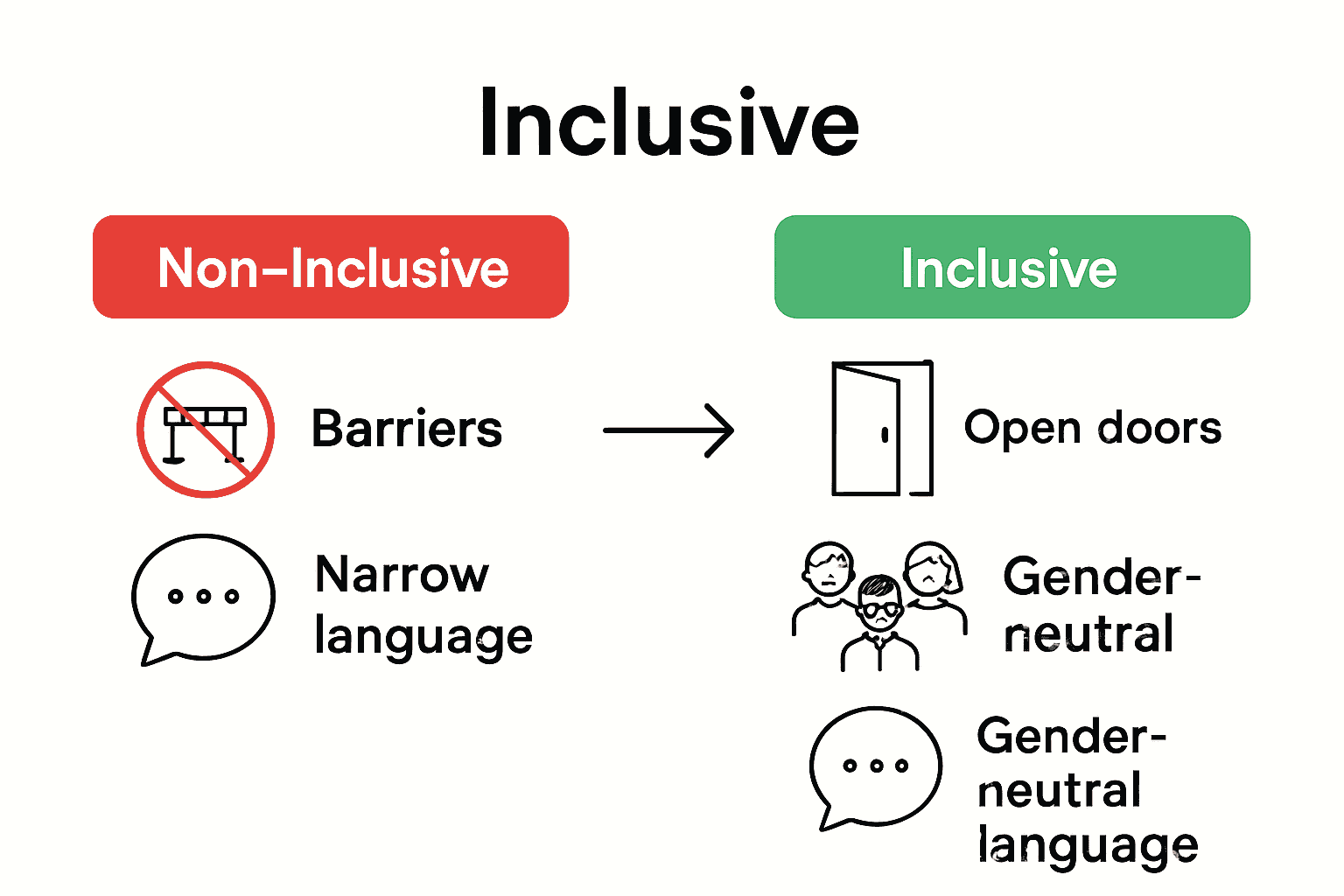
- Remove gendered language from job descriptions
- Use neutral pronouns
- Avoid overly specific educational requirements
- Highlight transferable skills
- Emphasize learning potential over rigid experience
Pro Tip: Review your draft job description with diverse colleagues to identify potential unconscious biases before publishing.
By approaching talent requirements thoughtfully, you create opportunities for graduates from varied backgrounds to showcase their unique strengths and contribute meaningfully to your organization.
Here’s a summary of key strategies for inclusive graduate recruitment at each step:
Step 2: Craft job descriptions emphasizing diversity values
Crafting job descriptions that genuinely reflect your organization’s commitment to diversity means going beyond surface level statements and creating authentic invitations for talented graduates to join your team.
Kabel emphasizes the critical approach of focusing on skills and potential rather than rigid qualifications. This means reimagining how you communicate job requirements to welcome candidates from diverse backgrounds and experiences.
Start by critically examining your language. Replace narrow technical jargon with clear descriptions of actual work outcomes. According to RoleMapper, clarity between essential and non-essential requirements is key to attracting diverse talent. This approach helps prevent qualified candidates from self selecting out of application processes.
Key strategies for emphasizing diversity values include:
- Use gender neutral language
- Highlight your organization’s commitment to inclusion
- Describe opportunities for learning and growth
- Specify that transferable skills are welcome
- Explain how diverse perspectives contribute to team success
Pro Tip: Have professionals from different backgrounds review your job description to ensure it feels welcoming and authentic.
By thoughtfully crafting your job descriptions, you transform recruitment from a transactional process into an opportunity to showcase your genuine commitment to building a dynamic and inclusive workplace.
Step 3: Integrate unbiased language and accessible criteria
Creating job descriptions that welcome all graduates means carefully selecting language that breaks down barriers and invites diverse talent to apply. Your goal is to craft criteria that focus on potential and capability rather than unnecessary restrictions.
Fetcher provides crucial guidance on eliminating language that might inadvertently exclude talented candidates. This means carefully reviewing your job description to remove gender coded words and unnecessary requirements that could discourage qualified applicants from applying.
According to Health Education England, developing accessible criteria involves a thoughtful approach to describing job requirements. Instead of listing rigid qualifications, focus on the core skills and potential contributions a graduate can bring to your organization.
Key strategies for integrating unbiased language include:
- Remove gendered terms like chairman or policeman
- Use neutral pronouns like they or them- Avoid words that suggest gender preference
- Describe skills in terms of capabilities
- Focus on outcomes rather than specific background
- Highlight learning opportunities
Pro Tip: Run your job description through an inclusive language checker to identify potential biases you might have missed.
By approaching your job descriptions with intentionality and empathy, you create an invitation that speaks to the diverse potential of graduate talent waiting to make their mark.

Step 4: Promote postings on LGBTQ+ friendly channels
Expanding your recruitment reach means strategically selecting channels that authentically connect with diverse graduate talent. Your goal is to ensure your job postings are visible in spaces where LGBTQ+ professionals feel genuinely welcomed and valued.
Fetcher suggests promoting job postings on platforms specifically designed to support LGBTQ+ professionals. This targeted approach helps you move beyond traditional recruitment methods and directly engage with talented graduates who might otherwise be overlooked.
According to Kabel, utilizing diverse recruitment channels is crucial for reaching a wider and more inclusive audience. This means looking beyond mainstream job boards and exploring specialized networks that celebrate professional diversity.
Key strategies for promoting job postings include:
- Utilize LGBTQ+ professional networking platforms
- Partner with university LGBTQ+ career centers
- Share postings in queer professional associations
- Engage with LGBTQ+ professional social media groups
- Attend virtual and in person LGBTQ+ career events
Pro Tip: Ensure your recruitment channels reflect the same level of inclusivity you promise in your job description.
You can also advertise on myGwork to directly reach LGBTQ+ professional networks and demonstrate your commitment to genuine workplace inclusion.
Step 5: Evaluate and improve posting inclusivity
Creating truly inclusive job postings is an ongoing process that requires continuous reflection and refinement. Your goal is to develop a dynamic approach that consistently attracts diverse graduate talent by staying responsive to evolving workplace standards.
RoleMapper recommends regularly reviewing and refining job descriptions to ensure they remain inclusive and do not inadvertently exclude any potential candidates. This means treating your job posting as a living document that can be adjusted and improved over time.
According to Health Education England, evaluating job descriptions requires a comprehensive approach that goes beyond surface level changes. You need to dig deeper into the language, structure, and underlying messages your posting communicates to different groups of potential applicants.
Key strategies for evaluating and improving posting inclusivity include:
- Conduct periodic language audits
- Gather feedback from diverse professionals
- Track applicant demographic data
- Compare your postings against inclusive best practices
- Solicit input from employee resource groups
Pro Tip: Create a diverse review panel that can provide multiple perspectives on your job descriptions.
By treating inclusivity as an ongoing commitment rather than a one time task, you create recruitment practices that genuinely welcome and respect graduate talent from all backgrounds.
Build Truly Inclusive Graduate Job Postings That Attract Diverse Talent
Crafting graduate job postings with inclusive talent requirements and unbiased language can feel overwhelming. The challenge is clear remove hidden barriers and create welcoming opportunities that resonate with diverse candidates, especially LGBTQ+ professionals. You want to foster a recruitment process that highlights skills, potential, and authentic inclusion instead of rigid credentials or coded language.
Discover how mygwork.com empowers employers to connect with a vibrant community of LGBTQ+ graduates and diverse professionals. With specialized job postings and access to inclusive career resources, you can transform your graduate hiring. Act now to promote your roles in spaces that truly celebrate diversity and drive meaningful change. Start your journey toward an equitable workforce today by visiting mygwork.comand joining a network that supports your inclusive recruitment goals.
Frequently Asked Questions
How can I remove gendered language from job descriptions?
To remove gendered language, replace terms with neutral alternatives and avoid pronouns that imply gender. For example, use “chair” instead of “chairman” and replace “he” or “she” with “they”. Review your job descriptions and adjust at least three instances of gender-coded terms.
What key skills should I emphasize when creating diverse job postings?
Focus on core competencies and transferable skills while downplaying rigid educational qualifications. Highlight abilities like problem-solving and teamwork that can apply across various experiences. Consider identifying at least five core skills that represent the actual work requirements in your postings.
How can I ensure job descriptions are welcoming to diverse candidates?
Craft job descriptions that reflect your organization’s commitment to diversity and inclusion by using clear, inviting language. Highlight opportunities for growth and describe how diverse perspectives contribute to success. Aim to create a friendly tone that resonates with candidates from various backgrounds within your job postings.
What specific criteria should I include in a job posting to promote inclusivity?
Integrate accessible criteria by focusing on potential contributions rather than rigid requirements. Avoid listing specific degrees and instead describe the capabilities needed for success in the role. Review your criteria every six months to ensure they remain relevant and welcoming to all candidates.
How can I effectively promote diverse job postings?
Promote your job postings on platforms specifically aimed at diverse talent, such as LGBTQ+ professional networks and university career centers. Utilize social media channels and attend relevant career events to spread awareness. Set a target to post in at least three diverse channels for each job opening to maximize reach.
How often should I evaluate and improve my job postings for inclusivity?
Conduct evaluations of your job postings bi-annually to ensure they continue to uphold inclusive standards. Gather feedback from diverse professionals and adjust language or criteria as needed. Commit to revising at least one aspect of your job description during each evaluation to enhance inclusivity.