
How to Launch LGBTQ Hiring Initiatives for Inclusive Workplaces
October 22, 2025
Did you know that workplaces with active LGBTQ inclusion programs see up to 30 percent higher retention rates among diverse employees? Creating an environment where all professionals feel welcome and valued starts with thoughtful hiring practices. Whether your organization is just beginning or refining its efforts, understanding the steps to LGBTQ-inclusive recruitment can pave the way for greater belonging and long term business success.
Quick Summary
Table of Contents
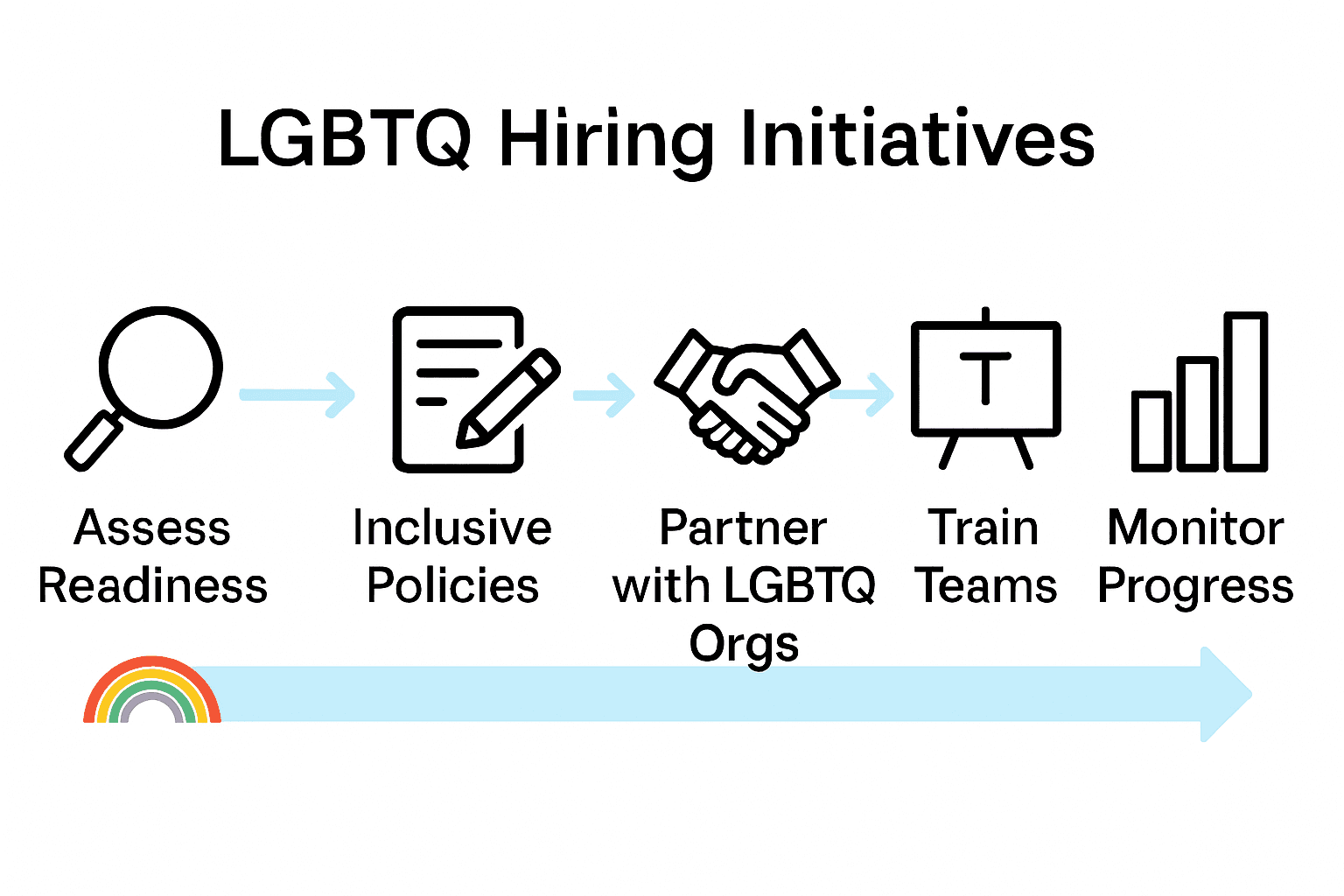
- Step 1: Assess Organizational Readiness For LGBTQ Hiring
- Step 2: Develop Inclusive Recruitment Policies And Messaging
- Step 3: Partner With LGBTQ Organizations And Platforms
- Step 4: Train Hiring Teams On Inclusive Practices
- Step 5: Monitor Progress And Evaluate Initiative Effectiveness
Step 1: Assess organizational readiness for LGBTQ hiring
Evaluating your organization’s preparedness for LGBTQ hiring means taking an honest look at your current workplace culture and practices. This assessment will help you understand where you stand and identify critical areas for improvement before launching targeted recruitment initiatives.
Start by conducting a comprehensive internal audit focused on existing diversity metrics and inclusion practices. According to the National Sexual Violence Resource Center, organizations must examine their capacity at both organizational and individual levels to effectively engage with LGBTQ+ communities.
Your audit should include several key components. Review current non discrimination policies to confirm they explicitly protect sexual orientation and gender identity. Analyze workforce demographic data to understand representation gaps.
employees anonymously about their experiences with workplace inclusivity. Check training records to determine existing diversity and sensitivity education.
Pay special attention to potential barriers or microaggressions that might discourage LGBTQ+ candidates from applying or feeling comfortable in your workplace. This means examining interview processes, benefits structures, and workplace communication norms.
Pro Tip: Authenticity matters more than perfection. Being transparent about your organization’s commitment to learning and improving can itself be attractive to potential candidates.
Once you complete this assessment, you will have a clear roadmap of strengths and opportunities. Your next step will involve developing targeted strategies to address identified gaps and create a more welcoming environment for LGBTQ+ professionals. Learn more about creating inclusive workplace cultures with our talent solutions guide.
Step 2: Develop inclusive recruitment policies and messaging
Building an inclusive recruitment strategy means transforming how your organization attracts and welcomes diverse talent. Your goal is creating a recruitment approach that signals genuine commitment to LGBTQ+ professionals and breaks down traditional hiring barriers.
According to Proaction International, inclusive recruitment starts with carefully examining your current language and communication channels. This means removing exclusionary terminology from job descriptions and expanding your recruitment networks to include specialized LGBTQIA+ professional communities.
Start by auditing your job postings for gendered or restrictive language. Replace terms like ‘he/she’ with gender neutral ‘they’. Ensure your job descriptions focus on skills and qualifications rather than making assumptions about candidate backgrounds. Highlight your organization’s commitment to diversity directly in job advertisements.

Broaden your recruitment channels beyond traditional platforms. Connect with LGBTQ+ professional networks, attend diversity focused career events, and partner with organizations that support queer professionals. These targeted approaches help you reach talented candidates who might otherwise feel overlooked.
Pro Tip: Train your recruitment team to recognize and combat unconscious bias. This means developing interview protocols that allow candidates to express themselves authentically without feeling pressured to disclose personal identity details.
By implementing these strategies, you create a welcoming environment that signals true inclusivity. Explore our talent solutions for more recruitment insights and learn how to build a more diverse workforce.
Step 3: Partner with LGBTQ organizations and platforms
Connecting with specialized LGBTQ+ professional networks transforms your recruitment strategy from passive to proactive. These partnerships help you access talented candidates and demonstrate your genuine commitment to workplace diversity.
Platforms like myGwork offer incredible opportunities for employers seeking to build inclusive talent pipelines. According to their platform description, these specialized networks host events like WorkFair job fairs and provide training resources that directly connect inclusive employers with LGBTQ+ professionals.
Research and identify reputable LGBTQ+ professional organizations in your industry. Look for networks that offer job boards, mentorship programs, and community events. Consider national organizations like the National LGBT Chamber of Commerce as well as local professional groups that represent diverse queer professional communities.
Attend LGBTQ+ career events and networking conferences. These spaces allow you to meet potential candidates, understand community needs, and showcase your organization’s authentic commitment to inclusion. Engage as a listener and learner first rather than approaching these spaces solely as a recruiter.
Pro Tip: Sponsoring LGBTQ+ professional events demonstrates meaningful allyship. Choose sponsorships that provide real value to the community rather than superficial visibility.
By building strategic partnerships, you create sustainable pathways for LGBTQ+ talent to enter and thrive in your workplace. Explore our membership options to discover how we can support your diversity recruitment efforts.
Step 4: Train hiring teams on inclusive practices
Creating an inclusive hiring process requires more than good intentions. Your hiring teams need targeted training that transforms unconscious biases into intentional, equitable practices that welcome diverse talent.
Start with comprehensive unconscious bias training that helps recruiters recognize and interrupt their automatic assumptions. This means exploring how personal experiences and cultural conditioning shape perceptions of professional competence. Interactive workshops that use real world scenarios can help teams understand how subtle biases impact candidate evaluation.
Develop clear interview guidelines that standardize assessment criteria. Create structured interview protocols where all candidates answer the same core questions. This approach reduces individual interviewer bias and ensures each candidate is evaluated consistently on their skills and potential.
Focus on teaching interview techniques that create psychological safety. Train your team to ask open ended questions that allow candidates to share their experiences without feeling forced to disclose personal identity details. Practice active listening skills that demonstrate genuine respect and curiosity about candidate backgrounds.
Pro Tip: Regular training is not a one time event. Schedule quarterly refresher sessions and create feedback mechanisms that help your team continuously improve inclusive hiring practices.
By investing in thoughtful training, you transform your hiring culture from the inside out. Learn more about our workplace inclusion resources to support your diversity journey.
Step 5: Monitor progress and evaluate initiative effectiveness
Tracking the success of your LGBTQ hiring initiatives requires more than good intentions. You need systematic measurement that provides clear insights into how your diversity strategies are performing in real world scenarios.
The Corporate Equality Index offers an excellent benchmarking framework for organizations committed to LGBTQ workplace inclusion. By tracking your annual CEI scores, you can generate measurable data that demonstrates tangible progress in your diversity efforts.
Establish key performance indicators that go beyond representation numbers. Track metrics like candidate diversity in application pools, interview progression rates, retention of LGBTQ+ employees, and internal advancement opportunities. These comprehensive metrics reveal the true impact of your inclusive hiring strategies.
Conduct regular anonymous employee surveys to gather qualitative feedback. Create safe channels where LGBTQ+ staff can share their workplace experiences candidly. This feedback provides nuanced insights that numeric data cannot capture allowing you to continuously refine your approach.
Pro Tip: Transparency builds trust. Share your progress publicly even when results are imperfect. Demonstrating commitment to ongoing improvement matters more than achieving immediate perfection.
By systematically monitoring your initiatives, you transform diversity from a static goal to a dynamic organizational journey. Explore our membership resources to access tools that can support your ongoing evaluation efforts.
Here’s a summary of key steps to LGBTQ-inclusive hiring:
Transform Your LGBTQ Hiring Initiatives Into Lasting Workplace Inclusion
Are you ready to close the gap between your DEI vision and true LGBTQ workplace inclusion? The article highlighted the importance of internal audits, authentic recruitment strategies, and meaningful partnerships to create a more welcoming environment but the real challenge is turning these insights into action. Many organizations struggle to attract and retain diverse talent when their processes are not visible in spaces where LGBTQ professionals are actively seeking employers who truly value them. This gap can leave you feeling uncertain about how to compete for top talent and ensure your policies translate into genuine opportunity for everyone.
With myGwork, you have direct access to a thriving community of LGBTQ professionals and allies. Our platform provides tailored tools to help you build inclusive recruitment pipelines, strengthen your employer brand, and measure your progress—just like the steps outlined in this article. Showcase your commitment, connect with qualified candidates, and join a network of organizations leading the way in LGBTQ workplace equality. Visit mygwork.com to activate your strategy and make your next hire a step forward for inclusivity. Opportunity is waiting—start building a stronger, more diverse workforce today.
Frequently Asked Questions
How can I assess my organization’s readiness for LGBTQ hiring initiatives?
To assess readiness, conduct a comprehensive internal audit reviewing diversity metrics, non-discrimination policies, and employee experiences with inclusivity. Start by gathering feedback through anonymous surveys and analyzing demographic data within 30 days.
What steps should I take to develop inclusive recruitment policies for LGBTQ candidates?
Begin by auditing job descriptions for exclusionary language and making them gender-neutral. Revise your recruitment messaging to highlight a commitment to diversity, and implement these changes within two weeks.
How can I effectively partner with LGBTQ organizations to enhance my hiring initiatives?
Identify and connect with reputable LGBTQ professional organizations and networks in your industry. Attend their events and engage with the community to build authentic relationships, ideally starting within the next month.
What training should I provide to my hiring teams to ensure inclusive practices?
Offer comprehensive unconscious bias training that highlights how personal biases affect recruitment decisions. Make this training a priority and schedule it within the next quarter to establish effective interview protocols.
How can I monitor the effectiveness of my LGBTQ hiring initiatives?
Establish key performance indicators (KPIs) that measure candidate diversity and retention rates. Regularly review this data and employee feedback to refine your strategies, aiming to conduct evaluations every six months.