
How You Can Use the Power of Meditation to Stay in the Present
May 16, 2023Pierre Labissiere, who is a Senior Consultant at Kroll with their Restructuring Administration team sat down with Kroll’s Marketing Manager Juan Normey to discuss Pierre's mental health journey, how meditation made all the difference, and talk about the ways he is passing on these lessons to his colleagues.
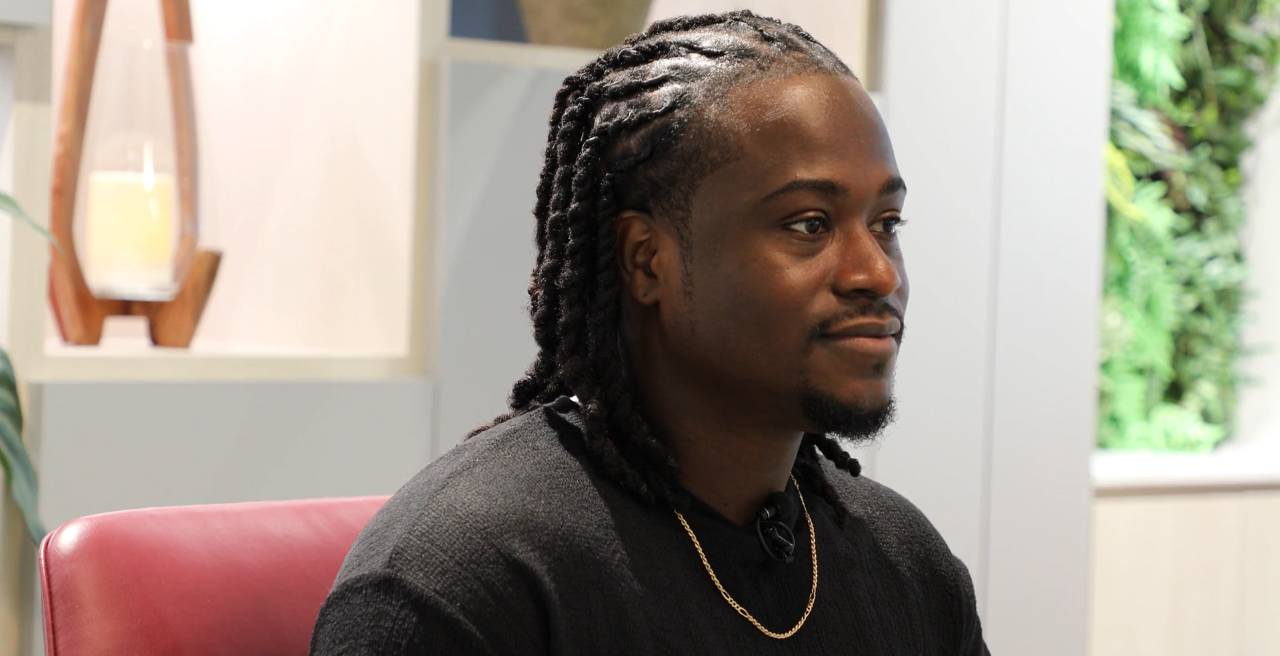
Pierre Labissiere, Senior Consultant at Kroll shares his journey with meditation and how it's impacted his mental health
Juan: Hi Pierre! So, to begin with, can you give me some context and some background about you, and your meditation practice?
Pierre: Yes. So, my background in meditation started about 2015, ironically enough, it really became a necessity for me because I was in a dark time in my life when it came to work life balance. I was working lots of hours, didn't really have much of a social life, wasn't really eating well or really taking care of myself physically. I was just kind of grinding it out at work and it got to the point where I was really just desperate to find some sort of relief to just feel better, whether it was physically or mentally.
So, I started looking towards things like getting to sleep earlier, drinking more water, trying to get exercise. But then I found meditation and I said, you know what? I have nothing else to lose. I was really in a depressive state and just wasn't feeling well and I was just desperate to try to find something.
After I began that journey of starting meditation back in 2015, I really saw a shift starting to happen within about 30 days and it was kind of shocking to me because I started to actually feel better about each day. I felt like I was having more focus with my work. I felt like I was becoming more intentional about what I gave my time and energy to, and it just started to make me feel better and was a tool in my overall toolkit to really help me.
J: Wow, thank you for sharing that with us, I know that a lot of people will be able to relate to that feeling of depression and not knowing what steps to take. How did you first find out about meditation?
P: So I actually found it through a Ted talk. I really enjoy watching Ted talks and I really love anything that's about making our lives easier or optimizing us as humans. And I found this meditation talk by Andy Puddicombe, who is the CEO and founder of the app ‘Headspace’. Before I didn't really think of anything of it. But then again, just really feeling bad mentally, physically. It kind of popped up back into my head.
And then I downloaded the app and just one morning at 6:00 AM at home before work, I tried it. It felt really weird at first. But I just said, you know what? Just give it 10 days. So, I just stuck out for the 10 days and it became a lifelong thing from there.
J: So, you did it by yourself, with the app?
P: Yep, did it by myself. And then from there I just started doing research into different types of meditation styles, whether it was transcendental, or other apps like ‘Insight Timer’ and just really looking into the world of mindfulness. After the first 10 days of my meditation journey, I learned that meditation is about being present. It was groundbreaking for me because it made me realize a lot of times, I was stressing out about things that I “thought” were going to happen. Whether it was deliverables at work or if it was worrying about things that happened in the past. And I just wasn't in the present. Being able to internalize that concept really changed my perspective on things.
"I think one of the things I found beautiful about meditation is that it not only helps you with your mental health, but when you're reducing stress in your body, it has a physical effect on you as well."
J: Did you go through any additional trainings for this?
P: So with that, I honestly just practiced and put in the hours and people started noticing my demeanor was different. I think one of the things I found beautiful about meditation is that it not only helps you with your mental health, but when you're reducing stress in your body, it has a physical effect on you as well. When we're stressed out and we're having negative thoughts chronically it can physically affect us in a negative way. When we're w working to reduce that stress by coming from a place of gratitude, and staying in the present, the physical effects on our body are just as prevalent.
I think people just started to notice that I'm just happier. I'm more content, I'm more focused, I'm getting things done and people just started asking me what are you doing differently? And I just started sharing that I'm doing meditation in addition to just all these other things.
My boss at the time asked me if I would be open to leading the team in a guided meditation. There were about 10 of us on the team and we were still working a lot of hours so he thought it would be good for morale. And it was just the perfect opportunity for me to work with the team and try to pass on what was working for me on to them.
J: And, is there a type of meditation that you do in particular?
P: How I initially learned it was really just focusing on the breath and using the breath as an anchor. So again, going back to the idea that meditation is about being present. I generally like to focus on the breath, but I think it depends on the mood that I'm in. So, if I'm just feeling just anxious, I may do a meditation just focusing on gratitude. Or just focusing on an emotion. But what I like to tell people is that you can meditate by just being present in anything you're doing.
If you're going to the gym and you're just focused on the workout, focusing on that mind body connection, you're going to get yourself in a meditative state. If you're doing work and you lock yourself in for 30 minutes to focus on your work, getting rid of distractions that can put you into a meditative state. So, it's really about being present in whatever you're doing. I think the simplest and most common is focusing on the breath and that's what opened me up to it.
J: And in terms of the contribution that you're doing for the company with your expertise in the area, what are you doing exactly?
P: So I've actually led two guided meditations in the New York City office. That was in person, and we also streamed it via Teams. And then I've also recorded about four other meditations. One was an audio meditation, that's on our mindfulness corner. And then the other three were video guided meditations that were about 5 minute each, with each having a focus on a different topic. From gratitude to service.
So, for I've been fortunate enough to be able to contribute to the company and to some of the work that they're doing to support our mental health. Honestly, I am very grateful for that and the opportunity to do that again. I am always looking forward to it.
J: And how do you feel about Kroll’s mental health policy?
P: Honestly, I feel great about it because I was originally with Prime Clerk and now, once we were integrated into Kroll they allowed me to have this platform to speak about mental health, and to share my practice of meditation with the company. They are also giving me the platform to shoot content. I think that's amazing. And then on top of it, I think they offer a lot of tools.
Employees have an opportunity to speak to a therapist. Also, the benefits that we have. With our gym pass that gives us access to moving our bodies physically. Also, the sick time policy that we have, which is awesome as well. So, I think there are a lot of resources, and the company is really making an effort to make mental health a priority, as well as just building community, and making that a priority.
Obviously, we have bottom lines and goals that we're trying to meet, but I think leadership is very conscious that people are what allows us to meet those goals and we're doing things in line to support the people. I'm really happy about the resources and the support that we have from leadership.
J: What would you say to somebody who needs to find ways to fit this into a busy schedule?
"With meditation, it's really about learning that the thoughts are always going to come. You can't stop the thoughts from coming. But when you're just trying to be present, whether it's on your breathing, whether it's spending time with your kids, whether it's going to the gym, all it’s about realizing when you get distracted."
P: I would say take anywhere from 60 seconds to 5 minutes. Just take a few minutes to take a deep breath just to get present. A lot of times people say: "My thoughts are constantly going and my brains just not stopping.” With meditation, it's really about learning that the thoughts are always going to come. You can't stop the thoughts from coming. But when you're just trying to be present, whether it's on your breathing, whether it's spending time with your kids, whether it's going to the gym, all it’s about realizing when you get distracted.
Noticing that and then just coming back to that present moment, coming back to the thing you want your attention on, and gradually over time that muscle of focus and attention will grow. So, I think just being patient with yourself and the same way that we schedule time for meetings and deliverables, making time and making it a priority to just work on your mental health, to work on your meditation practice or just working on anything that's going to bring you joy and peace. Making that a priority and scheduling it into your life the same way we do with anything else that's important to us.
"I think honestly the biggest take away for me is we really have all of our power in the present."
J: Do you think our mobile phones and technology are detrimental for this practice?
P: That's a great one. I think that technology is a tool, and it can be very detrimental to us especially as studies are showing nowadays that our attention span is at the shortest that it's ever been because of technology. But I think like with any tool, it can be used for good or bad. So, in my instance, the apps initially helped me get into this practice and I think it's about just learning how to use that tool effectively. There are ways to put your phone on do not disturb when it's time to just lock in with work, lock in on anything you want to be present for. You can change the way your phone sends you notifications. So, I think technology it's neither good nor bad, but it's about really understanding what it is, understanding our relationship and basically adjusting that so that we get that desirable outcome.
J: If you had to choose one big learning or take-away message that you learn from these years of meditation, what would you choose?
P: I think honestly the biggest take away for me is we really have all of our power in the present. There's a quote from a movie, which I think it’s kind of silly to say, but it is really impactful. It's from Kung Fu Panda. They said ‘the past is history, the future is a mystery. But the present is a gift. That's why it's called the present.’ And anything that we want to create in our future and our life, we don't create that by thinking about it. We create that with the actions and things that we're doing in the present.
So, by working on meditation, working on staying in the present moment, that's where we're going to have the power to create the life that we want to. Just focusing on being in the here and now every day and every moment as much as possible. That's really going to make the biggest impact. And I think it's such a small thing. But when you compound that over time, you're going to see real results with anything as long as you're just staying in that present moment.
And although I think meditation is important and is a great tool for our overall mental health, I think it's also important to realize it's one tool. It's important that if you're feeling depressed or feeling just negative regularly, to speak to a professional. I do try to advise that all the time. Again, meditation is just one tool. One way of dealing with stress and mental health. But it's not a magic pill. So, I think that it is also important to always check with your medical provider. Always seek help. Especially when it comes to things like suicidal thoughts and depression. Unfortunately, those numbers are starting to spike, especially after going through a pandemic where people weren't allowed to connect with others and have that social interaction. It was very detrimental on people's overall wellbeing, but people are beginning to be able to heal. I always think it's important to mention that you should always seek medical and/or professional help and guidance when it comes to these serious issues.