
Complete Guide to Inclusive Hiring Practices
October 1, 2026
Did you know that companies with diverse teams are up to 35 percent more likely to outperform their peers financially? Employers everywhere are realizing that inclusive hiring is not just about fairness, but about creating a stronger, more innovative workforce. Misconceptions still cloud the topic, leaving many organizations unsure where to start. Clear strategies can help break down old barriers, revealing new possibilities for teams of every shape and size.
Key Takeaways
| Point | Details |
| Inclusive Hiring | A strategic approach to recruitment that eliminates unconscious bias and creates equitable opportunities for all candidates. |
| Core Benefits | Inclusive hiring leads to enhanced creativity, improved financial performance, and stronger employee engagement. |
| | Effective Strategies | Successful inclusion requires comprehensive training, mentorship, and transparent recruitment processes to systematically address systemic barriers. | | Legal Protections | Understanding diverse legal frameworks is essential for fostering inclusive hiring practices and ensuring equal opportunity for all professionals. |
Table of Contents
Defining Inclusive Hiring and Common Myths
Inclusive hiring is more than just a buzzword - it’s a strategic approach to recruitment that actively works to eliminate unconscious bias and create equitable opportunities for all candidates. According to research from Reach Summit Global, this process encourages recruiters to recognize and mitigate both conscious and unconscious biases during candidate evaluation.
Many professionals misunderstand inclusive hiring, believing it means lowering standards or giving preferential treatment. But that’s not how it works. Inclusive hiring actually means:
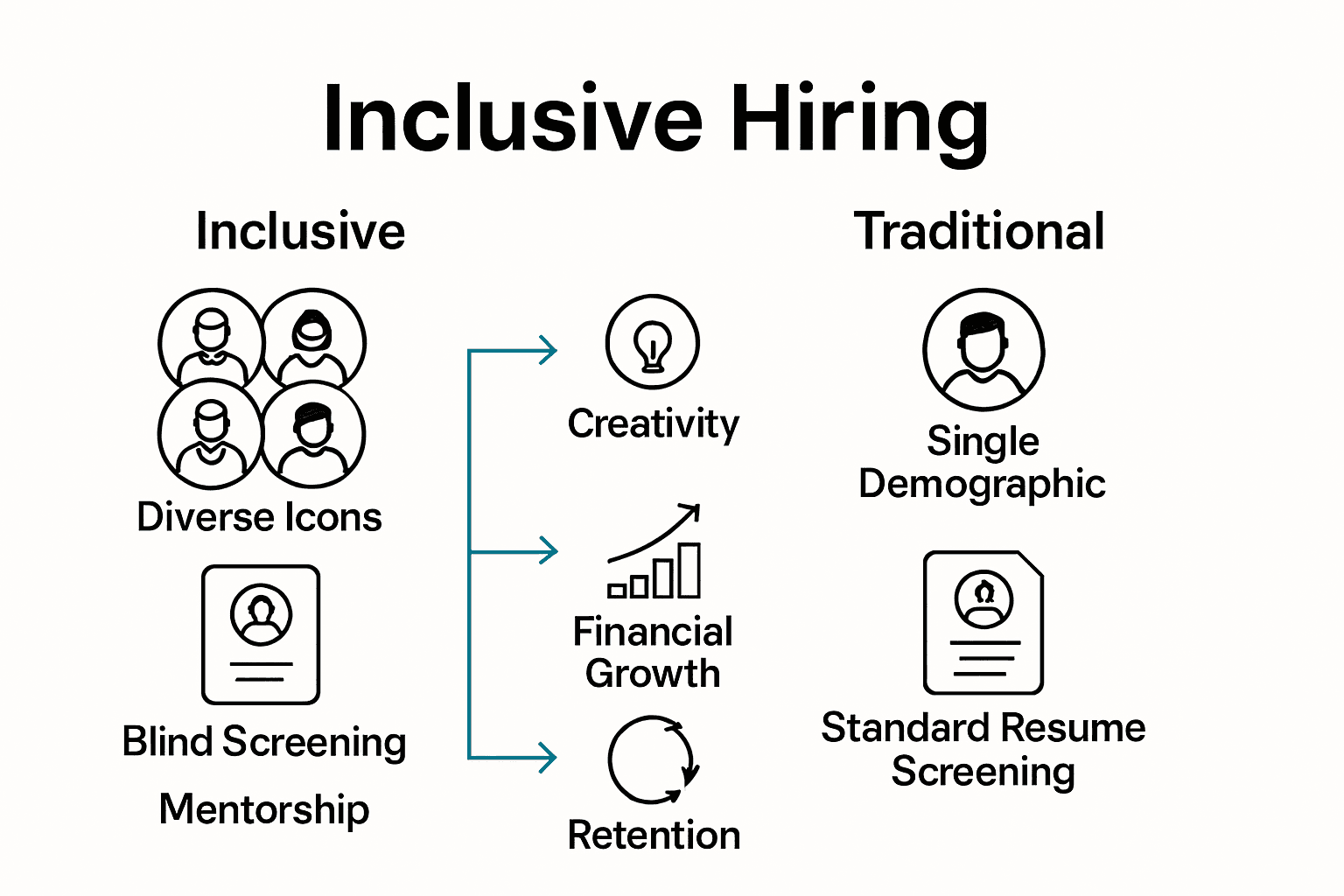
Designing job descriptions that welcome diverse talent
Creating recruitment processes that are transparent and fair
Implementing blind screening techniques
Training hiring managers to recognize and counteract personal biases
The goal isn’t to replace merit with diversity. It’s to ensure that merit is genuinely and fairly assessed, regardless of a candidate’s background, gender identity, sexual orientation, or personal characteristics. By removing unnecessary barriers and acknowledging systemic inequalities, organizations can tap into a wider, more talented talent pool.

Common myths about inclusive hiring often stem from misunderstandings about its purpose and implementation. The reality is that diverse teams consistently outperform homogeneous ones, bringing different perspectives, problem-solving approaches, and innovation to the workplace. Stop thinking about inclusion as a compliance checkbox. Start seeing it as a strategic advantage that can transform your organizational culture and performance.
Core Benefits of Inclusive Hiring Practices
Diversity isn’t just a feel-good strategy - it’s a powerful business accelerator. According to research from Shaw Trust, diverse teams drive significant organizational improvements across multiple performance dimensions, including innovation, decision-making, and financial performance.
The tangible benefits of inclusive hiring practices are profound and far-reaching:
Here’s a summary of the core benefits inclusive hiring brings to organizations:
| Benefit | Business Impact | Example Outcome |
| Enhanced Creativity & Problem-Solving | Drives innovation | New product ideas Improved solutions |
| Financial Performance | Increases revenue & profit | Higher financial returns Market share growth |
| Employee Engagement | Boosts retention & morale | Lower turnover Better team dynamics |
| Employer Brand Strength | Attracts diverse talent | Wider candidate pool Positive public image |
| Expanded Talent Attraction | Accesses underrepresented groups | More qualified applicants Broader perspectives |
Enhanced team creativity and problem-solving capabilities
Improved financial performance
Higher employee engagement
More attractive employer brand
Expanded talent attraction potential
Research from Intuit reveals that companies embracing inclusive practices experience remarkable advantages. Organizations with gender-diverse teams are statistically more likely to outperform their industry peers, demonstrating that diversity isn’t just a moral imperative - it’s a competitive strategic advantage.
Beyond financial metrics, inclusive hiring transforms workplace culture. It signals to potential candidates and existing employees that your organization values individual differences, creates psychological safety, and provides equitable opportunities. By deliberately building diverse teams, companies unlock human potential, foster innovation, and create environments where every professional can thrive - regardless of their background, identity, or personal story.
Key Elements of Effective Inclusion Strategies
Building a truly inclusive workplace requires more than good intentions - it demands strategic, purposeful approaches that systematically remove barriers and create opportunities for all professionals. Flexible work arrangements have emerged as a critical component of modern inclusion strategies, enabling organizations to tap into diverse talent pools that were traditionally overlooked.
According to Fair Cultures, remote and flexible work options dramatically expand access to talent by supporting:
Individuals with disabilities
Caregivers with complex scheduling needs
Professionals living in rural or underserved areas
Talent with unique personal circumstances
Effective inclusion strategies go beyond workplace flexibility. They require a holistic approach that addresses systemic barriers through deliberate, measurable actions. This means reimagining recruitment processes, creating supportive workplace cultures, and implementing ongoing education and accountability mechanisms.
Key elements of successful inclusion strategies include developing comprehensive training programs, establishing mentorship networks, creating transparent career progression pathways, and continuously measuring and reporting on diversity metrics. The goal is creating an ecosystem where every professional feels valued, heard, and empowered to contribute their unique perspectives - transforming inclusion from a theoretical concept into a lived organizational experience.
Legal Protections and Global Regulations
Navigating the complex landscape of employment equity requires understanding how different countries approach legal protections for marginalized professionals. Each jurisdiction has unique frameworks designed to prevent discrimination and promote fair hiring practices across diverse populations.
In Canada, the Employment Equity Act represents a proactive model of legal protection. This legislation mandates federal employers to take deliberate steps toward increasing representation of specific groups, including:
Women
People with disabilities
Visible minorities
Indigenous peoples
Similarly, the United Kingdom’s Equality Act 2010 provides a comprehensive legal framework that prohibits discrimination in hiring processes. The act protects individuals from unfair treatment based on characteristics such as:
Age
Disability
Race
Sex
Religion
Sexual orientation
Gender identity
These legal protections go beyond simply preventing discrimination. They actively encourage organizations to create inclusive environments that recognize and value individual differences. While specific regulations vary globally, the underlying principle remains consistent: every professional deserves equal opportunity to pursue their career aspirations, free from systemic barriers or prejudicial treatment.
Professionals and employers alike must stay informed about these evolving legal landscapes. Understanding your rights and responsibilities is crucial in building workplaces that genuinely respect, support, and celebrate diversity in all its beautiful complexity.
Challenges, Pitfalls, and How to Avoid Them
Implementing inclusive hiring practices isn’t a straightforward journey. Despite good intentions, organizations frequently encounter significant obstacles that can derail their diversity and inclusion efforts. According to research from Human Resources Online, many hiring managers acknowledge the benefits of inclusive recruitment while simultaneously struggling with critical challenges.
Common pitfalls in inclusive hiring include:
Superficial diversity efforts that lack genuine commitment
Limited understanding of inclusive recruitment processes
Unconscious bias persistent in screening and interview stages
Insufficient training for hiring managers
Lack of comprehensive diversity metrics and accountability
Addressing these challenges requires a multi-dimensional approach. Organizations must invest in comprehensive bias training, develop structured interview protocols, and create transparent evaluation mechanisms that minimize subjective decision-making. This means implementing blind screening techniques, standardizing interview questions, and establishing clear, measurable diversity goals.
The most successful inclusive hiring strategies treat diversity as an ongoing cultural transformation, not a one-time initiative. They continuously educate teams, regularly audit hiring practices, and create feedback loops that allow for constant improvement. By acknowledging potential pitfalls and proactively developing strategies to address them, organizations can move from performative diversity efforts to meaningful, sustainable inclusion that genuinely transforms workplace culture.
Ready to Build a Workplace Where Everyone Can Thrive?
You have seen how unconscious bias and a lack of fair processes can hold back truly talented professionals. In your journey toward inclusive hiring practices, challenges like a limited talent pool and barriers for LGBTQ+ individuals may often feel overwhelming. What if there was a way to bring equity to your recruitment strategy and connect with candidates who are motivated to make a difference?
Take a step forward with myGwork. Join our community to access:
A unique network of LGBTQ+ professionals looking for supportive employers
Inclusion-focused job listings and career resources
Insightful workplace equality news and events tailored for diversity champions
Whether you are seeking to diversify your own team or advance your career where authenticity is valued, create your profile at myGwork today. Don’t wait to start attracting or becoming the talent that will shape the future of inclusive workplaces.
Frequently Asked Questions
What is inclusive hiring?
Inclusive hiring is a strategic approach to recruitment aimed at eliminating unconscious bias and creating equitable opportunities for all candidates, ensuring that individuals from diverse backgrounds are given fair consideration during the hiring process.
How can organizations implement inclusive hiring practices?
Organizations can implement inclusive hiring by designing welcoming job descriptions, employing transparent recruitment processes, utilizing blind screening techniques, and training hiring managers to recognize and counteract biases.
What are the benefits of inclusive hiring?
Inclusive hiring leads to enhanced creativity, improved financial performance, higher employee engagement, a stronger employer brand, and expanded talent attraction capabilities, ultimately resulting in better organizational outcomes and workplace culture.
What challenges do organizations face in inclusive hiring?
Common challenges include superficial diversity efforts, persistent unconscious bias during interviews, insufficient training for hiring managers, and a lack of comprehensive diversity metrics. Addressing these requires a multi-dimensional approach with ongoing education and accountability.