Complete Guide to Inclusive Recruitment Practices
October 1, 2026
Nearly 67 percent of job seekers say workplace diversity influences their decision to join a company. Inclusive recruitment is now a vital focus for organizations hoping to attract top talent and drive innovation. Companies that reshape hiring to welcome every background not only spark creativity but also build stronger, more resilient teams ready for the challenges of a changing world.
Key Takeaways
| Point | Details |
|---|---|
| Inclusive Recruitment | Focuses on intentional hiring practices that eliminate barriers for marginalized communities, fostering diverse and equitable workplaces. |
| AI Considerations | AI tools can enhance inclusive recruitment but may also perpetuate biases; continuous monitoring and adjustment are crucial. |
| Legal Frameworks | Laws such as the Employment Equity Act mandate equitable hiring practices, emphasizing the importance of structured guidelines for workplace diversity. |
| LGBTQ+ Inclusion | Strategic integration of LGBTQ+ talent involves creating supportive environments that recognize and nurture diverse skills and perspectives for organizational success. |
Table of Contents
- Defining Inclusive Recruitment In The Workplace
- Types And Strategies For Inclusive Hiring
- Legal Frameworks Supporting Inclusive Recruitment
- Real-World Applications For Lgbtq+ Talent
- Common Pitfalls And How To Avoid Them
Defining Inclusive Recruitment in the Workplace
Inclusive recruitment is more than a buzzword—it’s a strategic approach to building diverse, equitable workplaces that recognize talent across all identities and experiences. Workplace inclusion starts with intentional hiring practices designed to eliminate systemic barriers and create opportunities for professionals from marginalized communities.
According to the Inclusive Excellence framework, true organizational diversity goes beyond numeric representation. It requires deliberately embedding diversity, equity, and inclusion (DEI) into core operational strategies. This means:
- Removing unconscious bias from job descriptions
- Creating transparent, standardized evaluation processes
- Establishing mentorship and development pathways
- Actively cultivating welcoming workplace cultures
Artificial intelligence presents both promising opportunities and potential risks in inclusive recruitment. Research from a 2024 industry workshop highlights that AI recruitment tools can simultaneously enhance fairness and inadvertently perpetuate existing biases. Successful implementation requires a nuanced, context-sensitive approach that continuously monitors and adjusts algorithmic decision-making to support genuinely equitable hiring practices.
At its core, inclusive recruitment recognizes that diversity isn’t just about filling quotas—it’s about creating environments where every professional can contribute fully, feel valued, and advance based on their skills and potential. By reimagining traditional hiring frameworks, organizations can build workforce ecosystems that reflect our wonderfully complex, multifaceted world.
Types and Strategies for Inclusive Hiring
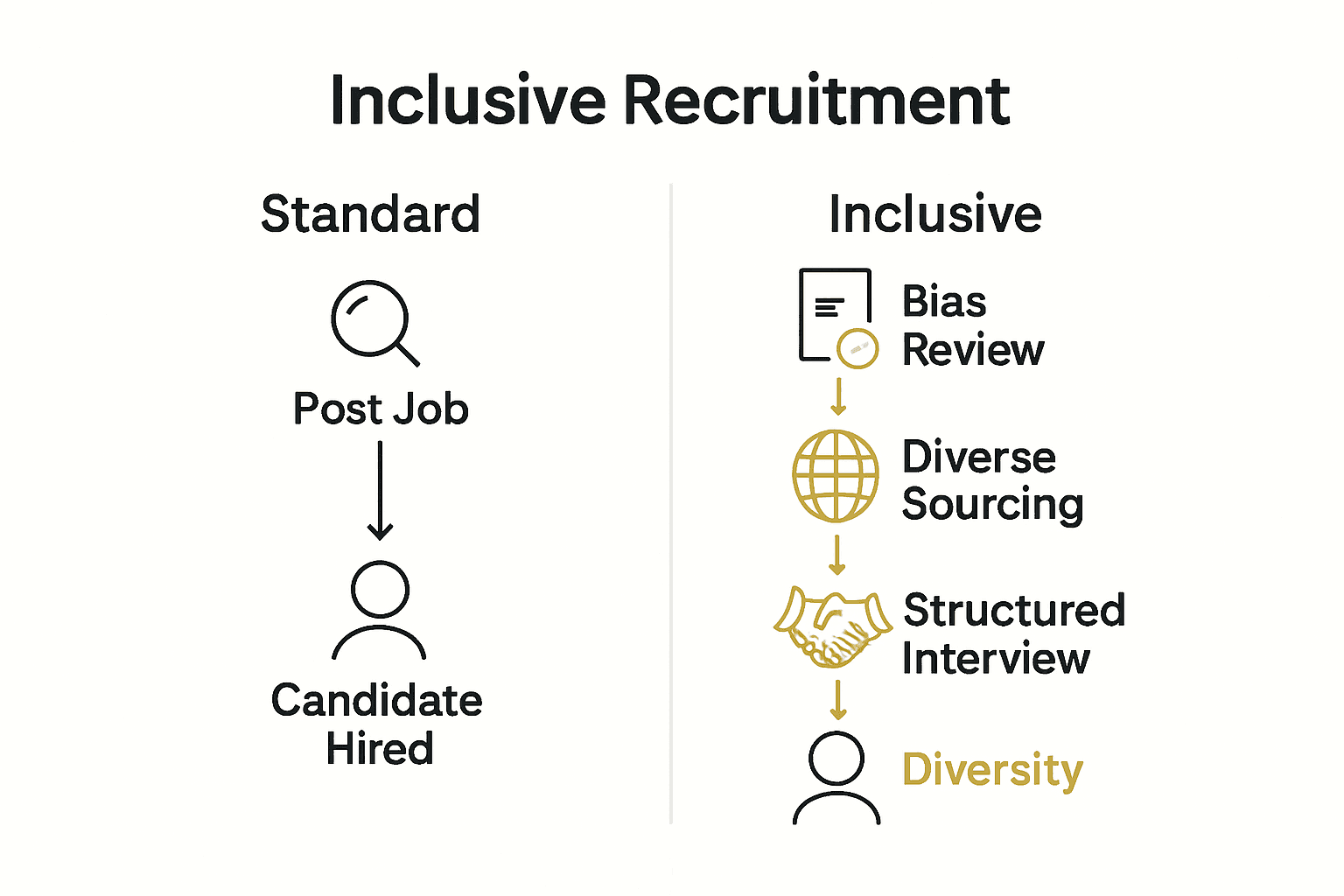
Inclusive hiring transforms traditional recruitment by intentionally designing processes that welcome talent from all backgrounds. According to research from diversity.com, successful strategies focus on systematically reducing barriers and bias throughout the talent acquisition journey.
Key Inclusive Hiring Strategies
Effective approaches to building diverse talent pipelines include:
Here’s a comparison of key inclusive hiring strategies and their impact:
| Strategy | Main Action | Impact on Inclusion |
|---|---|---|
| Job Description Review | Use gender-neutral, skill-based language | Reduces qualification bias |
| Expanded Recruitment Channels | Partner with diverse groups & sites | Broadens candidate pool |
| Structured Interviews | Standardize questions, train for bias | Ensures fair evaluations |
| Welcoming Interview Process | Design inclusive and respectful candidate experience | Improves candidate comfort |
| Diversity Metrics & Partnerships | Track progress, work with DEI organizations | Drives accountability |
- Writing Job Descriptions: Use gender-neutral language and emphasize skills over traditional credentials
- Expanding Recruitment Channels: Partner with community institutions and DEI-focused job boards
- Reducing Screening Bias: Implement structured interview processes and unconscious bias training
- Creating Welcoming Experiences: Design interview processes that feel inclusive and respectful
Research from Horizontal Talent highlights additional critical strategies. Organizations must set clear diversity metrics, commit to continuous improvement, and actively partner with organizations representing underrepresented professional communities.
The most progressive approaches view inclusive hiring not as a compliance requirement, but as a strategic opportunity to access broader talent pools, drive innovation, and create workplace environments where everyone can thrive. By reimagining recruitment as a holistic, intentional process, companies can build teams that genuinely reflect the rich diversity of human potential.
Legal Frameworks Supporting Inclusive Recruitment
Legal frameworks play a critical role in advancing workplace diversity by establishing structured guidelines that protect marginalized professionals and mandate equitable hiring practices. These regulatory mechanisms transform inclusive recruitment from a voluntary initiative to a fundamental organizational responsibility.
Key Legislative Protections
Consider Canada’s pioneering Employment Equity Act) as a prime example of proactive legal design. This legislation doesn’t just prohibit discrimination—it actively requires organizations to:
- Remove systemic employment barriers
- Implement positive hiring practices
- Create targeted training programs
- Develop retention strategies for underrepresented groups
- Increase representation of women, people with disabilities, visible minorities, and Indigenous peoples
Beyond national legislation, many jurisdictions have developed comprehensive anti-discrimination laws that protect professionals across various dimensions of identity. These legal frameworks typically address recruitment practices by:
- Mandating transparent hiring processes
- Establishing clear guidelines for fair candidate evaluation
- Providing mechanisms for reporting workplace discrimination
- Creating accountability measures for organizations
The evolution of legal frameworks reflects a broader societal recognition that diversity isn’t just a moral imperative—it’s a strategic advantage. By codifying inclusive recruitment principles, these laws help dismantle historical barriers and create pathways for talented professionals who have been systematically marginalized. Contact our legal resources team for more detailed insights into navigating these complex regulatory landscapes.
Real-World Applications for LGBTQ+ Talent
LGBTQ+ talent acquisition goes far beyond simple representation—it’s about creating dynamic workplace environments that genuinely value diverse perspectives and lived experiences. Organizations committed to meaningful inclusion understand that LGBTQ+ professionals bring unique skills, resilience, and innovative thinking that can transform workplace cultures.
Strategic Talent Integration
Effective LGBTQ+ talent strategies involve:
- Creating explicit non-discrimination policies
- Offering inclusive healthcare and benefits
- Developing robust employee resource groups
- Providing mentorship and leadership development programs
- Ensuring safe, respectful workplace environments
Professionals from LGBTQ+ communities often demonstrate extraordinary adaptability and emotional intelligence, skills directly transferable to complex modern workplace challenges. Companies that recognize and nurture these capabilities can unlock significant competitive advantages.

Building truly inclusive talent ecosystems requires ongoing commitment. This means not just hiring LGBTQ+ professionals, but creating pathways for advancement, ensuring psychological safety, and actively dismantling systemic barriers. Explore our talent solutions for LGBTQ+ recruitment to learn how organizations can transform their approach to diverse talent acquisition.
The most progressive workplaces view LGBTQ+ inclusion as a strategic imperative—recognizing that diverse teams drive innovation, enhance problem-solving, and reflect the rich complexity of our global professional landscape.
Common Pitfalls and How to Avoid Them
Inclusive recruitment isn’t a destination—it’s an ongoing journey fraught with potential missteps. Understanding and proactively addressing common challenges can transform well-intentioned efforts into meaningful, sustainable diversity strategies.
Technology and Bias Risks
Research from algorithmic bias studies reveals a critical warning: technological hiring tools can inadvertently perpetuate discriminatory patterns if not carefully governed. Key risks include:
- Algorithmic systems reproducing historical hiring biases
- Unintentional filtering of diverse candidate pools
- Opaque decision-making processes
- Lack of systematic bias monitoring
Mitigation strategies require active, continuous intervention. Organizations must:
- Regularly audit AI recruitment tools
- Implement transparent evaluation mechanisms
- Train hiring teams on recognizing systemic biases
- Develop diverse data sets for algorithmic training
- Create human oversight processes
Beyond technological challenges, cultural pitfalls can derail inclusive recruitment. Performative diversity—where organizations celebrate representation without creating genuine belonging—remains a significant obstacle. True inclusion demands moving beyond checkbox mentalities and creating environments where all professionals can authentically thrive.
Successful inclusive recruitment isn’t about perfect execution, but about committed, transparent, and adaptable approaches that continuously learn and improve. By acknowledging potential blind spots and maintaining a growth mindset, organizations can build recruitment ecosystems that genuinely reflect the rich diversity of human potential.
Take the Next Step Toward Truly Inclusive Recruitment
Struggling to move beyond surface-level diversity efforts? Many organizations fall into common pitfalls like technology bias and performative inclusion. The article highlights how genuine workplace inclusion demands more than just policy changes. It requires intentional hiring strategies and continuous monitoring to ensure every professional is valued and empowered to grow. If you are aiming to break down barriers, attract talent from the LGBTQ+ community, and build a workforce that embodies authenticity, you need hands-on tools and a supportive network.
Accelerate your progress by joining mygwork.com, the leading platform designed for inclusive recruitment of LGBTQ+ professionals. Here, you will find:
- A network tailored for diversity-driven hiring
- Targeted job postings and visibility for underrepresented talent
- Access to events, legal resources, and DEI strategies
Do not wait to transform your recruitment process. Visit our talent solutions page to see how we can help you reach your diversity goals. Connect with professionals and explore real-world inclusive practices at mygwork.com today.
Frequently Asked Questions
What is inclusive recruitment?
Inclusive recruitment refers to hiring practices that intentionally aim to eliminate barriers and create opportunities for professionals from diverse backgrounds, ensuring representation and equity in the workplace.
How can organizations remove bias from job descriptions?
Organizations can remove bias by using gender-neutral, skill-based language in job descriptions and focusing on required skills rather than traditional credentials to attract a more diverse candidate pool.
What are effective strategies for structuring interviews inclusively?
Effective strategies include standardizing interview questions, providing bias training for interviewers, and designing the overall interview process to be respectful and welcoming to all candidates.
How can companies measure the effectiveness of their inclusive recruitment practices?
Companies can track diversity metrics, establish accountability measures, and continuously review and adjust their hiring processes based on the feedback and performance of underrepresented candidates.