
India’s blood donor rules challenged by gay man
September 2, 2024India’s National Blood Transfusion Council and the National AIDS Control Organization, under the Health and Family Welfare Ministry, have a guideline that permanently restricts men who have sex with men from donating blood. However, this rule might be subject to change as the Supreme Court considers a challenge to the constitutionality of the 2017 blood donor regulation.
On July 30, the Supreme Court agreed to review the challenge brought forth by Shariff D. Rangnekar, a gay man from Delhi and the director of the Rainbow Literature Festival. The complaint was drafted by lawyer Rohin Bhatt and filed by Ibad Mushtaq.
This rule also affects trans people, female sex workers, and the broader LGBTQ+ community.
Rangnekar highlighted that these restrictions are based on discriminatory and outdated views from the 1980s in the U.S.A.
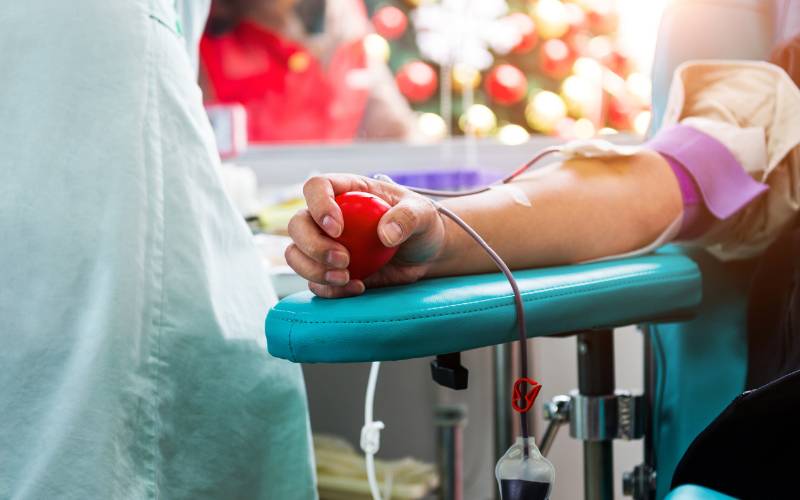
Image Credit: Canva
He pointed out that several countries, such as the U.S.A., UK, Canada, and Israel, have re-evaluated their policies, with new guidelines that no longer impose overall bans on blood donations from gay men or genderqueer individuals.
“It is presumed that a particular group of persons may be suffering from sexually transmitted disease,” stated Rangnekar in his lawsuit, according to the New Indian Express, a leading English newspaper in India. “Medical technology and education, especially in the field of hematology, has progressed tremendously. The screening of donors is conducted for every donation before a transfusion.”
According to ‘Washington Blade’, Rangnekar urged the Supreme Court to review the blanket ban, arguing that it is unreasonable. He claimed this prohibition violates fundamental rights such as equality, dignity, and life, as protected under Articles 14, 15, 17, and 21 of the Indian Constitution.
He further claimed the ban effectively prevents LGBTQ+ individuals from fully engaging in society, treating them as second-class citizens.
Rangnekar contended that sections 12 and 51 of the 2017 blood donor guidelines are discriminatory and unconstitutional because they permanently exclude LGBTQ+ individuals from blood donation. He argued these rules unfairly target LGBTQ+ persons, preventing them from contributing to a life-saving cause and thereby violate their fundamental rights. He stressed that this exclusion perpetuates stigma and inequality, which contradict the justice and equality enshrined in the constitution.
On August 2, the Supreme Court took a notable step by issuing a formal notice to the Indian government concerning Rangnekar’s case.
Headed by Chief Justice Dhananjaya Yeshwant Chandrachud, the three-judge bench requested responses from the National AIDS Control Organization and the National Blood Transfusion Council. This action marked the court's acknowledgment of the substantial constitutional issues raised in the petition, paving the way for a critical examination of the regulations that have long barred LGBTQ+ individuals from donating blood.
In 2023, the Union Health Ministry responded to a Supreme Court petition filed by Thangjam Santa Singh, challenging the blood donor selection criteria of 2017. Singh called for the removal of rules preventing blood donations from trans individuals, MSM, and female sex workers.
At the time, the Union Health Ministry defended the exclusionary criteria in the Supreme Court, citing substantial evidence indicating that trans individuals, MSM, and female sex workers are at a higher risk for HIV, Hepatitis B, and Hepatitis C. The ministry argued these guidelines were meant to ensure the safety of the blood supply, although this stance has been widely criticised for fostering stigma and discrimination against marginalised groups.
In an interview with the Washington Blade, Rangnekar stated that India’s blood donation ban reflects a strong bias against the LGBTQ+ community. He emphasised that this pattern of exclusion is not just about blood donation but is part of a broader attempt to deny the community essential rights and dignity.
“There are many groups that could be high risk in certain areas, but you have a deterrence system in place,” said Rangnekar. “Globally, India claims to be a superpower, It is a country that has sold medical tourism to many parts of the world, and it is a hub for people coming from the developing world to have medical treatment, so what stops the government from having a testing system in place to allow us blood donation, but to have a blanket ban is absolute bias and nothing less than rubbish. We are in a country where there is a shortage of blood.”
Rangnekar also expressed optimism about his case.
Read related myGwork articles here:
France Ends Ban On Gay And Bisexual Male Blood Donors
Greece Lifts Ban On Gay Men Donating Blood
Justin Trudeau “Hopeful” That Canada Will End Blood Donation Discrimination Soon
More Gay And Bisexual Men Allowed To Donate Blood Thanks To “Historic” Rule Change
Keep up to date with the latest myGnews