
International Criminal Court seeking arrests over LGBTQ+ and gender persecution in Afghanistan
January 27, 2025The applications by the International Criminal Court (ICC) prosecutor for arrest warrants against two top Taliban leaders mark a significant step toward achieving justice for severe violations against women and girls in Afghanistan, as highlighted by Human Rights Watch today. The prosecutor’s requests on January 23, 2025, aim to charge the Taliban’s supreme leader, Haibatullah Akhundzada, and its chief justice, Abdul Hakim Haqqani, with the crime against humanity of persecution based on gender.
According to ‘Human Rights Watch’, the ICC prosecutor indicated there are reasonable grounds to believe that Akhundzada and Haqqani targeted Afghan women, girls, their allies, and individuals whom the “Taliban perceived as not aligning with their ideological gender identity or expression expectations,” including LGBTQ+ individuals. The prosecutor cited systematic Taliban violations affecting these people's rights to physical integrity and autonomy, free movement and expression, education, private and family life, and free assembly.
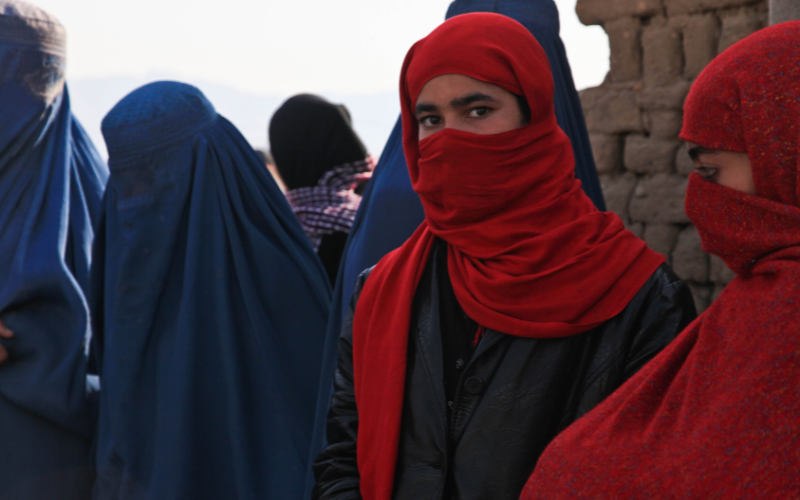
“The ICC prosecutor’s requests for arrest warrants against senior Taliban figures for gender persecution as a crime against humanity should bring the issue of the Taliban’s oppression of women, girls, and gender nonconforming people back to the forefront of the international community’s attention,” stated Liz Evenson, international justice director at Human Rights Watch. “With no justice in sight in Afghanistan, these ICC warrant requests present a crucial avenue for accountability.”
The prosecutor also claimed that the Taliban committed this persecution alongside other crimes under the ICC’s Rome Statute, such as murder, imprisonment, torture, rape, enforced disappearance, and other inhumane acts.
The Taliban have implemented measures, like educational bans, that restrict girls from studying beyond the sixth grade, limiting their future employment opportunities. They have also systematically curtailed women’s employment prospects even in health and education. Taliban members have subjected women participating in rights protests to beatings, detention, and torture. Additionally, the Taliban have targeted LGBTQ+ individuals with attacks or threats.
The requests were submitted to a pretrial chamber of three ICC judges who will decide whether to issue warrants. The ICC judges initially authorised an investigation in Afghanistan, an ICC member, in March 2020, following a preliminary examination begun in 2007, but it was halted for several years while considering a request from Afghanistan’s former government to defer ICC proceedings in favour of domestic prosecutions it claimed to be pursuing.
The court’s judges concluded that any investigations by the former government were at best a “very limited fraction” of those warranting ICC investigation and that the current government lacked interest in continuing the deferral request, leading to the resumption of the investigation in October 2022.
On November 28, 2024, six ICC member countries referred Afghanistan’s situation to the ICC prosecutor for investigation, expressing alarm over the stark deterioration of human rights in the nation, especially concerning women and girls.
In September 2023, Human Rights Watch determined that Taliban authorities were committing gender persecution as a crime against humanity against Afghan women and girls.
The Taliban have issued over 100 decrees severely restricting women and girls’ rights, including limits on freedom of movement, expression, and association; bans on many forms of employment; prohibitions on secondary and higher education; and arbitrary detentions infringing on liberty.
The prosecutor’s statement suggested intentions to pursue additional warrants against other senior Taliban leaders. Human Rights Watch has documented other grave Taliban and Islamic State Khorasan Province (ISKP) crimes that the ICC should investigate, including unlawful killings and enforced disappearances targeting former security personnel, activists, and journalists. Taliban forces engaged in arbitrary detentions, torture, and collective punishments of communities accused of opposition group associations. ISKP forces have been responsible for numerous unlawful attacks on Hazara-Shia communities and religious minorities, resulting in thousands of casualties and the exacerbation of historical impunity from both former Afghan and Taliban governments.
The ICC faces significant pressure, especially following the November 2024 arrest warrants issued against senior Israeli figures, including Prime Minister Benjamin Netanyahu. US lawmakers have renewed threats to sanction ICC officials and collaborators, potentially affecting the court’s global investigations, including in Afghanistan. Human Rights Watch stated that governments should support the ICC’s vital work by backing its independent mandate.
In September, several cross-regional countries initiated a dispute with Afghanistan under the Convention on the Elimination of All Forms of Discrimination against Women, which could lead to proceedings against the Taliban at the International Court of Justice, the UN’s top court for state disputes.
The ICC’s authorised investigation covers all alleged crimes within its jurisdiction in Afghanistan since May 1, 2003, and related crimes committed outside its territory yet linked to the Afghan situation since July 1, 2002. Submission of representations for investigation came from 11,150 individual victims and 130 families, all advocating for investigation proceedings.
Besides cases against Taliban and ISKP members, the ICC prosecutor should also consider alleged crimes by former Afghan security personnel and US forces, as highlighted by Human Rights Watch. The ICC prosecutor previously indicated their office would prioritise alleged Taliban and ISKP crimes while deprioritising those by Afghan forces and U.S.A. personnel, a decision criticised by victims and nonprofits for creating a double standard.
Over the years, Human Rights Watch has documented multiple violations of humanitarian law by Afghan government forces. Since the 2001 US-led invasion, instances of torture and ill-treatment sometimes resulting in deaths in custody have been recorded, along with summary executions by the U.S.A. military and CIA.
“The scope of international crimes in Afghanistan is extensive, and comprehensive accountability is critical to breaking the cycles of impunity leading to further abuses,” Evenson emphasised. “ICC member countries should ensure the court garners the support and resources needed to broaden its Afghanistan investigations.”