International Men's Day: Better Health For All Men And Boys
November 19, 2022Today marks International Men’s Day, as well as the month of Movember, a time dedicated to celebrating men’s health. With both movements focusing on the increasing concern around men’s health some have found it a useful tool in creating space to talk about mental health and toxic masculinity.
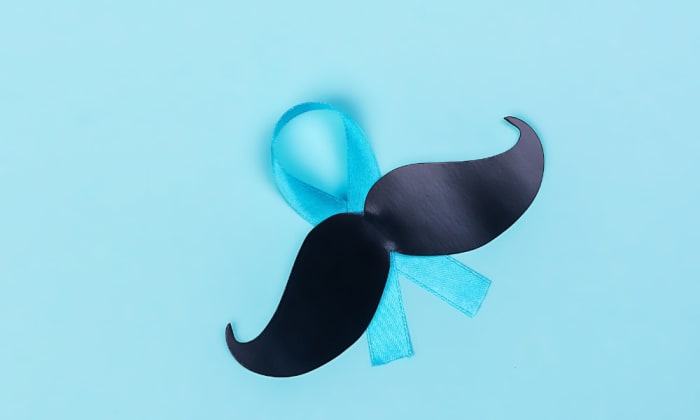
Movember started as a fun concept back in 2003 by two Australian friends Travis Garone and Luke Slattery, who jokingly decided to bring back the moustache by convincing their friends to grow one for charity for 30 days. Inspired by a friend's mother who was fundraising for breast cancer, they associated the moustache with the pink ribbon, but for men.
The annual moustache-starring global campaign, supported by many women, encourages men worldwide to support campaigns focusing on men's mental health and suicide prevention, and prostate and testicular cancer. From around 2017, the ‘fun’ movement started to tackle more serious health issues to help men live happier, healthier and longer lives.
When it comes to male health, the statistics are shocking worldwide. In countries like the US, 4 out of 5 suicides are by men, 1 in 8 men will be diagnosed with prostate cancer in their lifetime and testicular cancer continues to be the most diagnosed cancer in young men. In short, physical and mental health continues to be in crisis.
Men’s health is an issue that International Men’s Day Founder, Dr Jerome Teelucksingh, a doctor from Trinidad and Tobago, has been concerned about since the start of his campaign. He believes that the focus on health between the sexes is not equal. Until more recently, there has been “a lot more focus, support and funds dedicated to women’s health and other groups, to the detriment of men”, he pointed out.
So, he founded International Men's Day back in 1999. “I started the movement after I realised there were days designated to women and children, but apart from Father’s Day, there was nothing more for men. And not all men are fathers,” he noted. The date 19th November coincides with the day that the USA played against Trinidad in the 1989 World Cup qualifier. “The day stands out because although we lost the game, it was a day that we were all united. More importantly, it’s also my dad's birthday, a great role model for [my] family and the community. One of the main aims of the day was to celebrate positive and inspiring male role models doing good work and providing guidance in our very own communities. I also wanted to provide our children with other male role models other than those from Hollywood or Bollywood and sports stars to look up to.”
Not only does International Men’s Day aim to celebrate positive everyday male role models, but another of its main aims is to celebrate gender equality, as last year's year’s theme “Better relations between men and women” illustrated. However, the day has had its fair share of controversy.
With this growing backlash over the years, many planned Men’s Day celebrations have been cancelled or banned. Dr Teelucksingh attributes this to “alpha male groups with their own extreme agendas jumping on the bandwagon and confusing the cause for the public”. He believes this led to feminist groups and others, wrongly viewing the day as a backlash to International Women’s Day. However, last year's focus on gender equality, as well as the men’s health aspect, helped the movement to gain traction and much-needed support.
The day also aims to celebrate the diversity of men. “I felt there was a need for a focus on the diversity of men, which would include all men are men of different sexualities, different diverse backgrounds, different religions, different classes. We continuously get approached by many men from the LGBTQ+ community who have been unfairly treated (both at work or in their community) and urge us not to forget them in our campaign,” highlighted Dr Teelucksingh.
He wants the day to highlight the challenges faced by all men, be they queer, Black, White, disabled, fluid, etc. In essence International Men’s Day aspires to celebrate male diversity to remind us that men, like women, don’t have to be imprisoned by stereotypes, and that they too can be vulnerable. Men, like women, are diverse; and gender fluidity is increasingly challenging the very notion of binary gender divisions and what a ‘man’ is supposed to be.
Movember’s US Executive Director Mark Hedstrom shares Dr Teelucksingh’s view that “masculinity is too narrowly defined” and thinks “it's actually been harmful”. Hedstrom believes we all need to have a conversation about what the ‘masculinity’ spectrum actually looks like now, and ask all important questions like: “How do we better support all men? As a cisgender male, how do I step back and listen to the lived experience of men who aren't like me; and become an ally for a man that may be transgender or gay? How do we work together to help those men who have struggled and have been left behind, or even not recognized?”
Men’s health is a huge priority for Movember. Societies worldwide are realising that men need support too and we need to figure out how to better support all of them. Of course, that support will vary, noted Hedstrom. “In the US Latin and Black men, and other minority groups, have been disadvantaged in accessing health care when they needed it. Additionally, minority groups often need more access to it. For example, although 1 in 6 men in the US will be diagnosed with prostate cancer in our lifetime, Black/African-American have a two and a half times greater risk than the general population of developing it,” highlighted Hedstrom. “So there’s a lot of work to do to not only bring that awareness to that community but also build trust in a system that has oppressed them, particularly in the health context to get them to engage them to get access to care?”
It’s also doing a lot of work in the prostate cancer space around sexual health for both heterosexual and homosexual couples. “For example, we have campaigns that help couples engage in those all-important conversations about erectile dysfunction or bowel incontinence that may result from prostate cancer treatment,” added Hedstrom.
Although Movember is doing some great work in this space, having funded more than 1,250 men's health projects around the world to help men live longer lives, Hedstrom admits there’s still a lot of work to do as a foundation and society. It is currently looking at how to reach and help more men in disadvantaged and oppressed communities, particularly those that fall through the cracks. Men’s mental health is a particular concern not just for groups like Movember, but health organisations and institutions worldwide, particularly with male suicide rates, particularly amongst younger men, on the rise.
Currently, mental health is a huge focus for Movember. Last year they aunched a new initiative, Rooted & Rising Collective bringing together creators to elevate their businesses and to produce content that supports better mental well-being for young Black men. This first-ever media accelerator for Black creatives has brought together 10 emerging digital creators, with a combined audience of over 1.5 million, to not elevate their businesses, but also nurture their well-being, and create content that inspires young Black men to live happier, healthier and longer lives. “These Black Male influencers will also influence a lot of younger generations, and hopefully, tackle some of the stereotypes, and the sort of alpha male kind of attitudes that they think they have to live up to,” said Hedstrom.
The patriarchy also plays a major role in the increasing rates of mental health challenges for men. Being able to openly communicate how you feel and ask for help when you are struggling is vital in reducing suicide rates. However, our society actively teaches men and boys, from a very young age not to do this: to burry how they feel and “man up”. We teach boys that asking for help is to show weakness, when in fact it is the very opposite. Suicide is currently the leading cause of death for UK men under 50 years old, and these stereotypes directly feed into this. Colman O’Driscoll, former Director at Lifeline explains the root of this issue: “We tell boys that 'boys don't cry’, we condition boys from a very young age to not express emotion, because to express emotion is to be 'weak'.”
Feminism isn’t “just for women” but will benefit everyone in society. By challenging outdated and damaging stereotypes, we can create a culture that values expressing how you feel and normalises asking for help, and this is what must be at the core of any day focusing on men’s mental health.
The nuance of the conversation, and what often causes conflict is how to engage men in feminism, without them speaking over or taking space away from women. We want them to be a part of the solution to breaking down gender inequality and stereotypes, but some find it disheartening that the only way to encourage them to get involved is to show them what they can benefit from this; surely, they should want to play a role whether they benefit or not? Beyond Equality is one organisation hoping to change this by engaging men and boys in feminism in a constructive way that challenges stereotypes and creates a safer society for everyone.
Beyond Equality started eight years ago with projects in schools and universities with the mission to engage men and boys to rethink masculinity, create gender equality, and prevent gender-based violence. Their programs now span schools, workplaces, sports and universities, and they have found success in engaging men to think about how they can prevent street harassment and play an active vital role in creating a more equal world.
“There's a need and an opportunity in the UK to engage men in a brave and transformative rethinking of what 'being a man' means for them and others”, explains Managing Director Daniel Guinness. “We need to engage all men in preventing gender-based violence and creating communities that are safe for everyone. We need to give all men and boys the chance to develop identities and behaviours that are healthier for themselves and others.”
There is also an important opportunity throughout November to bring to light the issues faced by marginalized and vulnerable men. Although many have asked, ‘Do we really need another day to focus on men, is that not just every day?’ And in part this may be close to true for some men, it is not the case for many others. The unique issues faced by trans men, for example, is often left out of many conversations around equality. “I get this question a lot in interviews: ‘We hear a lot about transgender lives these days, but where are all the transgender men?’, shares trans activist Aydian Dowling. “My answer is always something along the lines of ‘We are out there, and I believe as time goes by and more people come out and share their stories, you will hear more about us!’… There are many trans men today all around the world whose stories are not being told. Not being seen. That needs to change.”
By using International Men’s Day to highlight trans men, Black men, disabled men and queer men we are creating a much-needed space to listen to how we can support and uplift them. Creating an equal society will take everyone, and that means not excluding anyone from the conversation. Men’s mental health is an important issue, that needs to be addressed and part of doing so is supporting men to challenge toxic masculinity and harmful stereotypes.
Perhaps we do not need another day for men to take up space from others, and that is where it is important to ensure we stay focussed on the issues at hand. Because if we can create a world where men can freely express their emotions, where we can rethink what “makes a man”, we can build a world that is safer for everyone. In the words of Ben Hurst: “Boys won’t be boys; they’ll be what we teach them to be,” so let’s teach them that it’s okay to ask for help, and that the best way to show your strength is through kindness and empathy.