
"It’s Important Not to Shy Away From Standing up for What’s Right" an Interview With Justine Thompson
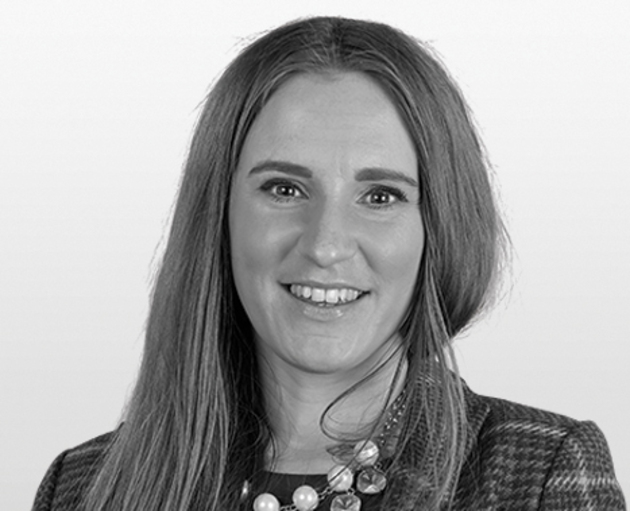
December 11, 2020An interview with Justine Thompson, Head of Diversity at Bryan Cave Leighton Paisner
Can you please introduce yourself?
I am the Head of Inclusion & Diversity for EMEA and Asia at Global law firm BCLP. While it might sound like a cliché, in my role no two days are the same. I count myself as incredibly fortunate that.
When did you decide to become an LGBTQ+ ally?
I would not say I made a conscious decision to become an LGBTQ* ally until around 8 years ago - shortly before I moved into a diversity role. Allyship for me grew out of friendship way, way earlier. I went through high school feeling inferior, excluded, isolated. I was a pretty lonely, unpopular kid, it’s quite painful to think back on it! Surrounded by confident children from wealthy families - who to the eleven-year-old version of me all seemed so “grown-up” - I was the short girl with acne. The shopkeeper’s daughter who, with no common ground, didn’t know how to strike up a conversation. My mum was terminally ill when I started high school. The bottom had fallen out of my world. As a parent, it’s basically everything you would want your own children to avoid. My lifeline - the one person who made it all bearable - was Stephen. Stephen was funny and quirky. Everyone liked him. He would take the time to hang back to chat to me in corridors, he sat with me in classes, he made me laugh. When I was 16 Stephen took me to have my ears pierced. When I was 18 he booked me in for my first spray tan (yes). My first job - pretty much as soon as I turned 18 - was at a fast-food restaurant. Despite being bright and doing really well at school, I didn’t think I was good enough to do more. It was Stephen who sat me down to write my resignation and marched into work with me to make sure I handed it in. I didn’t think I could do better, but he did. So it goes without saying that when Stephen came out I was there by his side, without consciously thinking about it. Whatever he needed, I was there. That was my role. And he had a really hard time. I’d tag along to bars with him (almost always the Central Station in Walthamstow) - he was not ready to go on his own for a year or so. I came along to first dates (disappearing when I knew he was OK). When I found my feet, got a job and a flat, I gave him a place to stay whenever he needed it. Looking back I know that he was way more of an ally to me than I ever could return. This was over 20 years ago and of course, the world has moved on.
Do you think allies need to be more vocal?
I think it’s important not to shy away from standing up for what’s right. Whether that’s at work or at home. As an ally, it’s not OK to be a bystander. It frightens me that the language that was bandied around in the playground 30 years ago - the stuff that prevented Stephen from opening up and being himself at school - is just as common today as it was back then. My children are 10 and 11 and they have been hearing homophobic language in the playground and on the football pitch for years. On many occasions now, I have been the “annoying mother” who phones or writes to the school (for what it’s worth, I find emails, which specifically set out the problem and how you expect the school to respond, work best - there’s a written record). I have demanded the school let me know precisely the steps they are taking to address the prevalence of “gay” as a derogatory term, a playground insult. I’ve sent them Stonewall Schools resources. My son’s junior school now actively (without prompting from me!) celebrates diversity, celebrates pride and raises awareness around LGBTQ* history. I’m not saying that’s because of me, but I also know from experience pressure from parents does have an impact. My older son is 11 and now at high school, and a far more confident 11 year old than I was! The simple things: he has friends, he can start a conversation with his peers and you know what, he regularly stands up to homophobic language in the playground. With confidence - and the other kids listen to him. Trust me, I am very alive to my faults and imperfections as a mother but I am immensely proud that my children have the conviction to stand up for what is right.
What's the role of allies within BCLP's LGBTQ+ network?
In addition to a Global LGBTQ* community and local LGBTQ* groups, BCLP has a large combined LGBTQ* Allies network, with almost 650 members from all four corners of the globe. We hold quarterly education / awareness raising sessions which connect and bring together our LGBTQ* colleagues and Allies. Visibility is really important and small as it seems, an important, impactful and simple way for our Allies to feel they are making a contribution is our Ally signature - particularly during the last year where so much of our work and activity has been virtual, the visual cues - seeing people turn up to events in person, wearing lanyards - that’s been missing. So an online, visible statement of support of the LGBTQ* community that’s visible each and every day really matters.
What's your involvement with the network?
In my role, it goes without saying that I’m heavily involved in BCLP’s LGBTQ* network and that’s been the case in my previous firms too. I have sought to use my skills, utilise and leverage my networks and connections, to make things happen. That’s manifested itself in so many ways over the years - from designing and hosting events, developing relationships with LGBTQ* community groups, identifying formal and longstanding relationships with LGBTQ* focused charities. And yes, I have marched at Pride. I have brought my children to march with me. Everyone has a skill they can leverage as an ally. At BCLP, our Buildings manager has been instrumental in enabling us to fly the rainbow, trans and bi flags from our building and helped to install light features in our new building which will allow us quite literally to light the place up like a rainbow! Our Events Manager drove her spare Christmas Tree into the office on a Sunday last year and spent hours decorating it with rainbow baubles. Our Design team helped us to introduce new branding, incorporating the Philadelphia flag earlier this year and our Marketing Director was instrumental in the introduction of our Allies email signature. In my former firm, the football and rugby teams - not only in London but in numerous locations across the world - adopted a rainbow sports kit. And back at BCLP, our Co-Chairs placed LGBTQ* inclusion at the top of our agenda following our merger - supporting us in putting global commitments in place to ensure that BCLP provided a safe space for LGBTQ* colleagues, regardless of the local landscape. Every Ally has something to bring - never underestimate what you can bring to the table! I know from experience at BCLP and at other firms that employers are at their very best when they create spaces and opportunities for all colleagues to use their passion and talent to support our LGBTQ* goals.
Would you work for a non-inclusive organisation?
I have worked for organisations where I have not felt included. I did not stay. For me, inclusion is a non-negotiable!
What advice would you give to someone who wants to become an ally?
Allyship is active. Be prepared to give your time, your talents, your ideas and your energy. Come ready to listen and to learn - and recognise that every person’s experience is different. And most importantly be visible and vocal in your support for LGBTQ* inclusion.
What has been your greatest achievement as an ally?
In 2016, I was named Stonewall’s Ally of the Year, which was a complete surprise. I don’t think the younger version of me could have or would have imagined or contemplated something like that ever happening - and everything that sat behind that award means such a huge amount. As someone who threw weekends, countless extremely late nights, all the energy I could give into the work I did, it was a “we see you - and we value what you’re doing” moment that I will remember forever. But perhaps much more important than that, I’m proud that through the job I do, and the way it has affected and impacted every aspect of my life, my children are already vocal allies and advocates. It’s second nature for them. And as someone who grew up not really learning how to forge friendships, I dearly cherish the opportunities I have had to meet and form connections with so many truly exceptional individuals in the LGBTQ* community. While I rarely express it, I know that there are occasions where my efforts, those of the firms I have worked for and those of my colleagues have made a very real difference, in the moment, in the short term and in some instance in the long term for members of the LGBTQ* community. For me, that’s an incredible privilege and something I will never take lightly.