Jobs, skills and AI: How to get ahead in an AI-driven economy
September 19, 2025The rise of artificial intelligence is reshaping the world of work, sparking both excitement and anxiety across the globe. In one of the largest recent workforce surveys – covering 38,000 employees in 34 countries – ADP found that nearly a third of workers worry about AI potentially replacing them, with about one in ten admitting they feel genuinely afraid of losing their jobs to machines.
The same research shows that many workers also see opportunities in AI. Their optimism reflects a growing recognition that success in the years ahead won’t come from resisting technology but from learning how to work alongside it.
The World Economic Forum’s Future of Jobs Report 2025 reinforces this point. It projects that while AI and automation could displace 92 million jobs by 2030, they will also create 170 million new ones, resulting in a net global gain of 78 million roles. Far from being a purely disruptive force, AI is expected to rebalance the job market toward new categories of work.

The generational divide on AI
Not all workers view AI in the same way. Age and career stage strongly influence how people perceive its opportunities and risks. Younger workers, for example, are paradoxically both the most optimistic and the most anxious. As digital natives, they are typically quick adopters of AI tools, using them to speed up tasks, boost creativity, and solve problems. At the same time, they know they have decades of working life ahead and that industries can be reshaped almost overnight. That tension explains why many Gen Z employees are simultaneously championing AI adoption while worrying about its potential downsides, according to ADP Research.
Millennials, who lived through the early waves of digital transformation, are often the most enthusiastic adopters at work. They see AI less as a threat and more as a natural extension of the technological shifts they’ve already navigated. Workforce studies show they are more likely than older colleagues to actively use generative AI on the job and to believe it will improve their professional lives in the near future.
Most Gen X employees, however, take a more cautious stance. Many are open to using AI but tend to apply it pragmatically, seeking out tools that directly enhance their expertise and experience rather than chasing every new application. Baby Boomers, meanwhile, show the lowest levels of adoption. While some use AI indirectly – through banking apps, fraud alerts, or financial tools – they are less likely to experiment with generative AI in the workplace. For many, with fewer working years ahead, the technology feels less relevant.
These generational differences have given rise to new workplace dynamics. Reverse mentoring, where younger employees coach older colleagues on AI tools, is becoming increasingly common. Executives often acknowledge that these cross-generational partnerships free them to focus on higher-value, strategic tasks.
Industry and geographic variations
Adoption rates also vary widely by industry and region. Technology, finance, and insurance professionals tend to view AI positively, embracing it as a tool for efficiency and innovation. In contrast, workers in personal services, healthcare, and transportation – fields where roles are often human-centric or physically demanding – express more scepticism.
Geography tells a similar story. Adoption is highly concentrated in advanced economies. Analysis from the Anthropic Economic Index suggests that Israel leads global per-capita usage at several times the expected rate, with Singapore also well ahead. Emerging economies like India and Nigeria, by contrast, are lagging behind expectations based on population and workforce size.
The importance of upskilling
Despite legitimate concerns, many case studies suggest that AI can drive upskilling rather than replacement. Research from the London School of Economics examined a seed-sorting company where automation was initially feared as a job-killer. Instead, workers transitioned into new roles as quality controllers and research collaborators. As economist Dr. Tomislav Karačić noted: “Over just five years, the role of seed sorters at the company changed dramatically. People who had long worked in roles often undervalued or assumed to be automatable became key operators in a new AI-supported process.”
This reflects a broader trend highlighted by the World Economic Forum. In 2025, 47% of work tasks were performed primarily by humans, 22% by technology, and 30% collaboratively. By 2030, that balance is expected to move toward near-equal distribution. The future of work, in other words, is neither human nor machine – it is both.
How to build AI-resilient careers
So how can today’s professionals build resilient careers in the AI era? The strategies differ slightly by generation but overall depend on the same foundations.
- Gen Z should lean into their AI fluency, positioning themselves as internal consultants while also developing leadership and strategic thinking skills.
- Millennials can use their adoption advantage to lead integration efforts, blending AI into existing expertise and preparing for leadership roles in change management.
- Gen X should take a strategic approach, using AI to amplify their deep industry knowledge and mentoring younger colleagues in exchange for tech insights.
- Boomers can start with practical tools that improve workflows and leverage their experience to guide AI adoption in advisory or oversight roles.
Here are five tips, relevant to all generations, to help build AI-resilient careers:
- Keep learning. Lifelong skill development – both technical and human – is essential.
- Work with AI, not against it. Learn how to prompt, interpret, and apply AI effectively.
- Double down on human skills. Emotional intelligence, creativity, and ethics remain irreplaceable.
- Build adaptable career portfolios. Diversify skills across industries and roles to stay flexible.
- Focus on strategy and creativity. These roles are least likely to be automated, and most likely to grow in value.
In short, AI is not the end of work, but the beginning of a new chapter. While fears about job loss are real and widespread, the evidence points to a more balanced future – one where millions of jobs will evolve or be newly created. For professionals willing to learn, adapt, and lean into their uniquely human strengths, the age of AI can be less a threat than a powerful opportunity. However, if you’re still worried about career prospects in an AI-driven economy, there are still jobs that can’t be easily replaced by AI, as certain roles rely on uniquely human-based skills that AI can't compete with or comprehend. Click here to find out more.
WORKFAIR 2025
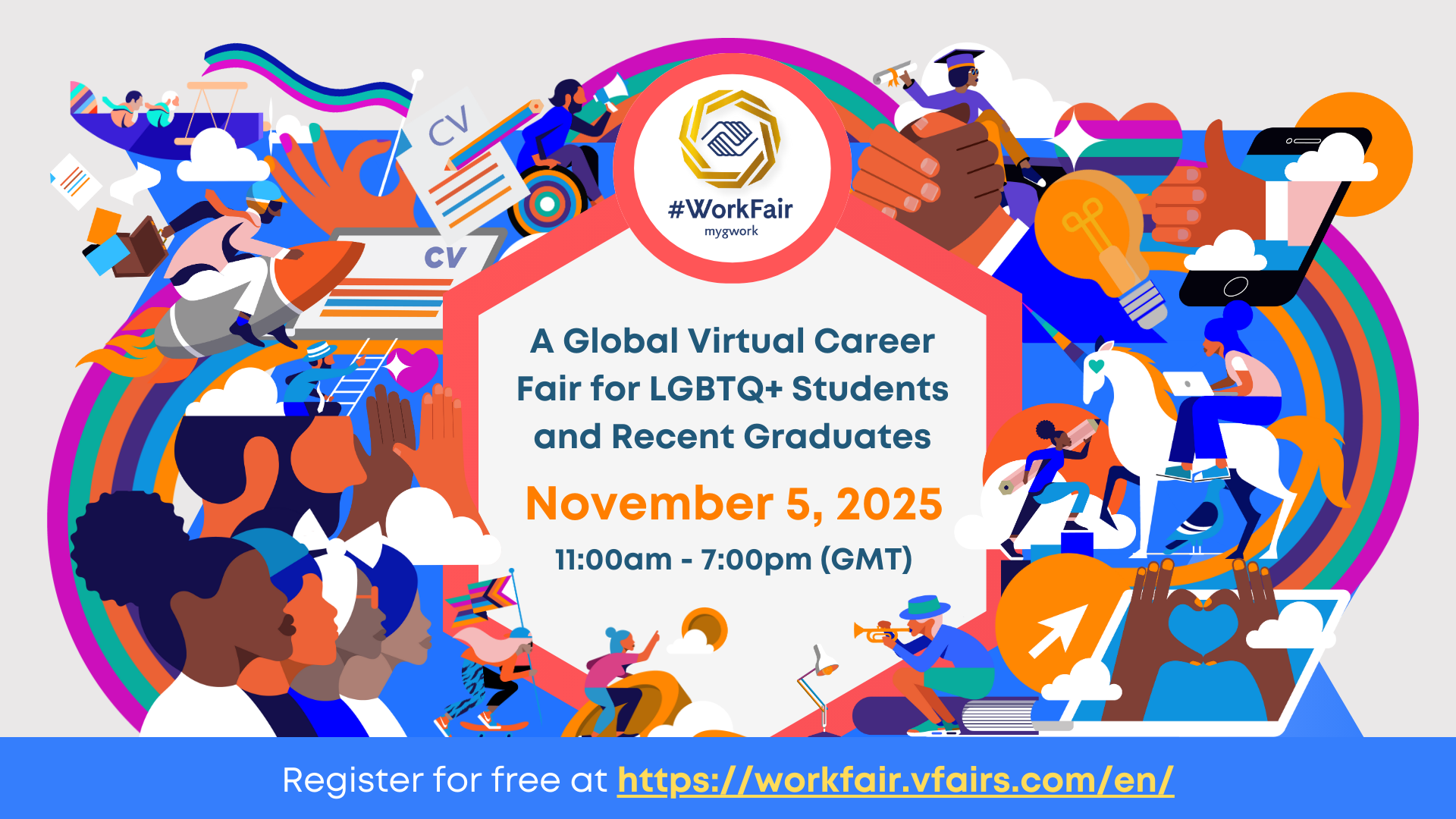
Looking for ways to upskill and find a new job? Then WorkFair 2025 is for you. Organized by myGwork, WorkFair is the world’s largest virtual global career fair for LGBTQ+ students, graduates, and allies. Taking place on 5 November 2025, it connects job seekers with global employers committed to inclusive hiring. Attendees can expect access to job opportunities, workshops, mentoring sessions, and networking with inclusive companies that are actively shaping the future of work. Find out more and register for FREE here.