
Lesbian history they didn’t teach you in school
April 20, 2026If you went through school even a couple of decades ago, you probably didn’t hear about LGBTQ+ people at all. Queer lives were either completely ignored, hinted at, or straightened out for the sake of the curriculum. Younger generations now might get a brief mention of Stonewall, a rainbow flag on a poster, and a line in social studies about same‑sex marriage being legalized in 2015 - but very little about what came before or what sat outside that narrow storyline.
One of the aspects of queer history that frequently falls through the cracks is a long, complicated, often deliberately erased history of women who loved women, and the communities they built.
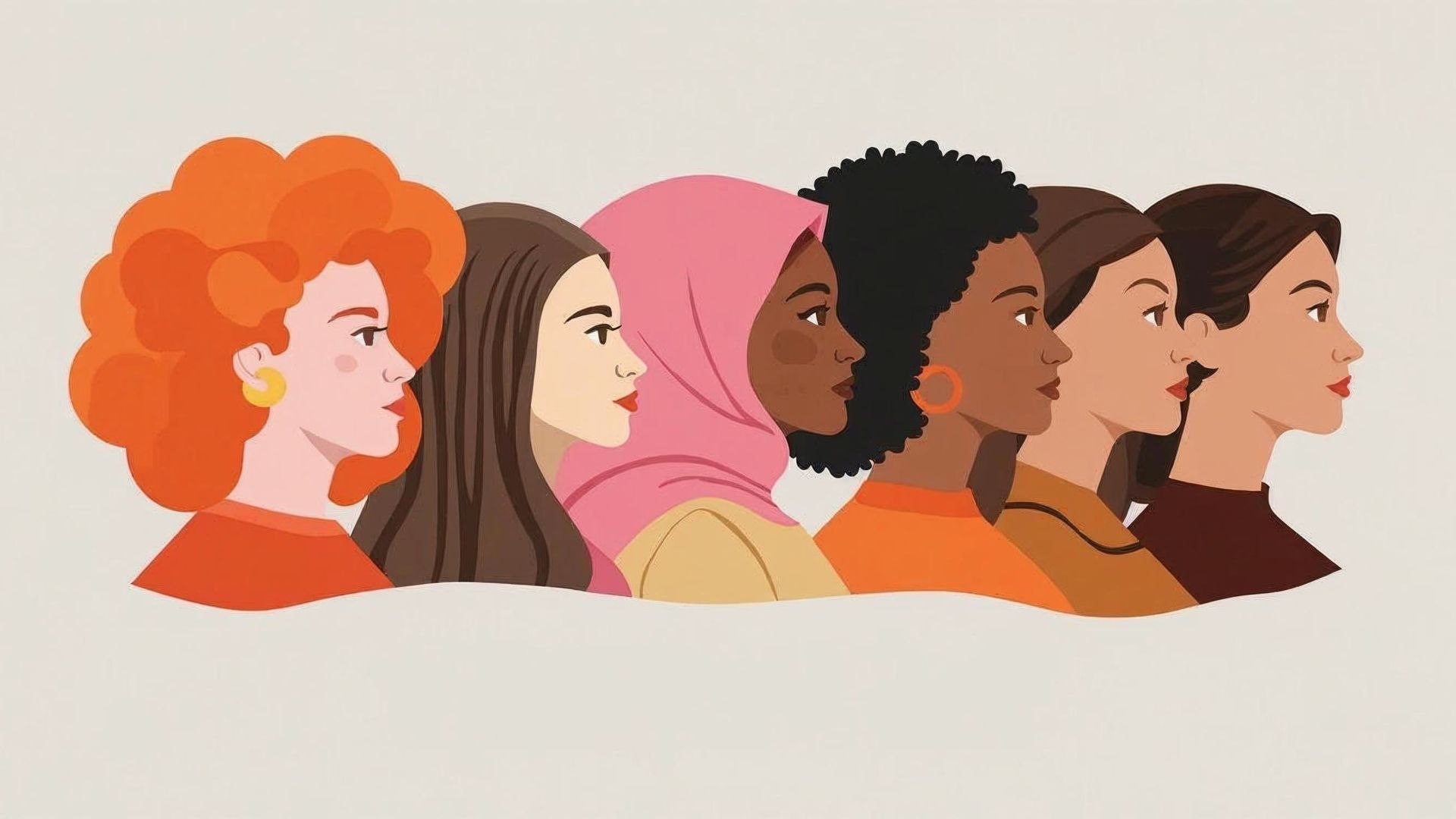
Before “Lesbian” had its name
Women have loved women for as long as there have been women, but the words we use now, “lesbian,” “sapphic,” “queer", are relatively new in the span of human history. Though even then, the word “lesbian” can be traced back to the Greek island of Lesbos, home of the poet Sappho (c. 630–570 BCE). Much of her poetry is lost, but what survives describes intense love and desire between women. For centuries, people tried to downplay the queerness of her work: calling it “friendship,” “admiration,” or blaming “translation issues.” Even now, Sappho is often taught without naming her as part of queer history.
In Europe and North America from the 1600s to the 1800s, women sometimes formed passionate, committed relationships with each other, often called “romantic friendships” or “Boston marriages.” Two women might live together, sometimes for life, pooling their money and pledging devotion to each other. Because society dismissed women’s sexuality, these relationships were often framed as friendships even when they were clearly intimate and central to both women’s lives. Whether or not every one of these women would use “lesbian” as a modern label, the history indicates that romantic and sexual bonds between women have a long history.
Lesbians in early movements for rights
When we talk about feminist and social justice movements of the 19th and early 20th centuries, a lot of our textbooks quietly closet people. Several key women’s rights activists had lifelong partnerships with women. Susan B. Anthony, American women's rights activist, never married, lived with women, and had intimate emotional bonds with them. Jane Addams, a Nobel Peace Prize–winning social reformer, lived for decades with Mary Rozet Smith in what many now read as a romantic partnership. Textbooks usually present them as simply “single” or “dedicated to the cause,” ignoring how their queer relationships may have shaped their politics and support networks.
Queer Black women have also been central to liberation movements, even when history books make them straight by omission. Frances Ellen Watkins Harper, a 19th‑century abolitionist and suffragist, wrote poetry and fiction that explored Black women’s independence and mutual support. Even when sexuality isn’t spelled out in surviving records, the networks of care and close partnerships among Black women activists have strong queer currents that historians are now revisiting with a more honest lens.
The Ladies of Llangollen and other quiet rebels
Some women became semi-famous for defying gender expectations without anyone daring to say the word “lesbian.” In the late 1700s, Eleanor Butler and Sarah Ponsonby, known as the Ladies of Llangollen, ran away together from Ireland and set up house in Wales. They refused marriage to men, lived together for over 50 years, and were visited by leading writers and thinkers.
People at the time bent over backward to interpret them as charming, eccentric ladies instead of what they almost certainly were: a committed queer couple. This is one of many examples where women built a life together in defiance of social norms, only to be sanitized by later historians who preferred to see “friendship” over queerness.
Lesbians and the birth of the modern LGBTQ+ rights movement
The start of the modern LGBTQ+ rights movement is usually boiled down to one word: Stonewall. Even that story is often told in a way that sidelines lesbians, especially lesbians of color and gender‑nonconforming people. Stormé DeLarverie, a biracial, butch lesbian and drag king, worked as a bouncer and performer in New York. Many witnesses say she was one of the first people to physically resist police during the 1969 Stonewall uprising. Her struggle with officers, while she reportedly shouted, “Why don’t you guys do something?”, helped ignite the crowd.
Marsha P. Johnson and Sylvia Rivera are most often recognized as trans women and drag queens, but both were deeply connected to lesbian and queer women’s communities. They helped create STAR (Street Transvestite Action Revolutionaries), supporting homeless queer and trans youth and sex workers. Their work created essential lifelines that helped many lesbians, especially those who were poor, trans, or POC.
In the 1950s, when being gay was criminalized, policed, and treated as an illness, lesbians started organizing anyway. The Daughters of Bilitis (DOB), founded in 1955 in San Francisco by Del Martin, Phyllis Lyon, and a small group of women, was the first known lesbian civil and social rights organization in the U.S. At first, they presented themselves as a “social club” to avoid police harassment. Over time, DOB published The Ladder, one of the earliest lesbian magazines in the U.S., created spaces where women could talk openly about their lives, and challenged the idea that lesbianism was a sickness.
By the late 1960s and 1970s, radical lesbian feminism emerged. Groups like the Radicalesbians wrote influential manifestos such as “The Woman‑Identified Woman” (1970), which argued that lesbian identity involved both desire and a challenge to patriarchy. These activists critiqued sexism within the broader gay rights movement and homophobia within the women’s movement, and they fought for women-only spaces where lesbians could live, love, and organize openly.
Overlooked Lesbians of Color
Even when Lesbian history is taught, it's often through a mostly white, middle‑class, and Western lens. That erases countless women whose identities were shaped by race, colonization, and diaspora. Audre Lorde (1934–1992), a poet, writer, and activist, described herself as “Black, lesbian, mother, warrior, poet.” Her work centered the experiences of Black women and lesbians of color, critiqued white feminism for ignoring race and class, and provided key language and momentum for what we now call intersectionality.
Pat Parker (1944–1989), a Black lesbian poet and activist, wrote powerfully about racism, sexism, and homophobia. She helped organize groups like the Gay Women’s Alternative in San Diego and was deeply involved in feminist and Black liberation movements. Cherríe Moraga and Gloria Anzaldúa, co‑editors of This Bridge Called My Back (1981), brought together radical writings by women of color, many of them lesbians and bisexual women. Their work challenged both mainstream feminism and mainstream gay rights movements to confront racism, colonialism, and class oppression. Beyond the U.S., lesbians of color have fought similar battles under different conditions, often under colonial laws that criminalized same‑sex relationships and policed gender expression.
Criminalization and resistance
Another missing chapter in school history is how systematically the state tried to erase queer women, and how they fought back. For decades, psychiatry classified homosexuality as a mental disorder. Lesbians were subjected to institutionalization, forced or coerced “treatments” such as conversion therapy, and loss of custody of their children if courts deemed them “unfit” mothers.
Activists pushed back, protesting the American Psychiatric Association and demanding that homosexuality be removed from the list of mental illnesses; this finally happened in 1973. However, it should be noted that it wasn't until 1990 that the World Health Organization (WHO) removed homosexuality from the International Classification of Diseases.
Lesbians and the AIDS crisis
The AIDS epidemic is often told as a story about gay men, but it's important to remember that lesbians played a crucial, often invisible role. Many lesbians became nurses, caregivers, and volunteers when hospitals, families, and the state abandoned people with AIDS. They sat at bedsides, delivered food, and organized home care for people who would otherwise have gone uncared for.
They also helped found and lead organizations like ACT UP (AIDS Coalition to Unleash Power), using skills honed in feminist and lesbian organizing to run hotlines, support groups, and hospice care. This labor, emotional, physical, and often unpaid, saved lives and pushed governments and medical institutions to respond.
It's because of these valiant and commendable efforts that, to this day, 'Lesbian' comes first in the LGBTQ+ initialism to recognize and honor the critical role lesbians played in caring for the community during the HIV/AIDS crisis.
Learn more about lesbian history and experiences
Leaving lesbian history out of textbooks hides the contributions of women who shaped politics, art, and social movements. It can perpetuate the unfounded stereotype that young lesbians are a modern “trend” instead of part of a deep, global history. And it distorts our understanding of feminism, civil rights, and LGBTQ+ struggles by straight‑washing and de‑queering them.
Before the 21st century, many women loved women, built lives together, and changed the world. Our official histories rarely say their names but, in time, the lesbian community will receive the justice, recognition and honor they have fought for and deserve.
To hear more about the experiences of lesbians and LGBTQ+ women in the modern landscape, make sure to tune into the upcoming myGwork panel 'Queer Women in Leadership' on Wednesday 22nd April.