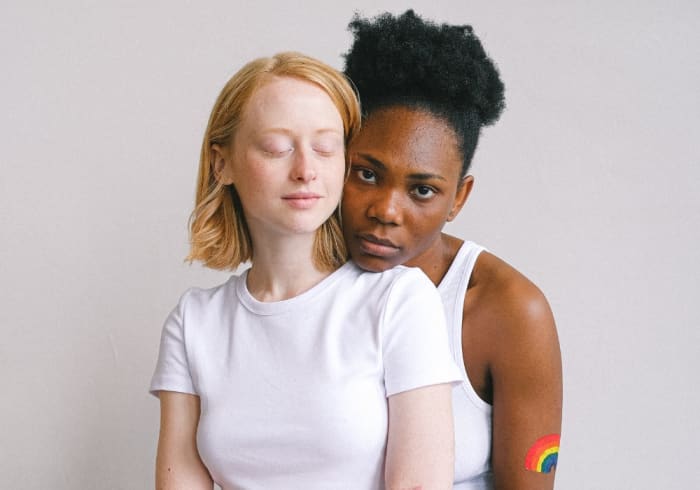
Lesbian Visibility Week: Visibility Without Action Is Futile, We Need Allyship And Change
April 27, 2022By Zoe Schulz, myGwork
This week marks Lesbian Visibility Week, an opportunity to uplift and centre the voices of lesbians from across our community. But as important as this is, we can’t stop at visibility. Because visibility isn’t enough. Visibility without action, without change, is simply putting the spotlight on a vulnerable group. For many women and people of marginalised genders, being visible can be dangerous. Being visible can be exhausting. But alongside tangible change, visibility can turn into growth and education. It can become the acceptance and normalisation the lesbian community desperately need.
A new study, conducted by charity Just Like Us, showed that within the LGBTQI+ community, lesbians are the most likely to experience tensions at home. This showed that 61% of young lesbians are facing problems in the home weekly. It also showed that lesbians, more than anyone else in the LGBTQI+ community, were more likely to experience loneliness and isolation from those closest to them. This is why, Dominic Arnall, CEO of Just Like Us is calling for schools to step up in their support for lesbians. If we can normalise lesbian relationships at a young age and educate young people, then we can create real change across society. “It’s really concerning to see that young lesbians are disproportionately facing tension at home,” says Dominic, “and [this] highlights just how much LGBT+ young people need positive messaging from their schools that it’s OK to be who they are.”
And it’s not just young lesbians who are struggling. Research from DIVA has shown that 75% of LGBTQI+ women are experiencing worse mental health due to the pandemic. Released just this week it gives an insight into the current struggles of queer women. The study spoke to 2000 LGBTQI+ women and of them, 77% reported worse mental health as a direct result of the pandemic. On top of this, over half had accessed mental health services in the past year and of them, 12% reported their attempts as unsuccessful.
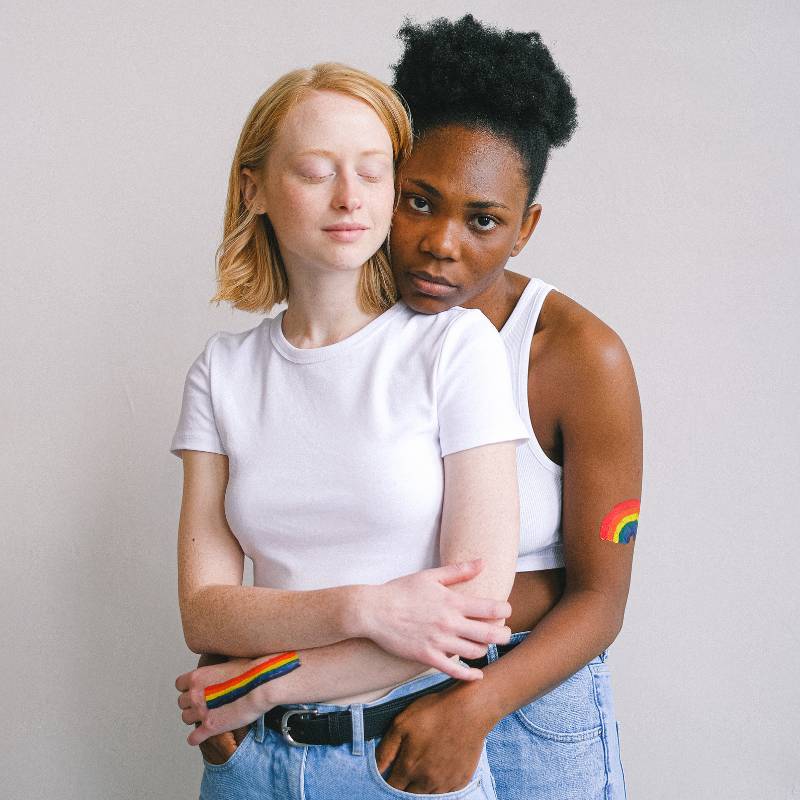
The past year has taken its toll on everyone, but for those that are already marginalised and vulnerable, the results have been catastrophic. Mental health resources that are LGBTQI+ inclusive are vital if we are to offer needed support to lesbians as we make our way through the pandemic. On top of this, we need to destigmatize accessing mental health services, with so many struggling, normalising asking for help has never been so important.
As we now ease out of lockdown, although we can celebrate our newly appreciated freedoms, we also need to make sure the outside world is safe for everyone. With 80% of women experiencing street harassment, this is an issue that is endemic to our society. In the UK, 75% of women have been a victim of harassment or violence, and 51% of women in London don’t feel safe on public transport. Sarah Everard’s tragic death recently brought to light just how critical street safety is and how it affects almost all women and people of marginalised genders. But LGBTQI+ women can’t be left out of this conversation, especially when the harassment, and often violence, they receive on the street is an amalgamation of both misogyny and lesbophobia.
The fight for LGBTQI+ equality has always been interlinked with the fight for women’s rights. In part, for the obvious reason that queer women exist, and you cannot rally for their liberation without acknowledging their oppression as women. But also, because the patriarchy is intrinsically linked to the marginalisation of the LGBTQI+ community. We cannot dismantle anti-LGBTQI+ attitudes without also dismantling the patriarchy, along with all systems of oppression. This is why when we speak of lesbian visibility, we must also speak of street safety because, for many lesbians, visibility on the street comes at too high a risk.
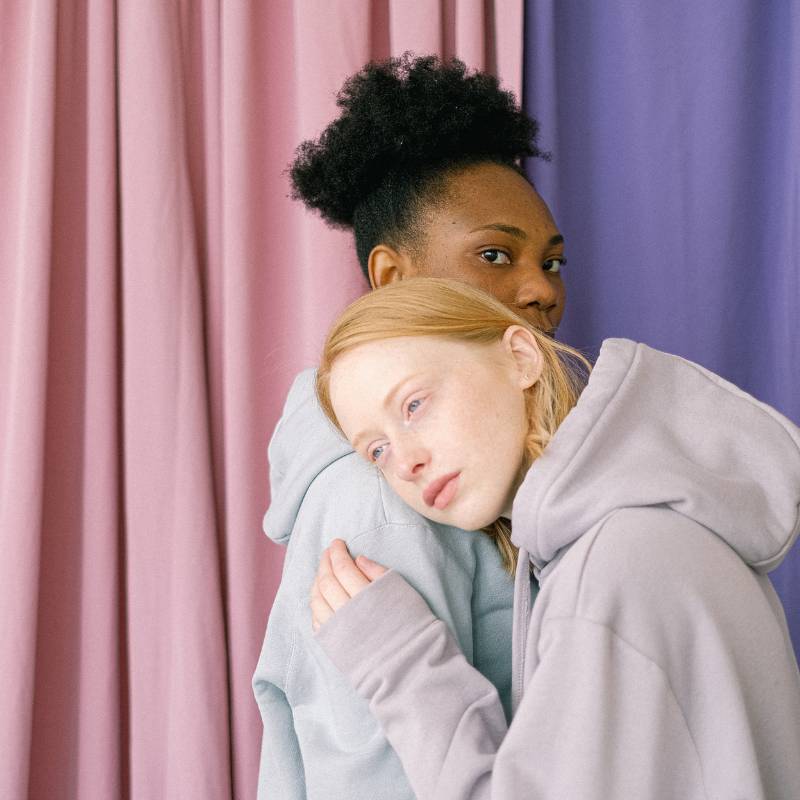
The reason we speak of visibility so highly, however, is because we know a world without it. For centuries lesbians have existed in the shadows of society. Throughout history, if you look close enough, you see they were always there, but too often hiding. Even recently, lesbian visibility has been treated as a novelty, the butt of a joke, or an offensive stereotype. And when you cannot see your identity represented in the media and world around you, it makes it even more difficult to understand and accept yourself. As Liz Carr explains “Seeing yourself validates you. It validates your experience, your existence.”
Yet, over the past decade, we have seen this change. With authentic representation on the rise and the growing realisation that anything less will no longer be tolerated, it feels like we could be reaching a tipping point. Tipping into a new world, where people can see lesbians represented wholly in the media and learn about the diversity of sexuality and gender expression from a young age.
Lianne Sanderson, an English Football player, understands first-hand the power in authentic visibility and has found power in being out about her sexuality. “People often say, 'why do we still need [Lesbian Visibility Week]? I don't really care if you're gay or straight’ - but there are still some that do care," she explains. "It's important for people like myself to be visible in the public eye and stand up for what's right. I've seen the impact you can make by just being visible and being yourself.”
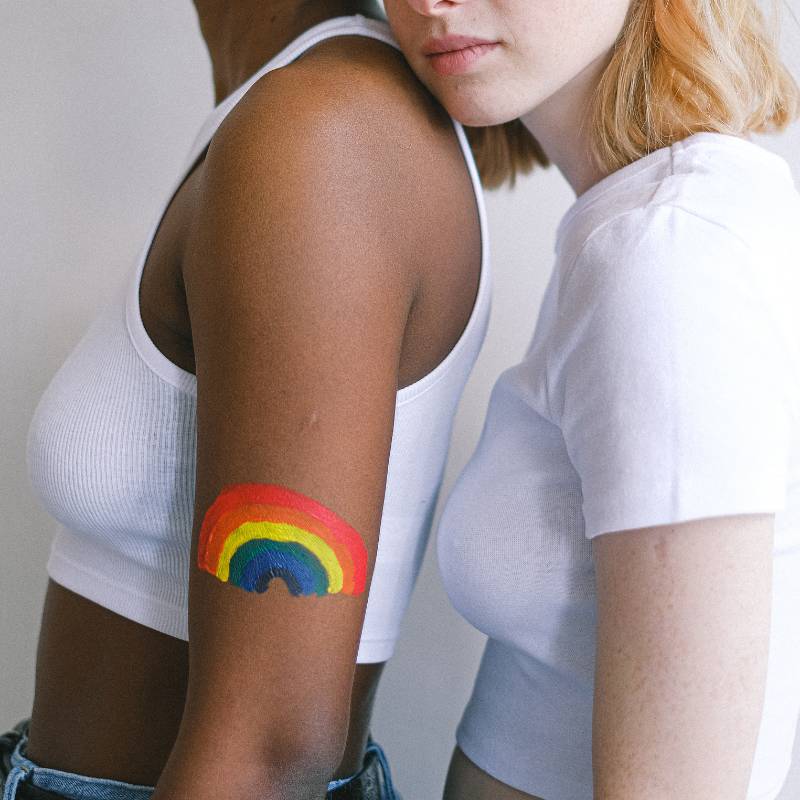
With more representation than ever, it feels like we may be on the verge of creating a world where lesbians can flourish. One where we can go beyond the outdated stereotypes and misconceptions of what a queer woman must be. One where lesbians are not just visible but celebrated. But, to truly uplift lesbians we need to stand by their side as we ask for visibility, but also safety.
In an unequal society, if we focus our efforts on the most marginalised, everyone benefits. If we centre our feminism on women of colour, trans women, disabled women, fat women and queer women, everyone is safer. With this, we ensure no one is left out and that in turn creates a more equal world for everyone. By lifting up the most vulnerable lesbians, all LGBTQI+ people are better off, because we become one step closer to a society that not just accepts but cherishes everyone regardless of who they love or their gender identity.
Join myGwork for our upcoming panel, Lesbian, and Bisexual Lived Experiences on Wednesday 27th April 2022 at 4pm GMT. Sign up to the free virtual event here.