
LGBTQ+ Advocacy: Driving Workplace Inclusion Globally
February 11, 2026Feeling misunderstood or overlooked is a reality many LGBTQ+ professionals still face—even within organizations that claim to value diversity. Advocacy in the workplace is more than visibility, it means actively dismantling persistent misconceptions about sexual orientation and gender identity. With a clear understanding of the complex, ongoing journey of coming out and the need for active workplace inclusion, this guide offers practical insights for corporate LGBTQ+ professionals striving for authentic equity and real change.

LGBTQ+ Advocacy Defined and Common Misconceptions
LGBTQ+ advocacy represents a strategic, multifaceted approach to advancing human rights, workplace equality, and social understanding for lesbian, gay, bisexual, transgender, and queer individuals. Unlike simplistic perceptions, this advocacy goes beyond visibility—it’s a sophisticated effort to dismantle systemic barriers and challenge deep-rooted misconceptions about sexual orientation and gender identity.
Sexual orientation and gender identity are complex, nuanced aspects of human experience that cannot be reduced to stereotypes or simplified narratives. Challenging myths about LGBTQ+ identities requires a comprehensive understanding that respects individual experiences and diverse expressions of identity.
Several persistent misconceptions continue to undermine LGBTQ+ advocacy efforts:
- Sexual orientation is not a choice: Individuals do not select their sexual orientation or gender identity
- Coming out is an ongoing process: It’s not a single event but a continuous journey of self-discovery and disclosure
- Diversity exists within the LGBTQ+ community: There’s no single, monolithic LGBTQ+ experience
- Professional spaces require active inclusion: Workplace environments must proactively support LGBTQ+ professionals
Strategic human rights advocacy requires understanding these nuances and systematically addressing societal misconceptions through education, legal frameworks, and consistent dialogue.
Workplace advocacy specifically focuses on creating environments where LGBTQ+ professionals can thrive without fear of discrimination. This involves developing inclusive policies, promoting representation, and challenging heteronormative workplace cultures that marginalize non-heterosexual and transgender employees.

Pro tip: Build your advocacy skills by actively listening to diverse LGBTQ+ experiences and amplifying voices within your professional network.
Types of LGBTQ+ Advocacy in the Workplace
Workplace LGBTQ+ advocacy represents a comprehensive strategy to create inclusive, supportive professional environments that recognize and celebrate diverse sexual orientations and gender identities. Workplace policy strategies range from systemic interventions to individual support mechanisms designed to dismantle discriminatory practices and promote genuine equality.
The most effective LGBTQ+ workplace advocacy approaches can be categorized into several key strategic types:
- Legislative Advocacy: Pushing for legal protections against workplace discrimination
- Policy Development: Creating comprehensive non-discrimination and inclusion guidelines
- Employee Resource Groups (ERGs): Establishing supportive internal networks for LGBTQ+ professionals
- Training and Education: Implementing comprehensive diversity and sensitivity programs
- Representation Initiatives: Promoting LGBTQ+ individuals into leadership and decision-making roles
Organizational transformation requires multifaceted approaches that go beyond surface-level diversity statements. This means developing robust mechanisms for understanding and addressing systemic barriers that LGBTQ+ professionals encounter throughout their career journeys.
Effective workplace advocacy also demands continuous engagement and accountability. Companies must move beyond tokenistic representations and create genuine opportunities for LGBTQ+ professionals to thrive, grow, and contribute meaningfully to organizational success.
Here’s a summary of how different types of workplace LGBTQ+ advocacy contribute to organizational outcomes:
Meaningful advocacy is not about counting diverse faces, but creating environments where every professional can bring their authentic self to work.
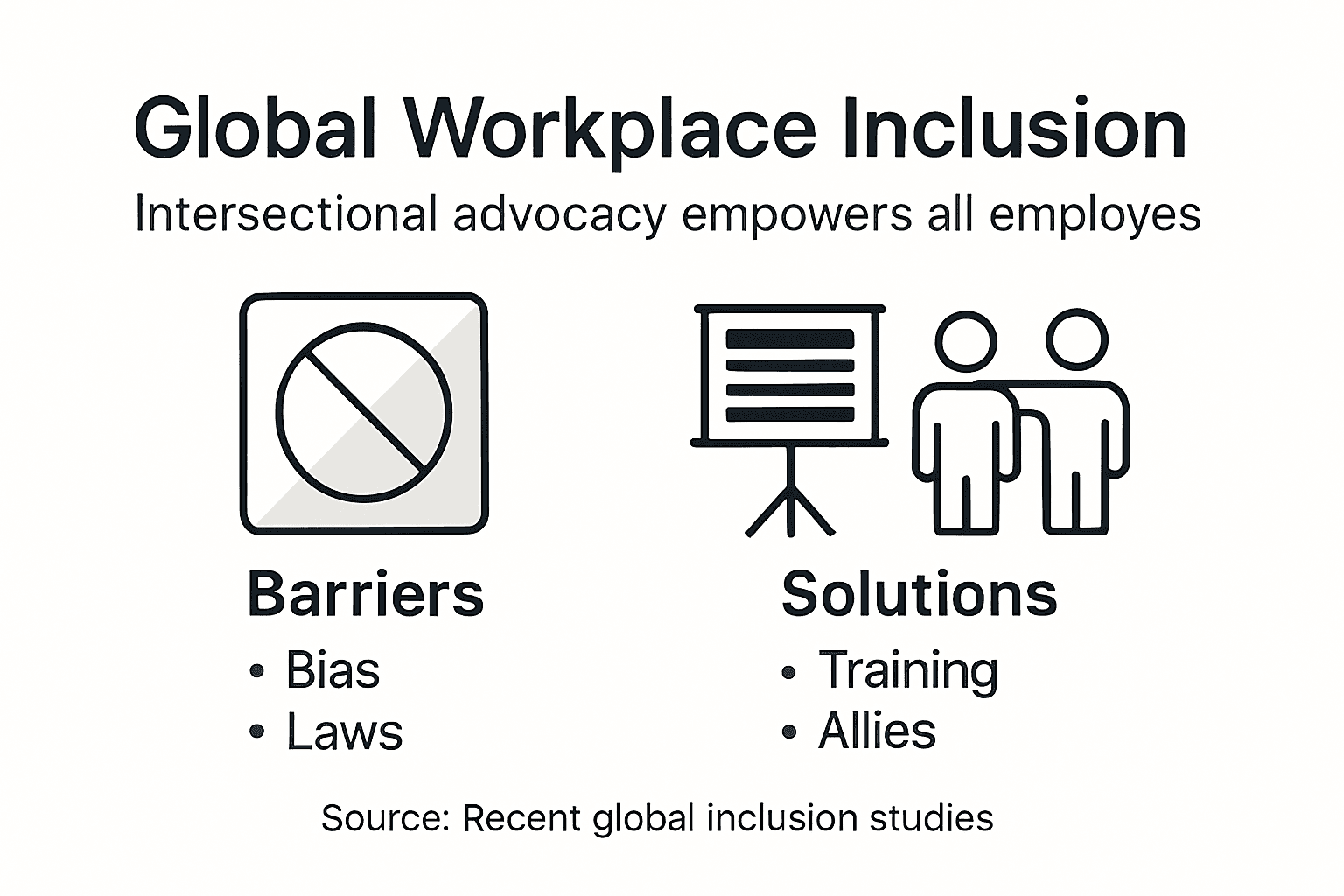
Intersectional approaches are crucial in modern LGBTQ+ workplace advocacy. This means recognizing that LGBTQ+ professionals have multiple, interconnected identities—considering factors like race, disability, socioeconomic background, and other dimensions of diversity that shape professional experiences.
Pro tip: Develop personal cultural competence by actively listening to diverse LGBTQ+ professional experiences and challenging your own unconscious biases.
How Advocacy Drives Real Change for Employees
Advocacy is the critical mechanism that transforms workplace culture from passive tolerance to active inclusion for LGBTQ+ professionals. Targeted advocacy efforts create meaningful systemic changes that directly improve employee experiences, reduce workplace discrimination, and establish more equitable professional environments.
The transformative power of advocacy manifests through several key mechanisms:
- Legal Protection: Securing comprehensive anti-discrimination legislation
- Policy Reformation: Developing inclusive workplace guidelines
- Cultural Shift: Challenging heteronormative professional paradigms
- Mental Health Support: Addressing workplace-related psychological challenges
- Representation Advancement: Creating pathways for LGBTQ+ leadership development
Structural change requires persistent, strategic interventions that go beyond symbolic gestures. This means implementing comprehensive approaches that address systemic barriers preventing LGBTQ+ professionals from achieving their full potential.
Comprehensive policy initiatives demonstrate how targeted advocacy can fundamentally reshape workplace dynamics. By challenging existing power structures and creating mechanisms for genuine inclusion, organizations can transform workplace cultures from the inside out.
Real advocacy is not about adding LGBTQ+ professionals to existing systems, but redesigning those systems to be inherently inclusive.
Intersectional advocacy recognizes that LGBTQ+ experiences are not monolithic. Effective strategies must account for the complex, overlapping identities that shape professional experiences, including race, disability, socioeconomic background, and other critical dimensions of diversity.
Pro tip: Develop sustainable advocacy by building coalitions across different diversity groups and creating mutually supportive networks.
Legal Protections and Employer Responsibilities
Legal protections for LGBTQ+ employees represent a critical foundation for workplace equality, establishing fundamental rights and safeguards against discrimination. International human rights frameworks mandate comprehensive non-discrimination policies that protect LGBTQ+ professionals from systemic workplace marginalization.
Employer responsibilities encompass multiple critical dimensions of workplace inclusion:
- Non-Discrimination Policies: Developing explicit protections for sexual orientation and gender identity
- Equal Opportunity: Ensuring fair hiring, promotion, and compensation practices
- Harassment Prevention: Creating robust reporting and intervention mechanisms
- Confidentiality: Protecting employee privacy and personal information
- Reasonable Accommodations: Supporting transgender and non-binary employees’ workplace needs
Global legal standards highlight significant variations in workplace protections across different regions. Multinational organizations must navigate complex legal landscapes, implementing inclusive policies that transcend regional legal disparities.
Systemic change requires proactive legal compliance that goes beyond minimum requirements. Progressive employers recognize that robust legal protections are not just about avoiding potential lawsuits, but creating genuinely supportive work environments.
Legal protections are the foundation, but true inclusion requires a cultural commitment that extends far beyond written policies.
Intersectional legal approaches acknowledge that LGBTQ+ employees experience discrimination through multiple, interconnected identity dimensions. Effective legal frameworks must consider complex interactions between sexual orientation, gender identity, race, disability, and other critical personal characteristics.
Pro tip: Regularly audit your organization’s policies to ensure they provide comprehensive, intersectional legal protections for LGBTQ+ employees.
Risks, Barriers, and Global Variations
Global workplace challenges for LGBTQ+ professionals are complex and multifaceted, varying dramatically across different cultural and legal landscapes. Pervasive workplace stigma creates significant barriers that impact professional advancement, mental health, and overall career trajectories for LGBTQ+ individuals worldwide.
The primary risks and barriers facing LGBTQ+ professionals include:
- Legal Discrimination: Varying levels of legal protection across different countries
- Social Stigma: Cultural prejudices that limit professional opportunities
- Career Advancement Barriers: Unequal access to promotions and leadership roles
- Psychological Stress: Ongoing challenges of workplace concealment and identity management
- Economic Marginalization: Potential income disparities and employment instability
Global policy variations reveal stark differences in workplace protections. Some regions offer comprehensive anti-discrimination laws, while others maintain legal frameworks that actively marginalize LGBTQ+ professionals.
Intersectional challenges compound these risks, with LGBTQ+ professionals from multiple marginalized groups experiencing compounded workplace barriers. Race, disability, socioeconomic background, and other identity dimensions significantly impact professional experiences.
Workplace inclusion is not a universal standard but a complex negotiation of local cultural, legal, and social dynamics.
Effective global advocacy must recognize these nuanced variations, developing flexible strategies that can adapt to different regional contexts while maintaining core principles of equality and respect.
This table compares global approaches to LGBTQ+ workplace inclusion:
Pro tip: Research local legal and cultural contexts before expanding LGBTQ+ inclusion initiatives into new geographic markets.
Role of Allies and Best Practices for Inclusion
Allyship in the workplace represents a transformative approach to creating genuinely inclusive professional environments for LGBTQ+ employees. Effective ally engagement requires intentional, sustained efforts that go beyond passive support and actively challenge existing systemic barriers.
Key practices for meaningful LGBTQ+ workplace allyship include:
- Active Listening: Prioritizing LGBTQ+ voices and experiences
- Continuous Learning: Educating oneself about LGBTQ+ challenges and perspectives
- Amplification: Using personal privilege to elevate marginalized voices
- Intervention: Challenging discriminatory behaviors and microaggressions
- Policy Support: Advocating for inclusive workplace policies
Authentic allyship demands more than performative gestures. It requires a genuine commitment to understanding the complex experiences of LGBTQ+ professionals and actively working to dismantle systemic inequities.
Successful allies recognize that support is not a one-time action but an ongoing process of personal growth, reflection, and consistent advocacy. They understand that true inclusion requires actively creating space for LGBTQ+ professionals to thrive, not just exist.
Allyship is not about being perfect, but about being committed to continuous learning and meaningful action.
Intersectional allyship acknowledges that LGBTQ+ experiences are not monolithic. Effective allies understand and respect the diverse, interconnected identities within the LGBTQ+ community, recognizing that support must be nuanced and personalized.
Pro tip: Develop your allyship through consistent, humble engagement—listen more than you speak, and prioritize actions over intentions.
Empower Workplace Inclusion Through LGBTQ+ Advocacy and Connection
LGBTQ+ advocacy in the workplace is essential for dismantling systemic barriers and fostering genuine inclusion. This article highlights critical challenges such as pervasive workplace stigma, lack of comprehensive legal protections, and the importance of intersectional approaches. If you are seeking to transform workplace culture from passive tolerance to active equality, you need a platform that understands these nuances and offers real solutions.
Discover how MyGwork empowers LGBTQ+ professionals and allies to build supportive networks and access inclusive career opportunities. By joining our community, you engage in meaningful advocacy that promotes diversity, representation, and legal accountability in employment. Take action now to advance your career and contribute to a global movement for workplace equality. Visit MyGwork and become part of a professional network committed to real change.
Frequently Asked Questions
What is LGBTQ+ advocacy in the workplace?
LGBTQ+ advocacy in the workplace is a strategic approach aimed at promoting equality, inclusion, and support for LGBTQ+ employees, addressing systemic barriers and fostering a culture where all employees can thrive without fear of discrimination.
How can organizations effectively implement LGBTQ+ workplace policies?
Organizations can effectively implement LGBTQ+ workplace policies by developing comprehensive non-discrimination guidelines, creating employee resource groups, providing training and education, and ensuring representation of LGBTQ+ individuals in leadership roles.
Why is allyship important in LGBTQ+ advocacy?
Allyship is important in LGBTQ+ advocacy because allies help create inclusive environments by amplifying marginalized voices, challenging discriminatory behaviors, and advocating for policies that support LGBTQ+ employees. Active engagement from allies drives cultural change within organizations.
What are the common misconceptions about LGBTQ+ identities?
Common misconceptions about LGBTQ+ identities include the belief that sexual orientation is a choice, that coming out is a one-time event, and that there is a monolithic LGBTQ+ experience that disregards individual diversity within the community.