
LGBTQ Coming Out at Work: Navigating Risks and Benefits
January 29, 2026Stepping into a boardroom or joining global strategy calls, many LGBTQ professionals wonder how much of themselves to share in spaces shaped by tradition and power. For those in mid or senior management roles, the question of workplace identity disclosure carries real weight, touching both career trajectory and personal well-being. Understanding what coming out at work truly means can help you shape an approach that honors authenticity while protecting your professional interests.

Defining LGBTQ Coming Out at Work
Coming out at work represents a deeply personal and complex decision for LGBTQ+ professionals, involving strategic disclosure of sexual orientation and gender identity within professional environments. Workplace inclusion research highlights this process as more than a single event - it’s a nuanced, ongoing navigation of professional relationships and personal authenticity.
At its core, LGBTQ coming out at work means intentionally revealing one’s sexual orientation or gender identity to colleagues, supervisors, and workplace networks. This disclosure can range from subtle signals like mentioning a same-sex partner to more direct conversations about identity. The process is fundamentally about creating space for genuine self-representation while managing potential professional risks and opportunities.
The contexts and strategies for coming out vary widely depending on several critical factors:
- Organizational culture and inclusivity
- Legal protections in specific regions
- Individual comfort and personal safety
- Professional role and career stage
- Potential impact on career trajectory
Coming out is not a one-time event, but a continuous process of negotiating visibility and personal boundaries in professional spaces.
Understanding workplace identity disclosure requires recognizing its multilayered nature. Contextual research emphasizes that sexual and gender identities are constructed within complex power systems, meaning each professional’s coming out experience is unique and deeply personal.
Pro tip: Develop a personal coming out strategy that prioritizes your emotional well-being and professional goals, recognizing that no universal approach fits every workplace scenario.
Forms and Experiences Across Workplaces
LGBTQ workplace experiences reveal a complex landscape of disclosure strategies and potential challenges across different professional environments. These experiences are deeply influenced by organizational culture, industry type, geographic location, and individual comfort levels, creating a nuanced picture of workplace identity expression.

The forms of coming out vary dramatically, ranging from subtle signals to direct, intentional disclosures. Some professionals might casually mention a same-sex partner during team conversations, while others might choose more formal approaches like updating HR documentation or participating in LGBTQ employee resource groups. These strategies are not one-size-fits-all but carefully calibrated personal decisions.
Key variations in coming out experiences include:
- Corporate environments with explicit diversity policies
- Small business settings with more intimate workplace dynamics
- Public sector jobs with specific legal protections
- Tech and creative industries often perceived as more inclusive
- Conservative industries with potential higher discrimination risks
Professional LGBTQ identity disclosure is a strategic negotiation, not a singular event.
Research indicates that coming out experiences are not static but evolve with workplace climate and organizational structures. Transgender and nonbinary professionals, particularly those from marginalized racial backgrounds, often face more complex and potentially risky disclosure scenarios compared to cisgender gay or lesbian colleagues.
Here’s a comparison of workplace types and their common climate for LGBTQ coming out:
Pro tip: Develop a personalized coming out strategy that considers your specific workplace environment, carefully balancing personal authenticity with professional safety and career goals.
Global Legal Protections and Variations
Global legal frameworks for LGBTQ workplace protections reveal a complex and uneven landscape of legal recognition and anti-discrimination measures. The legal landscape varies dramatically across different regions, with some countries offering comprehensive protections while others maintain restrictive or non-existent legal safeguards for LGBTQ professionals.
The spectrum of legal protections ranges from fundamental to comprehensive, with significant variations in scope and enforcement. Some countries have implemented nationwide anti-discrimination laws that explicitly protect sexual orientation and gender identity, while others provide minimal or no legal recourse for LGBTQ workplace discrimination.
Key global legal protection variations include:
- Countries with comprehensive nationwide anti-discrimination laws
- Regions with partial legal protections for specific LGBTQ groups
- Nations lacking any formal workplace protection mechanisms
- Jurisdictions with explicit constitutional protections
- Areas with emerging legal frameworks for LGBTQ rights
Legal protections for LGBTQ professionals are not uniform but reflect complex social and political dynamics.
Worldwide progress in LGBTQ legal rights demonstrates an evolving landscape of workplace inclusivity. The relationship between social acceptance and legal protections is intricate, with many countries showing incremental improvements in recognizing and defending LGBTQ workplace rights.
Pro tip: Research the specific legal protections in your jurisdiction and workplace, understanding that legal frameworks can vary significantly between regions and organizations.
Benefits and Challenges of Coming Out
Workplace coming out experiences present a complex landscape of potential risks and profound personal empowerment. LGBTQ professionals must carefully navigate the intricate balance between personal authenticity and professional safety, understanding that each workplace environment offers unique dynamics and potential consequences.
The decision to come out involves weighing multiple personal and professional considerations. While visibility can lead to increased workplace comfort and authenticity, it simultaneously exposes individuals to potential discrimination, microaggressions, and professional limitations. The psychological impact of this decision is profound, influencing not just individual well-being but also organizational culture and team dynamics.
Key benefits and challenges include:
- Enhanced personal authenticity and reduced psychological stress
- Potential for improved workplace relationships
- Risk of professional marginalization
- Opportunities for organizational culture change
- Potential negative career progression implications
- Increased visibility and potential leadership opportunities
Coming out is a personal journey of strategic self-representation, not a one-dimensional decision.
For many professionals, the benefits of workplace authenticity outweigh the potential risks. Being open about one’s identity can foster stronger interpersonal connections, create opportunities for leadership, and contribute to broader organizational diversity and inclusion efforts.
This table summarizes personal and organizational benefits of LGBTQ identity disclosure at work:
Pro tip: Conduct a careful, personal assessment of your workplace environment, seeking support networks and understanding your legal protections before making a disclosure decision.
Mitigating Risks and Building Support
Workplace inclusion strategies are critical for LGBTQ professionals navigating complex professional environments. Building robust support networks and understanding organizational dynamics can significantly reduce potential risks associated with coming out, transforming potential challenges into opportunities for personal and professional growth.
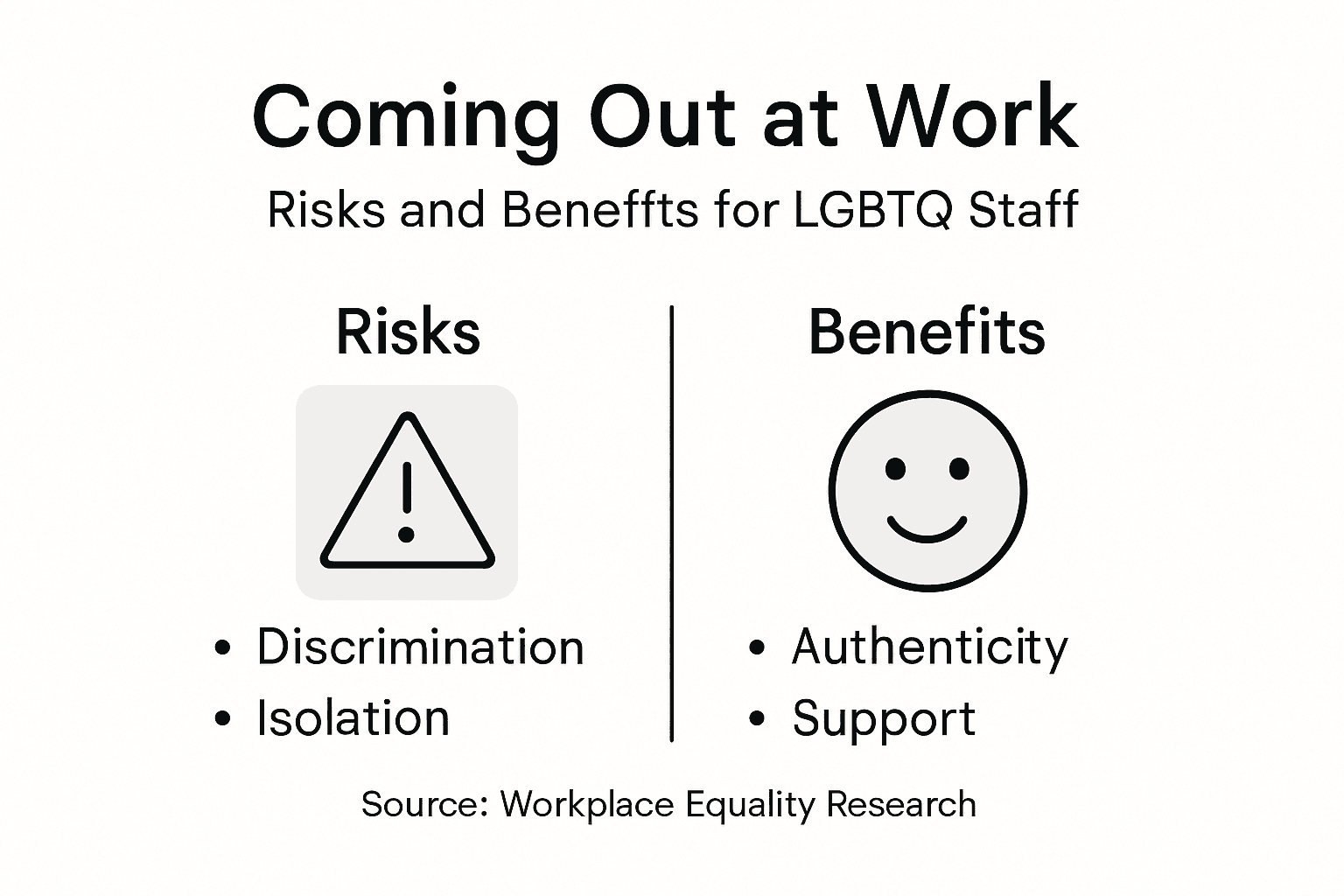
Effective risk mitigation requires a multifaceted approach that balances personal authenticity with strategic professional navigation. This involves carefully assessing workplace culture, identifying supportive allies, understanding legal protections, and developing personal resilience strategies that protect both emotional well-being and career progression.
Key strategies for building supportive environments include:
- Identifying LGBTQ employee resource groups
- Researching company non-discrimination policies
- Cultivating relationships with supportive colleagues
- Understanding legal protections in your jurisdiction
- Developing personal resilience and coping mechanisms
- Creating a confidential support network outside work
Successful workplace inclusion is a collaborative process, not an individual burden.
Protective factors for LGBTQ professionals demonstrate that comprehensive support systems can significantly mitigate workplace discrimination risks. By proactively building resilience and creating strategic support networks, individuals can transform potential challenges into opportunities for authentic professional expression.
Pro tip: Develop a confidential support network of trusted colleagues and external mentors who can provide guidance and emotional support during your coming out journey.
Empower Your Authenticity and Career Journey Today
Navigating the complex process of coming out at work requires courage and strategy. The article highlights key challenges such as balancing personal authenticity with professional safety, understanding workplace culture, and managing potential risks like discrimination or marginalization. If you are looking to build a strong support network and find employers who value diversity and inclusion, you are not alone. Many LGBTQ professionals face these same struggles as they decide when and how to disclose their identity at work.
Discover a community that champions your journey with mygwork.com. As a dedicated professional networking platform for LGBTQ+ talent, it offers you access to inclusive job opportunities, trusted resources, and meaningful connections to like-minded professionals and allies. Start exploring tailored career paths and events designed to foster workplace equality and empowerment right now. Take charge of your coming out experience with confidence by joining mygwork.com today and connecting with a supportive network ready to help you thrive.
Frequently Asked Questions
What does it mean to come out at work for LGBTQ professionals?
Coming out at work involves intentionally revealing one’s sexual orientation or gender identity to colleagues and supervisors, creating space for personal authenticity while managing potential professional risks and opportunities.
What are the benefits of coming out at work for LGBTQ individuals?
Benefits include enhanced personal authenticity, improved workplace relationships, opportunities for leadership roles, and a contribution to a more inclusive organizational culture, which can foster trust and collaboration among colleagues.
What challenges might LGBTQ professionals face when coming out at work?
Challenges can include the risk of discrimination, microaggressions, professional marginalization, and potential negative implications for career progression, which must be carefully weighed against the desire for authenticity.
How can LGBTQ individuals mitigate risks when coming out at work?
Building a robust support network, understanding organizational dynamics, identifying allies, and researching company non-discrimination policies can help mitigate risks associated with coming out and create a more supportive professional environment.