
LGBTQ History: Milestones Shaping Workplace Inclusion
January 27, 2026No one advances their career in a vacuum, especially when LGBTQ+ history has been shaped by centuries of suppression, activism, and resilience. For LGBTQ professionals in North America, every policy, networking event, and employment protection you encounter reflects generations of advocacy and pivotal milestones. This article unpacks how hard-won victories, evolving legal rights, and historic movements continue to transform workplace inclusion—and why understanding this history gives you a unique edge in building meaningful professional connections and negotiating opportunity.

Defining LGBTQ History and Its Evolution
LGBTQ history isn’t just about recent decades or pride parades. It stretches back thousands of years across cultures and civilizations. Ancient evidence of same-sex relationships exists in Greek, Roman, Indigenous, and Asian societies, proving that LGBTQ identities have always been part of human experience. What changed wasn’t the existence of these identities, but our willingness to acknowledge them openly.

For centuries, persecution forced LGBTQ people into silence. Shame, suppression, and secrecy became survival mechanisms. Families destroyed records. Historians ignored evidence. Communities disappeared from textbooks. That erasure shaped how generations understood themselves and their place in the world. Only in recent decades have scholars and activists worked to recover these hidden histories and weave them into mainstream narratives where they belong.
The field of LGBTQ history itself is surprisingly young. It began in the 1970s with activist historians who refused to accept the official story. LGBTQ history evolved as a scholarly field through the 1980s and 1990s, expanding beyond the Global North to include political economies, transnational perspectives, and trans histories. Scholars pushed themselves to think differently about gender, sexuality, and power.
The United States formalized LGBTQ History Month in 1994, and it has since spread globally. Different countries observe it at different times, reflecting their own pivotal moments. For you as an LGBTQ professional in North America, understanding these historical turning points matters because they directly shaped workplace protections, discrimination laws, and the acceptance you encounter today.
This history isn’t academic abstraction. Each milestone represents real people fighting for dignity, rights, and the ability to work without hiding who they are. Your career advancement, your networking opportunities, and the protections you enjoy exist because previous generations refused silence.
Pro tip: _Study the specific milestones and turning points that changed workplace protections in your industry or region, then reference them strategically in interviews and networking conversations to demonstrate deep understanding of how your field has evolved.
Key Identities and Movements Within LGBTQ History
LGBTQ movements aren’t monolithic. They’re made up of distinct communities, each with different experiences, priorities, and strategies. Gay men, lesbians, bisexual people, transgender individuals, and queer folks have historically organized separately and together, sometimes in harmony and sometimes in tension. Understanding these distinct identities helps you grasp why workplace inclusion looks different across organizations.
The earliest organized movements date back further than many realize. The Scientific-Humanitarian Committee, founded in 1897, advocated for decriminalization and recognition decades before most people think “LGBTQ activism” began. Early movements laid groundwork for modern advocacy by establishing that LGBTQ people deserved basic rights and dignity. These pioneers faced arrest, exile, and social destruction for simply asking to exist.
Modern movements evolved significantly from those early efforts. Organized social movements responded to centuries of persecution with lobbying, protests, mutual aid, academic research, and artistic expression. The 1970s through 1990s saw rapid expansion as lesbian feminists, Black queer activists, trans organizers, and others brought their own perspectives to the table. This diversity strengthened the movement but also created internal debates about priorities and inclusion.
Intersectionality became central to movement work. LGBTQ people of color, working-class activists, and transgender leaders pointed out that early movements often centered wealthy, white gay men. Their persistence forced movements to confront racism, classism, and transphobia within LGBTQ spaces themselves. This ongoing work shaped how organizations and workplaces approach inclusion today.
For you as an LGBTQ professional seeking advancement, this history matters directly. The protections you negotiate for in employment, the pronouns your company respects, the healthcare benefits you receive, and the networks you build all exist because different communities fought for recognition. Your workplace inclusion isn’t accidental. It reflects decades of organized struggle.
Pro tip: _Connect with affinity groups at your organization that reflect your specific identity or intersecting identities, then learn their history and how they’ve shaped workplace policy changes over time.
Pivotal Milestones in Rights and Representation
Milestones matter because they mark the exact moments when visibility shifted from impossible to inevitable. The Mattachine Society, founded in the 1950s, created the first sustained gay male organization in the United States. The Daughters of Bilitis followed, centering lesbian voices when society wanted them silenced. These weren’t just social clubs. They were resistance.
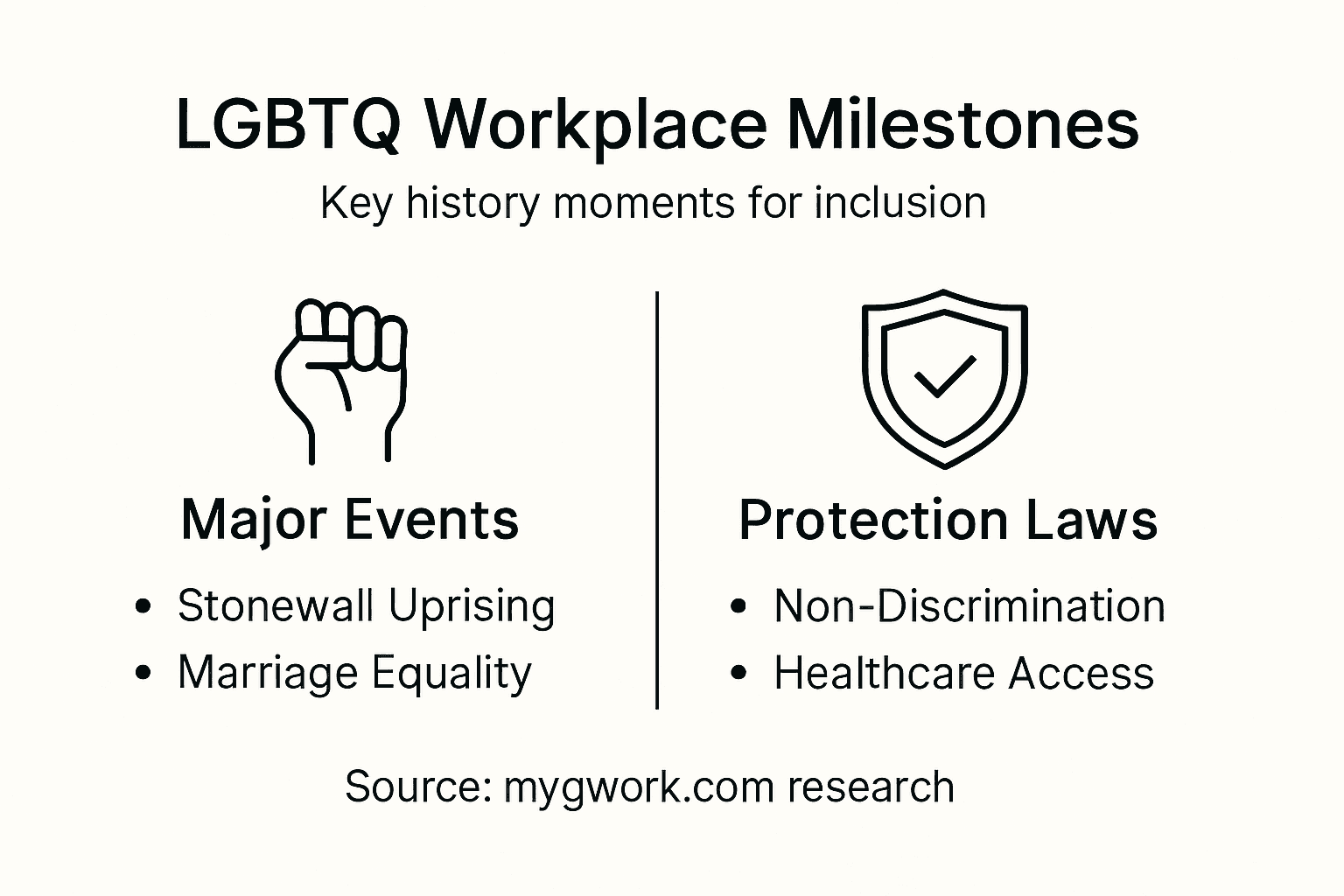
The 1960s and 1970s brought accelerating change. Police raids on gay bars transformed into uprisings. Pride parades emerged as public declarations of existence. Key dates across LGBTQ equality milestones show how rapidly legal and cultural landscapes shifted once communities refused invisibility. Decriminalization became law in multiple countries. Media representation moved from complete erasure to cautious acknowledgment.
Significant cultural and legislative advances shaped rights movements throughout subsequent decades. Marriage equality rulings transformed what seemed impossible into legal reality. Workplace non-discrimination protections followed, though unevenly across regions. Healthcare access improved in some places while remaining blocked in others. Each victory created space for the next fight.
These milestones directly impact your career trajectory right now. The job posting that includes “we value diverse sexual orientations and gender identities” exists because movements fought for legal protections. The HR policy allowing name and pronoun changes, the inclusive health insurance options, the welcoming workplace culture you find at progressive employers, the networking communities like mygwork.com that center LGBTQ professional advancement. These aren’t gifts. They’re victories.
But here’s the reality: progress isn’t linear. Some regions have moved backward. Some industries still lag far behind. Understanding which milestones apply in your specific geographic and professional context helps you navigate opportunities strategically. Know your rights. Know what’s been won where you work.
Pro tip: Research the specific anti-discrimination laws, healthcare protections, and workplace policies that apply in your state or province, then reference them confidently during salary negotiations and benefits discussions to ensure you’re advocating for everything you’re legally entitled to receive.
Here’s a summary of key turning points in LGBTQ workplace protections and their impacts:
Legal Landmarks Shaping Workplace Inclusion
Legal protections don’t appear automatically. They result from decades of court battles, legislative pushes, and organized pressure from communities refusing to accept discrimination. Understanding which legal landmarks protect you matters intensely as you navigate career decisions and negotiate with employers across North America.
The landscape varies dramatically by location. A 2023 global analysis found that 71 countries prohibit workplace discrimination based on sexual orientation, though far fewer protect gender identity, expression, and sex characteristics. In the United States, the 2020 Supreme Court decision in Bostock v. Clayton County established that Title VII prohibits employment discrimination based on sexual orientation and gender identity. That landmark ruling applied nationwide, transforming legal protections overnight for millions of workers.
But laws alone don’t guarantee safety. Research reveals persistent discrimination and harassment against LGBTQ employees continues despite legal protections, particularly affecting transgender and nonbinary workers and LGBTQ people of color. Faith-based exemptions in many jurisdictions allow religious organizations to discriminate legally. Enforcement remains inconsistent. Some employers comply enthusiastically while others find workarounds.
Canadian protections differ from American ones. Most provinces and the federal government prohibit sexual orientation discrimination, with gender identity protections expanding in recent years. Your specific province or state matters enormously. A policy legal and enforceable in Ontario may not apply in Texas or vice versa.
This is where your knowledge becomes power. When interviewing or negotiating benefits, you can reference specific laws protecting you. When facing discrimination, you know which agency to contact. When evaluating job offers, you understand which protections apply where. That clarity transforms you from a hopeful applicant into an informed professional advocating for yourself.
Pro tip: Before accepting any position, research the specific anti-discrimination laws, healthcare protections, and enforcement mechanisms in your jurisdiction, then document these protections in writing during your negotiations so expectations are crystal clear from day one.
This table compares the effectiveness and limitations of workplace inclusion protections in North America:
Ongoing Challenges and Advocacy Today
Legal victories created momentum but not completion. The same discrimination LGBTQ people faced decades ago persists today, just in more subtle forms. Openly out workers, transgender and nonbinary employees, and LGBTQ people of color face disproportionate workplace challenges. The fight isn’t historical. It’s happening right now in your office, your industry, and your network.
LGBTQ workers frequently experience discrimination related to sexual orientation, gender identity, expression, and sex characteristics despite legal protections. Faith-based exemptions carve holes in anti-discrimination laws. Enforcement remains inconsistent across jurisdictions. Some employers genuinely embrace inclusion while others comply minimally or find ways to circumvent protections altogether. Your experience depends heavily on where you work and who leads your organization.
Many LGBTQ professionals still hide. 2023 survey data shows that employees withhold their identity for safety reasons, experiencing harassment that damages mental health and derails careers. Transgender and nonbinary workers report the highest discrimination rates. The psychological toll of code-switching, monitoring every conversation, and questioning whether to share basic personal details creates exhausting, unsustainable work environments.
This is where advocacy becomes essential. Individual action matters, but systemic change requires organized pressure. Some LGBTQ professionals push their organizations to strengthen policies. Others join professional networks like mygwork.com that normalize visibility and connection. Some document discrimination and file complaints. Some simply show up authentically and model what inclusion looks like. All of these actions matter.
Your generation has different leverage than previous ones. Companies compete for talent. Diverse and inclusive workplaces attract top performers. Speaking up about discrimination, demanding better policies, and networking with other LGBTQ professionals creates real organizational pressure for change. You’re not just building your career. You’re building better workplaces for everyone coming after you.
Pro tip: Document any discriminatory incidents with dates and details, connect with your company’s employee resource group or diversity team to understand existing advocacy structures, and consider connecting with LGBTQ professional networks to amplify your voice and learn from peers navigating similar challenges.
Empower Your Career with a Platform Built for LGBTQ+ Workplace Inclusion
The article highlights the ongoing challenges LGBTQ+ professionals face in navigating complex workplace protections and advocating for meaningful inclusion. If you have ever felt the frustration of silent discrimination or the weight of needing to hide your identity at work this piece echoes your experience. You deserve a career space that values your true self and recognizes the historic battles behind every milestone shaping workplace equality.
At mygwork.com, we understand that knowledge of LGBTQ history and legal rights is only part of the equation. Connecting with a supportive network, accessing inclusive job opportunities, and engaging with employers committed to diversity will transform your career journey. Our platform is a dedicated professional hub to help you showcase your achievements, build powerful connections, and advocate confidently for your rights and benefits in a way that resonates with the legacy of activism described in the article.
Take control of your professional future today by joining mygwork.com. Explore inclusive job listings tailored to LGBTQ+ talent and become part of a community where your identity is an asset not a liability. Don’t wait for change let your career reflect the decades of progress made and the momentum yet to come. Visit mygwork.com to start building your authentic career path now.
Frequently Asked Questions
What is the significance of LGBTQ History Month?
LGBTQ History Month serves to raise awareness and visibility of LGBTQ history, celebrating achievements and progress over the decades in advocacy for rights and inclusion in society.
How have key milestones in LGBTQ history influenced workplace protections?
Key milestones, such as the Bostock v. Clayton County ruling, have established legal protections against discrimination based on sexual orientation and gender identity, shaping workplace policies and promoting a more inclusive work environment.
What challenges do LGBTQ employees face in the workplace today?
Despite legal protections, LGBTQ employees, especially transgender and nonbinary individuals and LGBTQ people of color, often face discrimination, harassment, and a lack of support, which can impact their mental health and career progression.
How can I advocate for better inclusion of LGBTQ individuals in my workplace?
Advocating for inclusion can include connecting with Employee Resource Groups, documenting discriminatory incidents, pushing for stronger workplace policies, and participating in professional networks that support LGBTQ professionals.