LGBTQ+ History Month: the story of Mexico
February 27, 2024By Zoe Schulz, myGwork
From lesbian nuns, to gay emperors and the one and only, bisexual hero, Frida Kahlo, Mexico is a place where queer excellence has pursued, in spite of an environment that hasn’t always been welcoming. Their battle for LGBTQ+ rights is a story of resilience and strength and one we can all learn from. Plus, if you’ve ever wondered why the number 41 has a taboo queer meaning, read on.
Looking back to the pre-Columbia era, in what is now known as Mexico, it is hard to find accurate information about LGBTQ+ people. Historical evidence is rare and often difficult to interpret. The majority of remaining evidence comes from Spanish conquerors who claim many incidents of sodomy, almost always in an accusatory and negative light. However, they then used this to justify their conquest and were known to have destroyed and tampered with historical records. This therefore makes it almost impossible to decipher what is propaganda and what is factual.
Despite this, it is still believed that the indigenous peoples of The Americas would have had an open view to sexuality and gender, much like the modern-day indigenous communities who view gender as fluid and have a third gender, known as two-spirit.
The Mayan community were one of the most dominant ancient societies in this area, dating back as far as 1800 BC. At their peak, they were thought to have grown to at least 40 cities, with a population of 2 million. Their communities were deeply religious, with mythology and religious rituals playing a vital role in their beliefs and values. Many of these rituals were known for their homoerotic overtones, with many shamans engaging in homosexual acts with their patients, and priests having ritualized homosexual activity with their gods.
Their God, Chin was said to have introduced homosexuality to their culture and then became related to same-sex love. Plus, another God, Tonsured Maize God, the maize deity connected to their staple crop, was depicted as an effeminate young man and is believed to have represented a third gender. Historian, Max Mejía notes of the era: “The Mayans had a more favorable view of diversity within the community, which suggests greater tolerance of homosexuality, above all when it concerned religious rituals and artistic practices.”
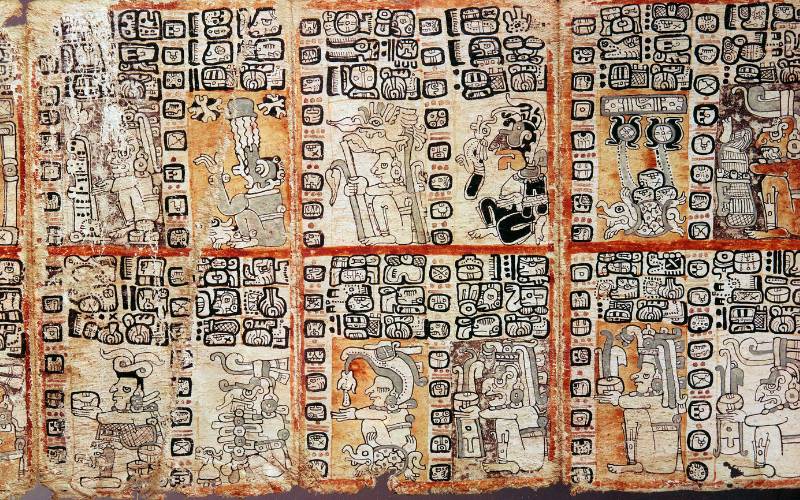
Image Credit: Canva
The Aztecs, then rose to become one of the leading societies from the 1300’s. They were a diverse group, with different dialects spread across several cities. Similarly to their predecessors, many of their gods and rituals had homoerotic themes. Despite this, homosexuality was strictly against the law, with harsh punishments for anyone caught. However, it is thought that in many areas these laws were ignored, and those in same-sex relations were relatively free. The Aztec word for lesbian is “patlacheh”, which shows existence and awareness of lesbians, but other than that very little is known about queer women from this period.
In 1519 the Spanish began to conquer what was then the Aztec Empire. With them, they brought disease, colonialism and a very strict and narrow view of sexuality and gender. They recorded accounts of “men dressed as women”, described as sinful sexual behaviour. Yet, we know these accounts are not to be trusted and were quite possibly slander. What we do know however, is that this era saw a tightening of laws against anything outside of heteronormativity. This ensued in a crusade of terror against same-sex relations, resulting in the tragic mass-murder of LGBTQ+ people, known as the burning of sodomites.
Mejía explains this as “the conquerors treated ‘sodomy’ as a special sin and hunted it down and punished it as such on a grand scale. They orchestrated crusades like the Holy Inquisition, which began burning sodomites at the stake as a special occasion”
As they colonised, they restructured the societies to be organised by western divisions, such as kinship, family and gender. This made it easier for them to enslave and oppress these communities, whilst also doing away with any remaining fluid views of gender – leaving a structured system where roles were based on gender and sex.
However, much like in other parts of the world LGBTQ+ people still existed and, at times, thrived. Juana Inés de la Cruz, one of the most famous Mexican lesbians, is a prime example of this. Born in 16th Century Mexico, she was a nun, as well as a writer, composer, philosopher and poet. She stood out with her outspoken views and was nicknamed the “The Tenth Muse” and “Mexican Phoenix”. A large portion of her literary work is seen as declarations of love and attraction to a number of women, and it is thought that she chose sisterhood to avoid traditional marriage.
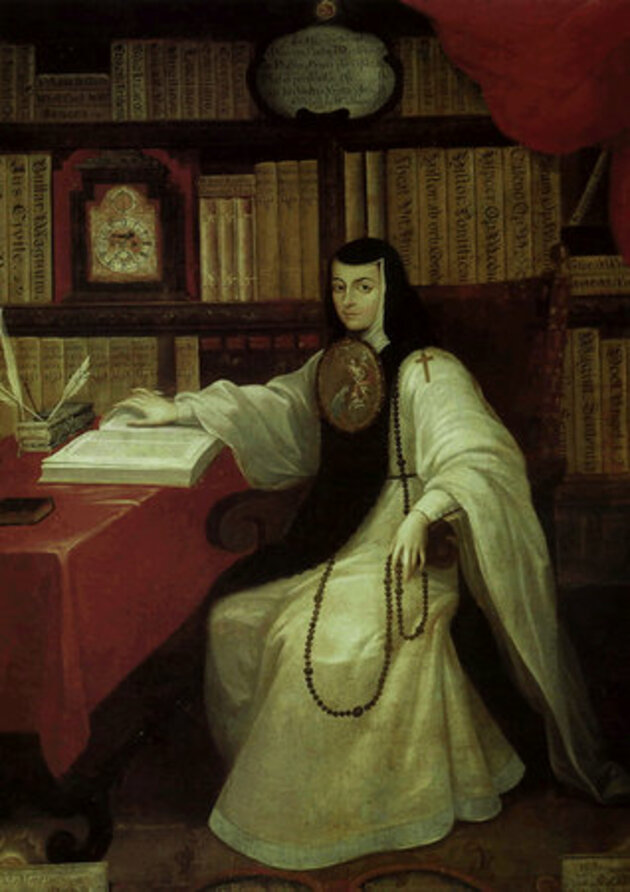
Sor Juana Inés de la Cruz by Miguel Cabrera, 1750
In 1821 Mexico celebrated independence from the Spanish, and with it, freedom from the shackles of colonial oppression. For the first time in hundreds of years, relations between same sex consenting adults, within the privacy of their own home, was no longer against the law. This did not grant LGBTQ+ people the ability to live openly in public, but it was one small step in the right direction.
This period also saw a surge in leaders with particularly close same-sex relationships. President Anastasio Bustamante was known to always be surrounded by young gentlemen, whom he lived with and travelled everywhere with. Whether these particularly close relationships were romantic, is up to speculation. Then in 1863 French troops took over and the country had their first Emperor, Maximilian I, for whom we have more than just speculation, but evidence that he was gay. His rule was described as "Kings who loved like queens" and after separating from his wife, he was said to have spent his time surrounded by male companions.
Throughout this time, LGBTQ+ people continued to exist within subcultures, living in the creases of society, obscured from public view. However, one night in 1901 the fate of 41 queers put this in the focus of the public eye. On the 17th November 1901 the police raided a party of 41 men, dancing together and wearing clothes of the opposite gender. The event, known as The Dance of the Forty-One, was a scandal that was the first of its kind to receive mass press coverage. The number 41 was from the onwards seen as taboo, this went so far that many buildings don’t have a 41st floor and many hotels and hospitals have no room 41.
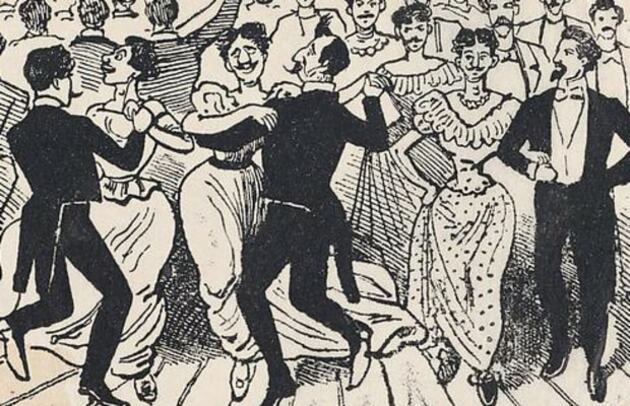
Artwork of The Dance of The Forty-One. Credit: Mary Evans Picture Library
Today, The Dance of the Fourty-One has been reclaimed by many LGBTQ+ people, with the thought that it represents courage and pride.
Less than a month later a similar raid took place on a lesbian gathering in Santa Maria, however there was almost no press or similar attention.
By the 1920’s there were a few public figures openly LGBTQ+, including the famous writer Salvodor Noro. Then in 1930’s came the rise of one of the world’s most famous bisexuals, still to this day, Frida Kahlo. The talented painter was openly bisexual and known for her resilience and strength. Her artwork often explored sexuality, broke down beauty standards and questioned traditional femininity. Still to this day, she is celebrated in Mexico and across the world.
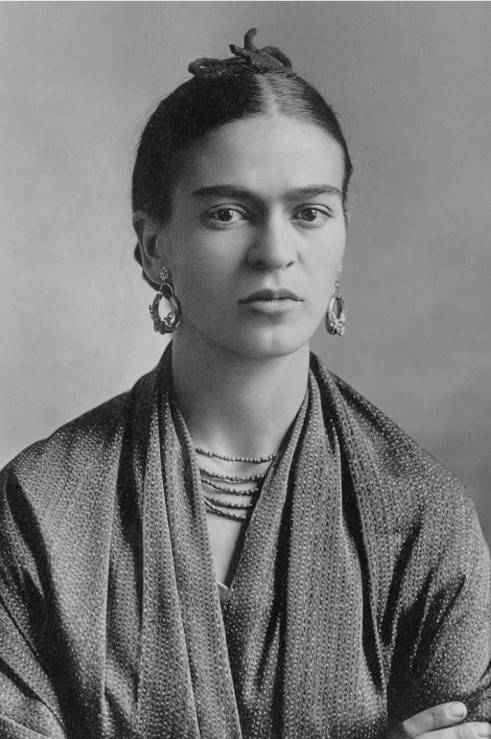
Image Credit: Sotheby's via Picryl.com
Nancy Cardenas, then became the first publicly open lesbian, when she declared her sexuality on television in 1969. At this point, LGBTQ+ visibility was slowly growing and with it, a movement for equality. In the 1970’s the first LGBTQ+ groups began to form and by 1978 they had their first Pride March.
Things seemed to be improving, but progress was slow. However, this came to an almost instant acceleration in the 1980’s when the HIV/AIDS crisis hit Mexico. The LGBTQ+ movement found itself driven to speak louder and fight harder, with a new tragedy hitting its community. This was a health crisis that still persists in the present day. Although today, people living with HIV can live a healthy and normal life with treatment, barriers such as access to medication, stigma and discrimination still remain. With gay and bisexual men and trans people being disproportionately affected by the virus, it is an issue that Mexican LGBTQ+ activists and organisations have been fighting for many decades and will continue to do so.
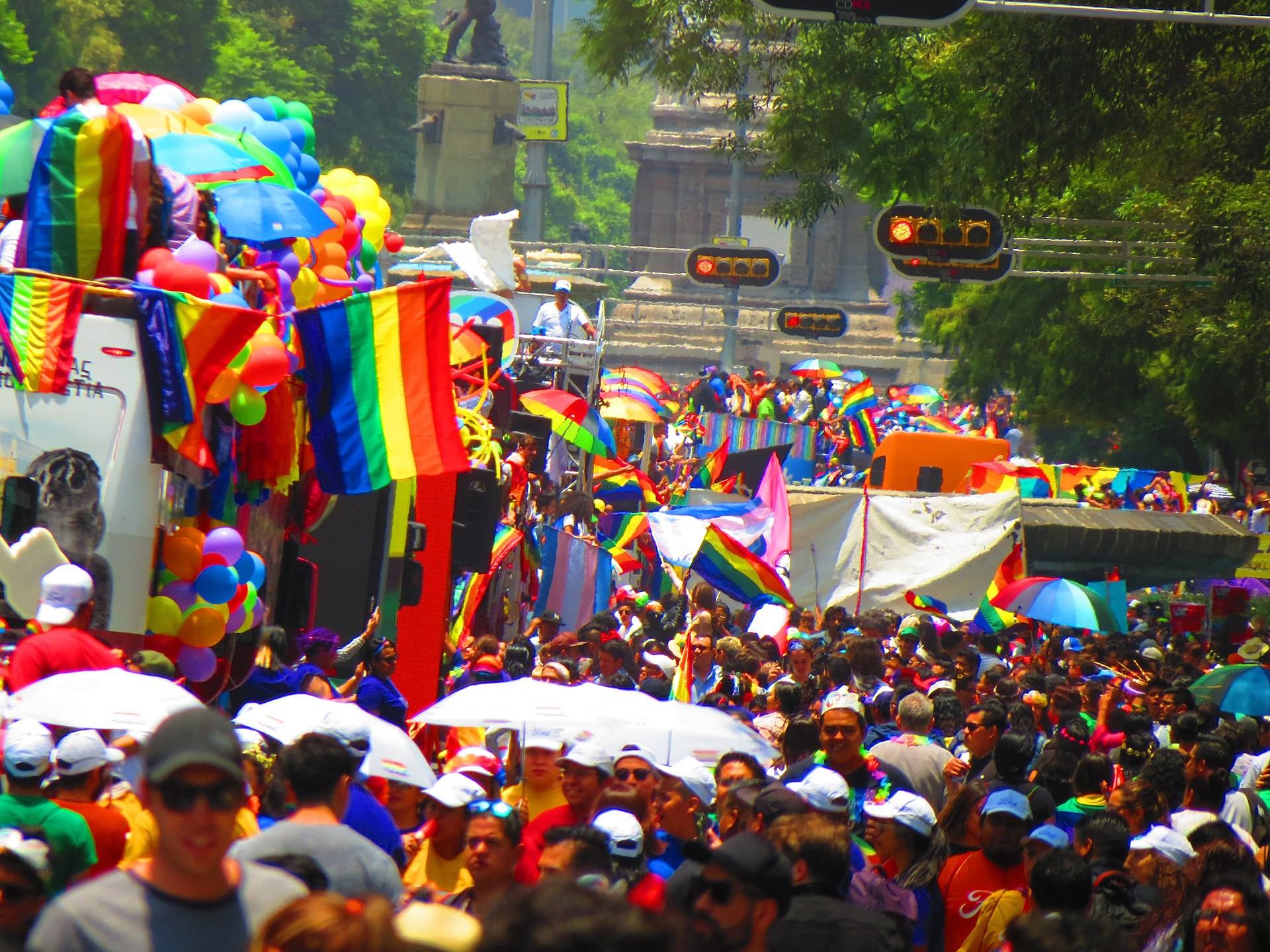
Mexico Pride in June 2019. Credit: Luisalvaz
This crisis did however, kick start a movement that was not about to backdown. This resulted in not just the visibility, which we’d seen increase in previous years, but concrete law changes. In 2003 laws came into place to combat discrimination and in 2007 civil unions for same-sex couples were finally recognised. Then in a historic moment in 2009, Mexico became the first place in Latin America to legalise equal marriage, despite backlash from the church.
As we’ve seen in many other countries, rights for the transgender community in Mexico sadly lagged behind their LGB family. However, in 2017 a petition started by a transgender person in Veracruz helped change this. They created the petition after being unable to change their name and gender marker on their birth certificate, despite this being possible in 6 of the 24 Mexican states. In October that year the Mexican Supreme Court ruled that this was a violation of their human rights and allowed their name and gender marker to be changed. Although the ruling only affected the petitioner, meaning future people could potentially be turned away, it still set a precedent and sent a message of hope.
Even with these small wins, life for the trans community in Mexico remains dangerous, with the country being rated the second deadliest place, after Brazil for transgender people. Their current President, Andrés Manuel López Obrador, has vowed to combat LGBTQ+ hate crime, yet so far these seem to have been empty promises. In the first three months of 2019 alone, 16 trans women were murdered, according the Associated Press. Diana Sánchez Barrios, activist and leader of LGBTQ+ human rights group ProDiana, speaks of this "It's like you [are] on trial being made guilty just for being a trans woman, we're always the most vulnerable, we're the perfect target for discrimination."
Nevertheless Sánchez, and many like her across Mexico continue to fight. Another activist, Kenya Cuevas, rode a hearse down Mexico City’s Pride Parade last year, to call attention to the violence against the trans community. The act resulted in death threats, but despite this she continues. "If I don't do it, the government isn't going to do it" Cuevas said "and if I wait for the government to do it, how many more people are going to be killed?"
Although the battle for LGBTQ+ equality continues, and much still needs to change for queer people to live freely as themselves, Mexico has a history rich with LGBTQ+ heroes, many of whom continue to inspire and empower people across the world today.