
LGBTQ+ onboarding steps for inclusive workplaces
December 1, 2025
Nearly half of American workers say they would feel more loyal to a company that demonstrates real support for LGBTQ+ inclusion. This shift reflects a growing expectation for workplaces to treat every employee with respect, regardless of gender identity or sexual orientation. By applying thoughtful strategies to onboarding, organizations can move beyond surface gestures and build authentic trust from day one. This guide reveals best practices for making onboarding a welcoming experience for LGBTQ+ professionals at every step.
Step 1: Assess Current Onboarding Policies
In this critical stage, you will systematically review your organization’s existing onboarding practices through an LGBTQ+ inclusivity lens. The goal is to identify gaps and opportunities for creating a more welcoming professional environment that respects gender identity and sexual orientation.
Start by collecting and carefully analyzing all current onboarding documentation, including employee handbooks, welcome packets, and training materials. Research from Columbia University’s Career Design Lab recommends neutralizing gendered language and implementing mechanisms that allow employees to accurately self identify. This means scrutinizing every document for binary gender assumptions and replacing them with inclusive terminology.
Key assessment areas include examining forms that require gender selection, reviewing communication protocols, and evaluating interview and intake processes. Look for opportunities to add optional gender identity fields, ensure gender neutral restroom information, and create space for employees to share their preferred name and pronouns comfortably. A thorough review will help transform your onboarding from a potentially alienating experience into a welcoming pathway for LGBTQ+ professionals.
Pro tip: Involve LGBTQ+ employees or diversity committee members in your policy review to gain authentic perspectives and insights that might otherwise be overlooked.
Once you complete this assessment, you will be prepared to develop targeted recommendations for meaningful policy updates in the next step of your inclusive workplace journey.
Step 2: Develop Inclusive Onboarding Materials
In this critical stage, you will transform your onboarding documents into welcoming resources that celebrate diversity and create psychological safety for LGBTQ+ professionals. Your goal is to craft materials that communicate genuine respect and commitment to inclusivity from the moment a new team member joins your organization.
Research from the Canadian Council on Rehabilitation and Work emphasizes the importance of offering documentation in accessible formats and promoting clear zero tolerance policies for discrimination. Begin by reviewing all onboarding documents through an intersectional lens. Replace gendered language with gender neutral terminology, ensure forms offer inclusive gender identity options, and create space for employees to self identify their pronouns and preferred names.
Consider developing supplementary materials that explicitly communicate your organization’s commitment to LGBTQ+ inclusion. This might include a diversity statement, information about employee resource groups, and clear guidelines on respectful workplace interactions. Incorporate visual representations that showcase diversity within your team and leadership. Design documents that not only welcome LGBTQ+ employees but actively celebrate their contributions and potential.
Pro tip: Have diverse team members review your materials to ensure the language genuinely feels welcoming and not performative.
With inclusive onboarding materials now developed, you are ready to move forward and implement training programs that will support your new approach to welcoming talent.
Step 3: Train Teams on LGBTQ+ Sensitivity
In this crucial stage, you will design and implement comprehensive sensitivity training that transforms workplace culture and builds genuine understanding among team members. Your primary goal is to create an educational experience that moves beyond compliance to foster authentic respect and support for LGBTQ+ professionals.

Professional development training modules from the Human Rights Campaign Foundation provide an excellent framework for creating inclusive environments. According to recent DEI research from the LGBTQ+ Bar Association, effective training should address critical topics like identity-based harassment, unconscious bias, and microaggressions. Design interactive workshops that encourage team members to examine their own assumptions and develop empathy through real world scenarios and personal reflection.
Structure your training to include multiple learning modalities: group discussions, scenario based role playing, expert led presentations, and reflective exercises. Invite LGBTQ+ professionals to share their lived experiences when possible, creating powerful moments of human connection that go beyond theoretical learning. Ensure your training materials use inclusive language, represent diverse gender identities and sexual orientations, and provide practical strategies for creating supportive workplace interactions.
Pro tip: Make training an ongoing process, not a one time event. Schedule periodic refresher sessions and create mechanisms for continuous learning and growth.
With your team now equipped with deeper understanding and sensitivity, you are prepared to implement policies that will sustain an inclusive workplace environment.
Step 4: Implement Personalized Welcome Initiatives
In this transformative stage, you will design individualized welcome experiences that make new LGBTQ+ employees feel genuinely seen, respected, and valued from their very first moment in the organization. The goal is to move beyond generic onboarding and create meaningful connections that signal your authentic commitment to inclusion.
Inclusive onboarding research from the Work Wellness Institute emphasizes the importance of smooth employee transitions and creating a sense of belonging. Drawing inspiration from Harvard Business School insights, consider establishing robust Employee Resource Groups (ERGs) as a cornerstone of your personalized welcome strategy. Design a comprehensive welcome package that goes beyond standard paperwork to include personal touches like a welcome video from team members, a curated resource guide for LGBTQ+ employees, and a designated mentor or buddy who can provide genuine support during the initial weeks.
Customize the onboarding experience by offering multiple touchpoints that demonstrate your organization truly understands and celebrates individual identities. This might include a personal welcome email that respects the employee’s preferred name and pronouns, an introduction to relevant ERG representatives, and a tailored welcome kit that reflects the diversity of your workforce. Create opportunities for new employees to share their preferred communication styles, professional goals, and personal interests, signaling that your organization values them as whole individuals.
Pro tip: Regularly solicit feedback from new employees about their welcome experience to continuously refine and improve your personalized initiatives.
With personalized welcome initiatives now in place, you have created a foundation of trust and respect that will help new LGBTQ+ employees feel immediately supported and valued.
Step 5: Evaluate and Refine Onboarding Outcomes
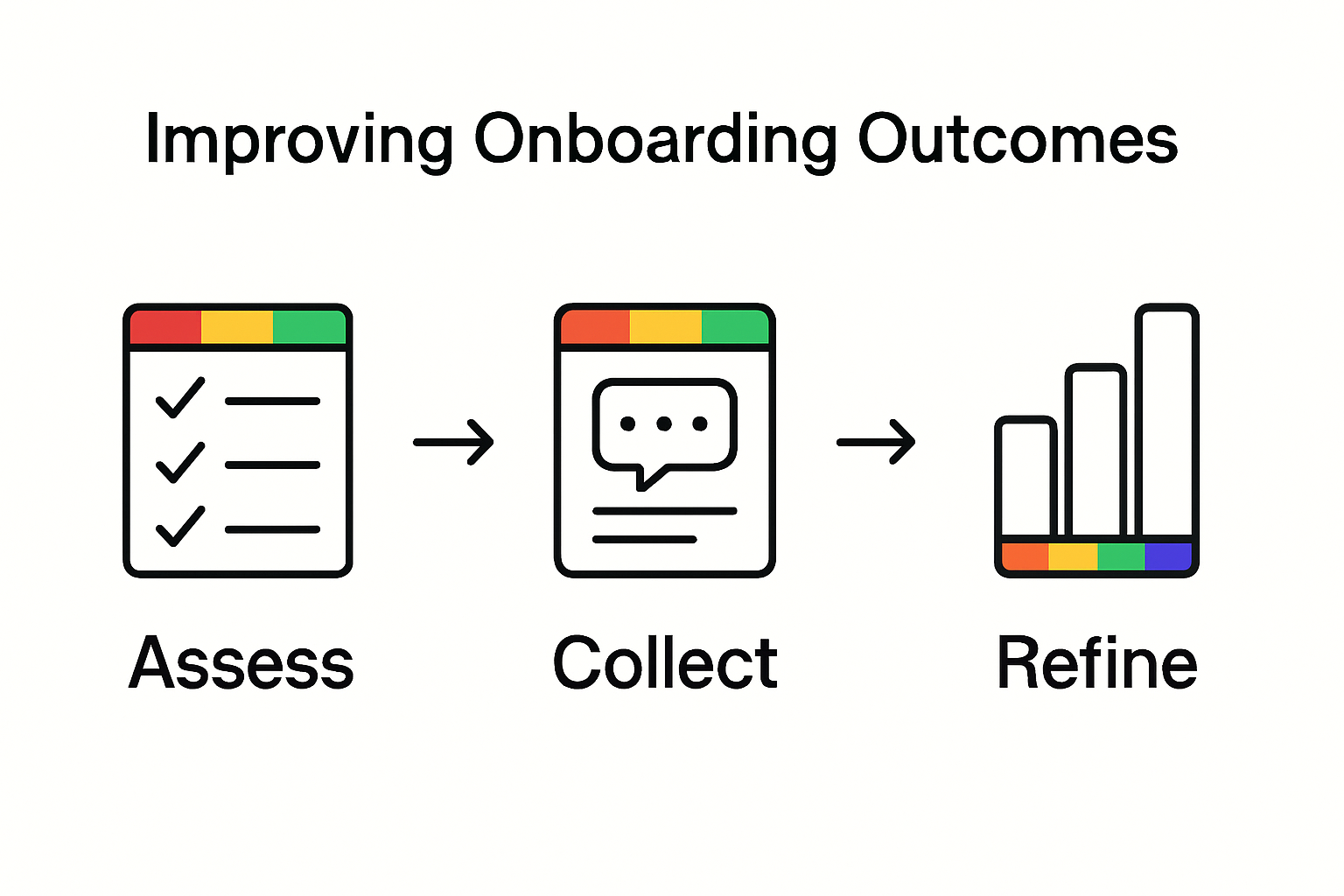
In this critical final stage, you will systematically assess the effectiveness of your LGBTQ+ inclusive onboarding process, transforming data and feedback into meaningful improvements. Your objective is to create a continuous improvement cycle that ensures your organization remains responsive and adaptive to employee experiences.
Research examining workplace inclusion policies highlights the profound impact that thoughtful onboarding processes can have on employee satisfaction and retention. Drawing insights from academic research on systemic barriers, design a comprehensive evaluation strategy that goes beyond surface level metrics. Develop detailed surveys and confidential feedback mechanisms that allow new LGBTQ+ employees to share candid insights about their onboarding experience, focusing on dimensions like psychological safety, sense of belonging, and perceived organizational support.
Implement a multi method evaluation approach that combines quantitative metrics and qualitative feedback. Track indicators such as early career satisfaction, retention rates for LGBTQ+ employees, employee engagement scores, and progression within the organization. Conduct structured interviews with new employees at 30 60 and 90 day intervals to capture nuanced perspectives on their initial experiences. Use these insights to identify potential gaps in your onboarding process and develop targeted interventions that address specific challenges.
Pro tip: Create an anonymous feedback channel that allows employees to share experiences without fear of professional repercussions, ensuring you receive truly authentic insights.
With a robust evaluation system in place, you have established a dynamic framework for continuous improvement of your LGBTQ+ inclusive onboarding approach.
Build Truly Inclusive Workplaces with myGwork
Creating an LGBTQ+ inclusive onboarding process requires more than policy adjustments and sensitivity training. It demands genuine connection, ongoing support, and a community where diversity is celebrated every day. If your organization is tackling challenges like neutralizing gendered language, fostering psychological safety, and implementing personalized welcome initiatives you are on the right path. But making these efforts tangible means linking your onboarding strategies with broader networks that empower LGBTQ+ professionals.
Discover how myGwork can elevate your inclusive hiring efforts by connecting you to a thriving community dedicated to diversity and equality in the workplace. As a professional networking platform for LGBTQ+ individuals, myGwork offers resources to support ongoing education, access to job opportunities that value inclusivity, and events designed to build allyship and belonging. Take the next step now to enrich your onboarding experience and demonstrate your organization’s commitment beyond onboarding by engaging with a network that shares your values. Start changing lives and careers today at myGwork and explore how you can integrate these principles throughout the employee lifecycle.
Frequently Asked Questions
How can I assess my organization’s current onboarding policies for LGBTQ+ inclusivity?
To assess your organization’s onboarding policies, review all existing documentation such as employee handbooks and training materials through an LGBTQ+ inclusivity lens. Identify gaps by checking for gendered language and ensuring there are mechanisms for employees to self-identify, ultimately aiming to create a more welcoming environment.
What steps should I take to develop inclusive onboarding materials?
Begin by transforming your onboarding documents to eliminate gendered language and include options for gender identity selection. Create supplementary materials that communicate your organization’s commitment to inclusivity and celebrate diversity, ensuring that new hires feel welcomed from day one.
What should LGBTQ+ sensitivity training for my team include?
Your sensitivity training should cover topics like identity-based harassment and unconscious bias while promoting empathy through interactive workshops. Incorporate real-life scenarios for team members to examine their assumptions, aiming to foster a culture of respect and support for LGBTQ+ professionals.
How can I personalize the welcome experience for new LGBTQ+ employees?
Design individualized welcome initiatives that make new employees feel respected and valued from the start. This can include personalized welcome emails that acknowledge preferred names and pronouns, as well as providing a mentor or buddy to support them during their initial weeks in the organization.
What evaluation methods can I use to refine my onboarding process for LGBTQ+ inclusivity?
Implement detailed surveys and feedback mechanisms to gather insights from new employees regarding their onboarding experience. Track key metrics such as retention rates and employee engagement scores, and conduct interviews at 30, 60, and 90-day intervals to identify areas for improvement and adapt your onboarding processes accordingly.